If someone called you a 'bird' during a romantic or sexual moment and you're not sure what they meant, here's the short answer: in most UK and Irish contexts, 'bird' is slang for a woman or girl, often with the implication that she's sexually attractive. It's usually a flirtatious or affectionate label rather than a reference to a specific sex act or kink. That said, the word carries a lot of baggage depending on who said it, how they said it, and what kind of relationship you have. This guide walks through all of that.
What Does Bird Mean Sexually in a Relationship?

Marcus Whitmore
23 Mar 2026

What 'bird' actually means as sexual slang
The core sexual or romantic meaning of 'bird' is rooted in British and Irish English. In that tradition, calling someone a 'bird' means you're referring to a woman or girl, typically with some sense of attractiveness attached. Think of it as sitting in the same family as words like 'chick,' 'babe,' or 'doll.' It's gendered, it's informal, and the sexual layer is more about attraction and objectification than about any specific act or dynamic.
What 'bird' is not, in most cases, is a technical term for a sex act or a kink code word. If you heard it and immediately searched for some hidden explicit meaning, you've likely gone further down the rabbit hole than the speaker intended. The word's weight is usually in how it frames you as a woman (desired, categorized, sometimes flattered, sometimes reduced), not in what it's asking you to do.
Regional context matters a lot here. In American English, 'bird' rarely carries sexual or romantic weight at all. If an American says it in a romantic context, it could be a borrowed British affectation, a quirky pet name, or something more personal to that individual. In British and Irish slang, though, it's well-established enough that most adults would recognize it immediately. The meaning also shifts based on the relationship: a long-term partner calling you 'my bird' reads very differently from a stranger saying 'she's a nice bird' to their friends.
One more thing worth clearing up: if you've seen 'birb' online and wondered if it's related, it isn't. 'Birb' is internet animal slang, a playful misspelling used for cute bird pictures and pet content. It has no romantic or sexual meaning. Similarly, 'bird' in British slang can also mean prison time (as in 'doing bird'), which is completely unrelated to relationships or attraction. Context will almost always rule those out, but it's worth knowing they exist.
When and how 'bird' actually comes up between partners
The word tends to show up in a few predictable situations within romantic or sexual dynamics.
- As a pet name or term of endearment: A British or Irish partner might say 'my bird' the way someone else would say 'my girl' or 'my girlfriend.' It signals ownership in an affectionate sense rather than anything explicitly sexual.
- As a flirtatious compliment: Someone might call you a 'lovely bird' or say 'you're such a bird' as a way of expressing attraction. The sexual implication is that you're desirable, not that anything specific is being requested.
- In third-person reference: A partner might describe you to a friend as 'my bird,' which in UK slang simply means girlfriend or romantic partner. You might overhear it and wonder what it implies.
- As a power-dynamic label: In some contexts, 'bird' can edge toward objectification, framing a woman as something to be admired or pursued rather than a full person. Whether that's the intent depends heavily on the speaker and the moment.
- As a kink or roleplay framing: Less commonly, 'bird' could be used deliberately in a roleplay or fetish context where bird imagery (flight, freedom, capture) is part of a fantasy. This would almost always be accompanied by other signals that make the intent obvious.
Compliment, kink, or insult? How to read the tone
The same word can land as sweet, neutral, or uncomfortable depending on delivery. Here's how to break it down.
When it sounds like a compliment

If 'bird' was said warmly, with affection, in a moment of closeness, it's almost certainly meant as a positive label. Think of the same tone someone might use for 'babe' or 'darling.' The person is expressing attraction or attachment, not making a request or statement about power. In a long-term relationship where your partner already uses casual UK slang, this is probably the most likely reading.
When it might signal a kink or fantasy
If the word came with other unusual framing, like specific imagery, roleplay language, or a request to lean into a particular dynamic, then it might be serving a more deliberate purpose. Bird symbolism in fantasy contexts often leans on themes like freedom versus captivity, delicacy, or being something rare and beautiful. If you heard 'bird' alongside other unusual or themed language, it's worth asking a direct question rather than guessing what the full picture looks like.
When it might be reductive or offensive

Calling a woman a 'bird,' especially in a dismissive or contemptuous tone, has drawn criticism for being infantilizing or objectifying. If it was said in a derogatory way, with contempt, or in a context that felt belittling, that discomfort is worth paying attention to. Pet-name slang like 'bird,' 'chick,' and 'doll' has faced pushback precisely because it can reduce a person to a cute, passive thing rather than an individual. Your instinct about the tone is usually right.
| Tone/Context | Likely Meaning | How to Respond |
|---|---|---|
| Warm, affectionate, private | Pet name or term of attraction | Accept, clarify if curious, or redirect if you dislike the label |
| Playful with themed or unusual language | Possible roleplay or fantasy framing | Ask what they have in mind before things progress |
| Public, third-person, matter-of-fact | UK slang for 'girlfriend/partner' | Probably neutral; flag it if it bothers you |
| Dismissive, contemptuous, or cold | Potentially objectifying or insulting | Name what you heard and how it landed |
| Out of nowhere, unexplained | Unclear; could be any of the above | Ask directly before assuming |
How to ask what they meant without making it weird
The clearest guidance available on navigating ambiguous sexual or romantic language is simply this: ask, rather than guess. Verbal cues can be ambiguous even when they feel obvious, and proceeding based on assumptions is where misunderstandings (and worse) happen. You don't need to make a big moment out of a clarifying question.
One practical tip worth borrowing from relationship educators: have these conversations when you're not in the middle of a heated moment. If 'bird' came up during intimacy and you weren't sure what to do with it, you don't have to solve it right then. Waiting until things are calm and low-pressure makes it easier for both people to communicate clearly, especially if the topic involves desires or dynamics that need more than a quick answer.
Here are some direct, non-escalating ways to ask:
- 'When you called me your bird earlier, what did you mean by that? I wasn't sure if it was just a pet name or something else.'
- 'I noticed you used 'bird' and I'm not familiar with it in that way. Is that just a British thing or does it mean something specific to you?'
- 'I want to make sure I understand what you were going for. Can you tell me more about what that word means to you?'
- 'I'm not sure how I feel about that label. Can we talk about it?'
- 'Was that just a term of endearment, or were you hinting at something you want to explore?'
All of these open the door without accusing or assuming. They give the other person room to explain, and they give you information you can actually use. If their explanation still leaves you uncertain, it's completely fine to say 'I'm still not sure I understand, can you be more specific?' Clarity is always better than proceeding in the wrong direction.
If something felt off: boundaries, consent, and your next steps

If 'bird' landed in a way that made you uncomfortable, whether because of the tone, the power dynamic, or what it seemed to imply, that reaction deserves to be taken seriously. Language in a sexual or romantic context carries real weight, and feeling uneasy about a label or implied request is a completely valid signal.
Consent guidance consistently emphasizes that communication should happen when uncertainty exists, not after the fact. If you felt pressured in the moment, or if the word came alongside behavior that made you feel uncomfortable, it's okay to stop and say so. Withdrawing or declining doesn't require a long explanation. Something simple like 'I'm not comfortable with that' or 'I need to stop' is enough, and it should be respected immediately. If it wasn't respected, that's a serious issue that goes beyond vocabulary.
If you weren't uncomfortable in the moment but you're now sitting with something that feels unresolved, you have a few options:
- Name what happened: Tell the person that a specific word or moment didn't sit right with you, and explain why. 'When you called me that, I felt reduced to just a physical thing' is honest and specific.
- Set the boundary going forward: You don't need to make it a confrontation. 'I'd prefer you not use that word for me' is a complete sentence.
- Assess whether this is a pattern: One stray word is one thing. If this is part of a broader pattern of dismissiveness or pressure, that's a different conversation, and possibly a reason to reconsider the dynamic.
- Talk to someone you trust: If you're not sure how to feel or what to do, a friend, counselor, or relationship resource can help you process it without pressure.
One specific note: if alcohol or other substances were involved when 'bird' came up, and things moved quickly after that, it's worth thinking carefully about whether real consent was present on both sides. Substances affect the ability to communicate and respect boundaries, and that matters regardless of what words were used.
Other bird words and phrases you might be mixing up
Because this site covers bird language in all its forms, it's worth flagging a few other bird-related expressions that sometimes get tangled up with the romantic or sexual use of 'bird.'
The phrase 'the birds and the bees' is the most commonly confused neighbor here. The phrase "the birds and the bees" is the most commonly confused neighbor here, and if you want the basics and nuance behind the bird and the bees meaning, there is a dedicated explainer. It's a gentle euphemism for explaining sex, especially to children, and it draws on nature imagery rather than slang, so if you were wondering what is bird and bees mean, that's what it refers to. the birds and the bees meaning It's a gentle euphemism for explaining sex, especially to children, and it draws on nature imagery rather than slang. If you've landed here while trying to understand that phrase, there are dedicated entries on the birds and the bees meaning and what 'the bird and the bee' represents that cover its origins and cultural use in much more depth. There are also dedicated explanations of what the bird and the bee meaning is and why people use that phrase the birds and the bees meaning.
Another one worth knowing: 'bird' in British slang can also mean a prison sentence, as in 'doing bird. Etymonline also notes that “bird-lime” is Cockney rhyming slang for “time” (especially time in prison), which later yields “bird” meaning “jail.” blank" rel="noopener noreferrer">bird' in British slang can also mean a prison sentence, as in 'doing bird. ' This comes from rhyming slang blank" rel="noopener noreferrer">('bird lime' equals 'time'). It has nothing to do with attraction or relationships, and if you've heard it in a conversation about someone's past or legal history, that's almost certainly what was meant. Context eliminates this one quickly.
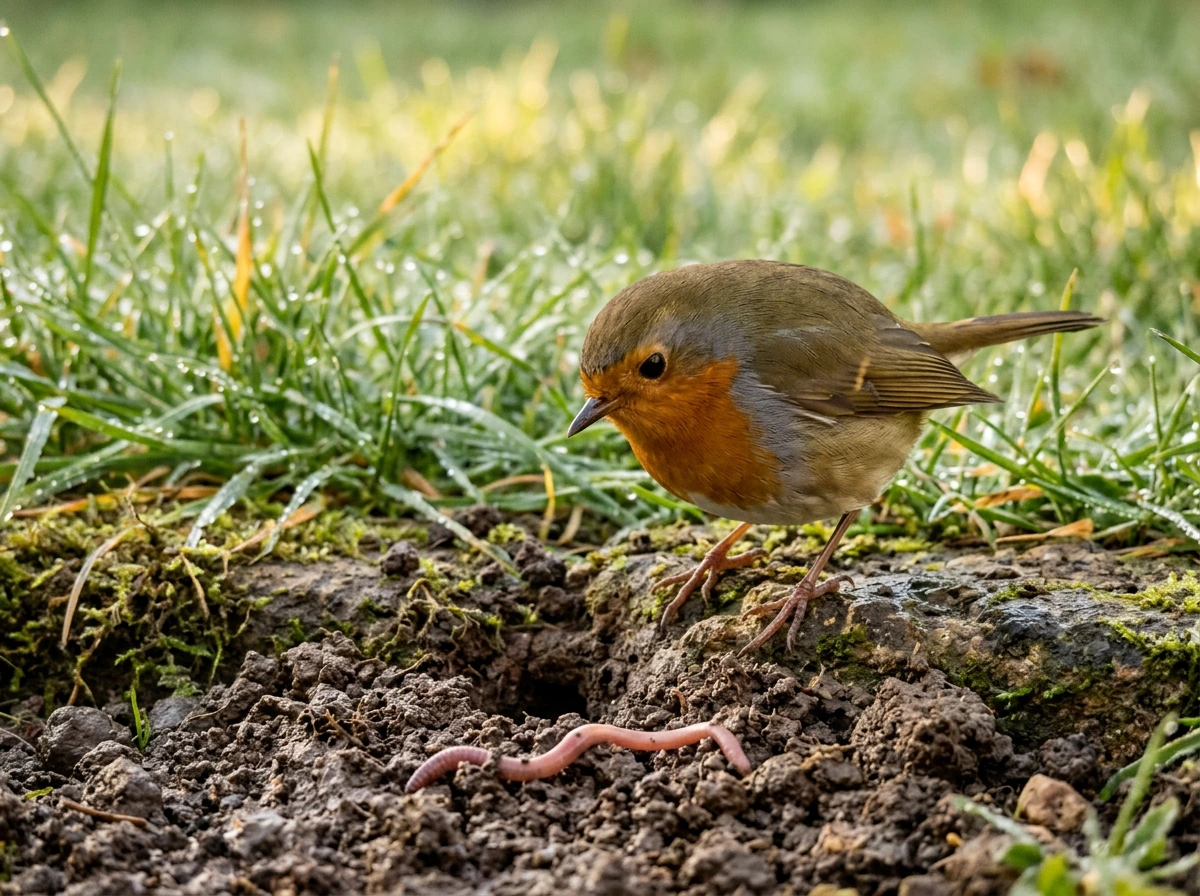
There's also a broader tradition of bird metaphors in romantic language. Calling someone a 'nightingale' suggests a beautiful voice or presence. 'Free as a bird' is about independence, which can come up in conversations about relationship expectations. The worm-and-bird metaphor (covered separately in a related article on 'the bird and the worm meaning') touches on themes of patience and reward. None of these are sexual on their own, but they show how bird language in relationships covers a wide emotional range, from attraction to autonomy to pursuit.
The bottom line is that 'bird' in a sexual or romantic context is almost always about how someone perceives or labels a woman, not about a specific act or kink. If you heard it and weren't sure, the most practical move is to ask a simple, calm question and go from there. Your comfort with the label (or your preference to skip it entirely) is just as legitimate as any explanation the other person can offer.
FAQ
If my partner says “my bird,” does it automatically mean attraction or something sexual?
Not automatically. In the British and Irish slang meaning, it usually signals flirtation or attraction, but “my” often makes it feel like a private pet name. The real test is tone and how they use it consistently, for example only during intimacy versus throughout the relationship.
How can I tell if “bird” is being used affectionately or in a way that objectifies me?
Look at framing and power. Affectionate use typically feels warm and mutual (they check in, they respond positively to your comfort). Objectifying use often comes with dismissal, comments that reduce you to appearance, or behavior that ignores your boundaries while using the term.
What should I ask if I heard “bird” during sex and I’m worried it was part of a kink?
Ask something that narrows the intent without accusing, for example “When you say ‘bird,’ what do you mean?” or “Is that just a pet name for you, or are you asking for a specific dynamic?” If they get vague or defensive, treat that as a cue to slow down and confirm consent.
If I’m not from the UK or Ireland, is it safe to assume “bird” has sexual meaning?
No. In American English it is rarely inherently romantic or sexual. If the speaker is British, Irish, or clearly using UK slang patterns, sexualized “woman or girl” slang becomes more likely. If not, treat it as personal nicknaming until confirmed.
What if “bird” was said in a friend group, like “she’s a nice bird”?
That context usually reads more like third-person slang for attractiveness rather than intimacy between you and the speaker. It can still be unwanted objectification, so consider your boundaries and whether the speaker treats you with respect when you engage directly with them.
Is “bird” ever used as a request to do something specific in the bedroom?
In most cases, no. It is generally not a code word for an act or kink. If “bird” is paired with explicit instructions or roleplay language, that broader context matters more than the single word, and you should ask for clarification before continuing.
What’s the best response if I feel uncomfortable but I don’t want to escalate or embarrass anyone?
Use a simple boundary statement and pause. For example, “I’m not comfortable with that term, can we talk later?” or “I need to slow down.” You do not need to justify it, and a respectful partner should immediately pivot.
If alcohol was involved when “bird” was said, how should I handle consent concerns now?
Be cautious. Alcohol can reduce the ability to communicate clearly and to respect boundaries in real time. If you felt pressured, didn’t have clear enthusiasm, or didn’t feel free to say no, consider that a consent issue regardless of the exact word used, and talk only when you both can be sober and calm.
Can “bird” have a different meaning entirely, like prison slang?
Yes, but usually only in conversations about someone’s past or legal situation, for example “doing bird.” If it appears alongside relationship language, pet names, or flirting, it is almost certainly the romantic slang meaning, but context still decides.
What if they say “it’s just slang” and I still don’t feel okay with it?
Your comfort matters more than whether they think the word is “harmless.” You can set a preference, for example “I don’t like that word, please don’t use it with me.” If they push back, ignore your boundary, or use it again after you asked, that is a stronger signal than the word itself.
Next Article
The Bird and the Worm Meaning and Lyrics Meaning
Understand the bird and the worm meaning, plus lyric themes and how to interpret common verse variants.