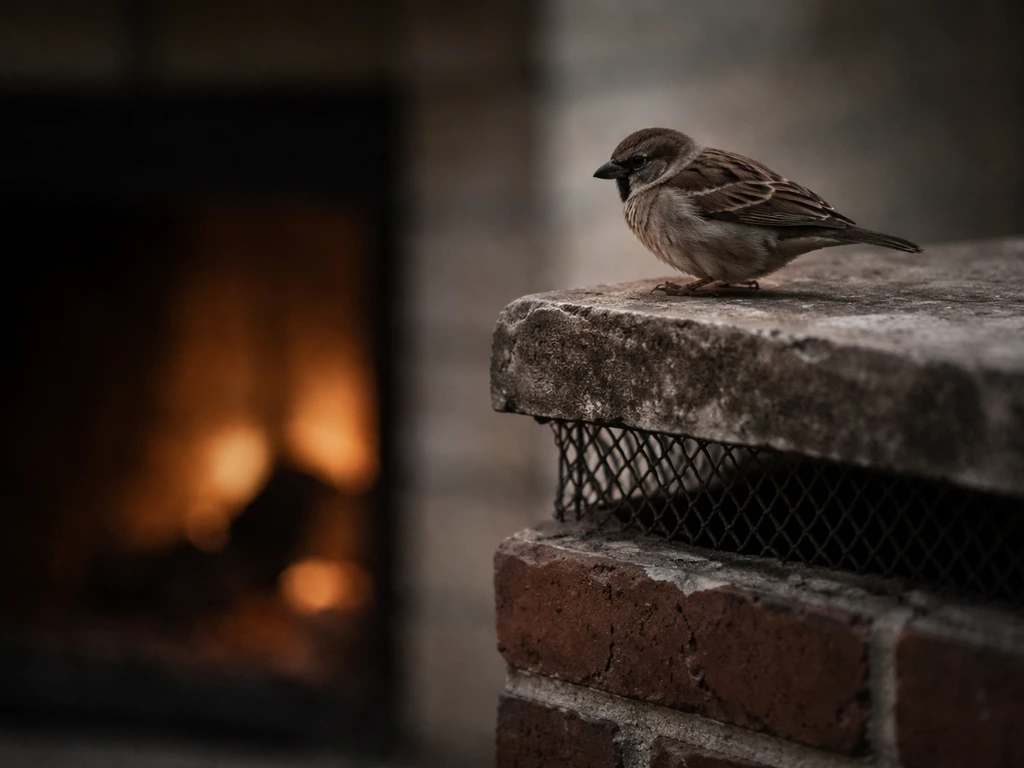
A bird on or in a Christmas tree most commonly symbolizes hope, joy, peace, or good luck, and the exact meaning shifts depending on the species shown. A red cardinal signals warmth, vitality, and sometimes a message from a loved one who has passed. A white dove points toward peace and the Holy Spirit. A robin carries strong festive meaning in the UK. A bird's nest tucked among the branches draws on a specific German folk tradition tied to prosperity. And sometimes, honestly, the bird is just there because it looks beautiful on a snowy branch, and no deeper meaning was intended. The trick is knowing which interpretation fits the specific ornament, card, or figurine you're looking at. If you ever wondered about the specific “santa claus bird meaning” people mention, the same idea applies: the exact symbolism depends on the species and the tradition attached to the ornament or card you are looking at.
Bird in Christmas Tree Meaning and Symbolism by Bird Type

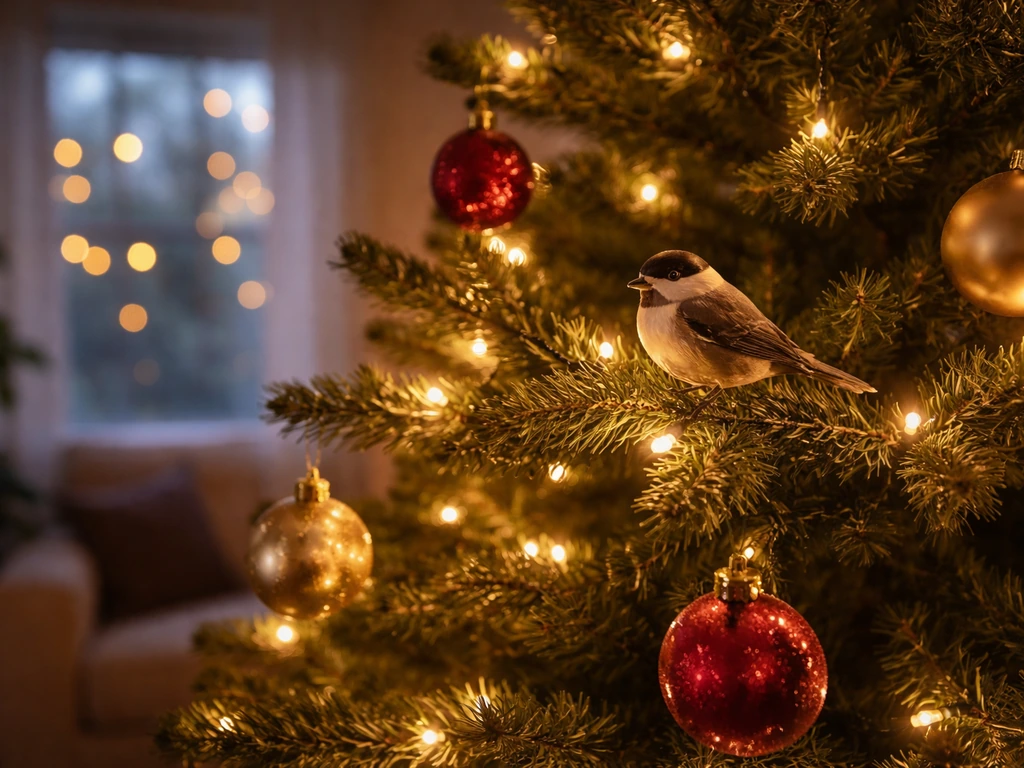
What the bird in the Christmas tree symbol usually means
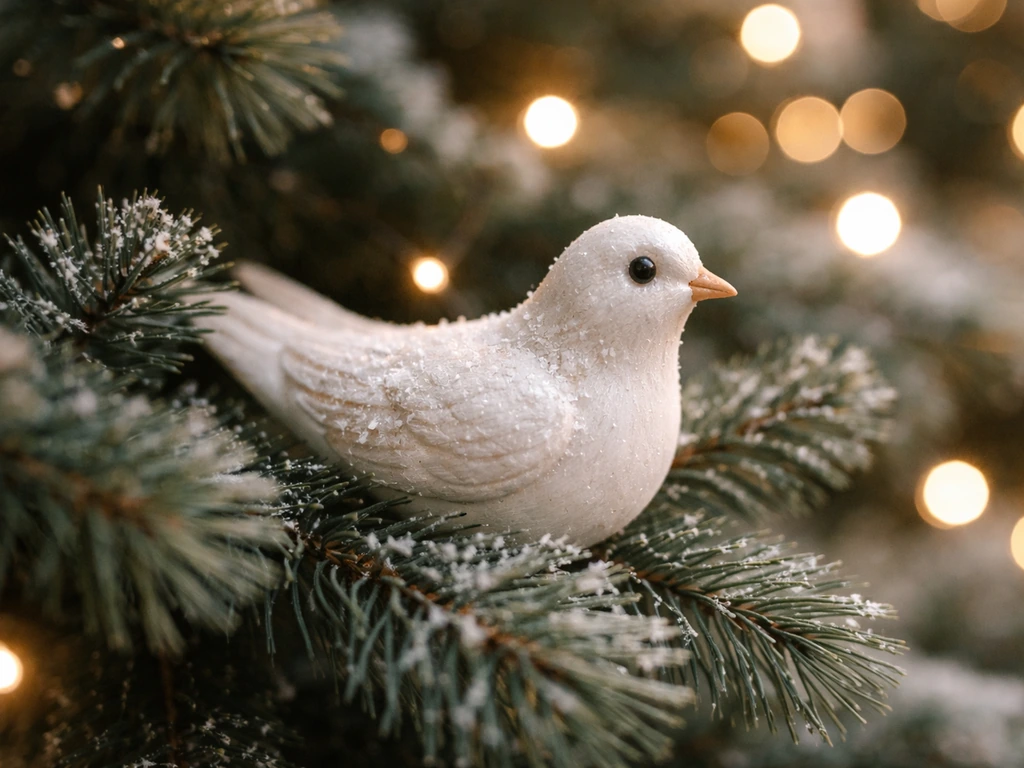
The broadest, most widely shared interpretation is that birds in holiday tree imagery represent hope and the promise of spring during the bleakest, darkest part of the year. That's not a modern marketing invention. Birds in winter have always carried a kind of emotional weight because seeing a living, singing creature when everything else looks dead and frozen feels like a small reassurance that warmth is coming back. That feeling got folded into Christmas and Yule traditions across Europe over centuries, so when ornament makers and card designers started filling trees with bird imagery, they were drawing on a well-established emotional shorthand.
The religious layer is real too. Dove imagery specifically connects to the Holy Spirit in Christian tradition, and that connection made birds a natural fit for a holiday with deep spiritual roots. But the secular and folk meanings run alongside the religious ones, so the same bird hanging on a tree can mean something spiritual to one family and simply mean "joy and new life" to another. Neither reading is wrong.
The most common bird types in Christmas decor and what each one suggests
Bird ornaments are not interchangeable. The species matters, and ornament makers know it. Here's a breakdown of the birds you're most likely to encounter and what meaning typically travels with each one.
| Bird | Key visual traits | Common symbolic meaning |
|---|---|---|
| Northern Cardinal (red) | Bright red plumage, distinctive crest on head, robust perching silhouette | Hope, vitality, warmth; memorial associations (messages from deceased loved ones); joy in winter |
| White Dove | All white, rounded body, often shown in flight or carrying something | Peace, the Holy Spirit, hope; frequently appears on cards with the word 'hope' literally in the design |
| Robin | Orange-red breast, small and round; common on UK Christmas cards | Festive good luck (especially in Britain and Ireland); linked to winter cheer and the Victorian postal tradition |
| Bird's Nest (with eggs) | Woven nest, sometimes with small eggs, placed in tree branches | Prosperity, health, happiness; rooted in German/European folklore about finding a nest in your tree |
| Partridge (in a pear tree) | Plump ground bird, often shown perched in a stylized tree | Primarily a song/cultural reference; the species symbolism is secondary to the carol association |
| Sparrow or small songbird | Small, plain brown or white bird | Humility, everyday joy; in some Advent ornament sets explicitly labeled as a 'Sparrow of Joy' |
| Dove (general bird in flight) | Any bird shown carrying a branch or soaring upward | Freedom, spiritual message, new beginnings; echoes Noah's Ark and peace symbolism broadly |
The cardinal deserves a little extra attention because it dominates the U.S. holiday ornament market. Its vivid red color against a white or green background is visually striking, and that contrast does a lot of the symbolic work on its own. Red is the color of life and warmth. Seeing a cardinal in winter feels like a defiant splash of color against the grey. Ornament brands lean into this deliberately, framing the cardinal as a seasonal symbol of hope and joy, and some specifically position it as a connection to people who have died, which has made cardinal ornaments a popular choice for memorial gifts.
Cultural and folklore meanings of birds at Christmas
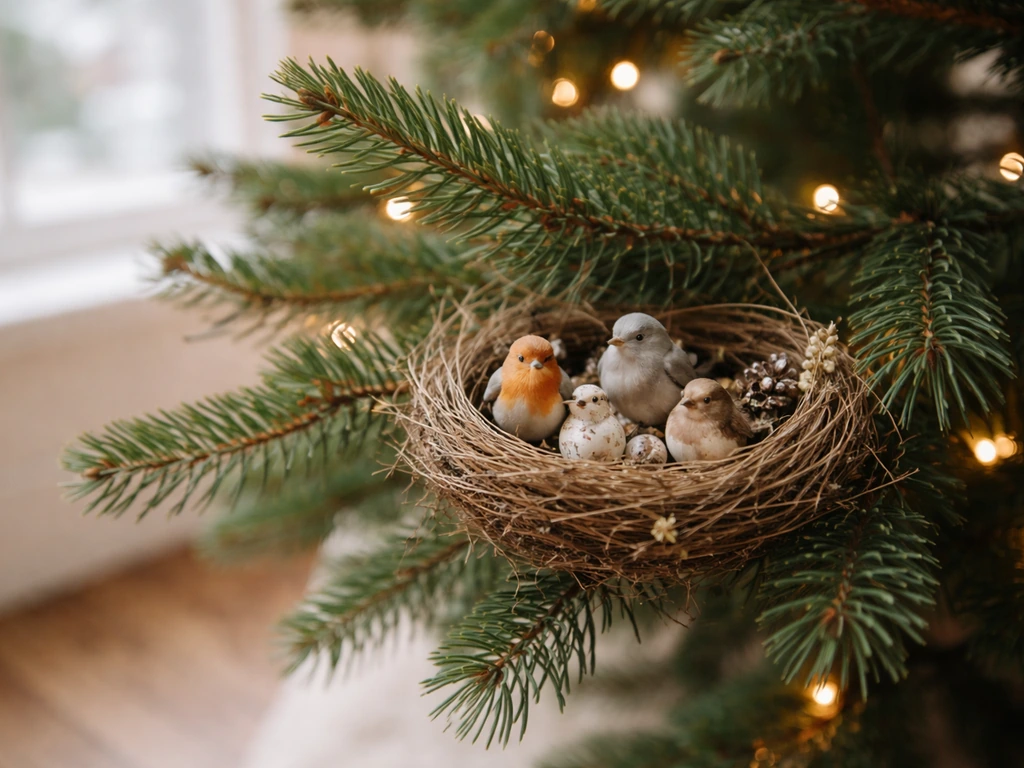
The German connection is the strongest documented thread. German folk tradition holds that finding a bird's nest in your Christmas tree is a sign of prosperity for the coming year, bringing health, happiness, and good fortune to the household. This is where the popular bird's nest ornament tradition comes from. Families hang a nest ornament, sometimes with small eggs inside, as a deliberate invitation for that luck to settle in. The tradition traveled with German immigrants to the United States and elsewhere, which is part of why it still shows up in mainstream holiday retail and European Christmas market shops like Käthe Wohlfahrt.
Across Scandinavia, bird symbolism is woven into midwinter and Yule traditions more broadly. The Yule period ("jul" in Norwegian, Swedish, and Danish) carried its own pre-Christian associations with birds as messengers and omens, and some of that older symbolic language got absorbed into Christmas celebrations as Christianity spread through the region. By the late 19th century, bird motifs were common in Scandinavian and broader European Christmas decoration, sometimes explicitly named as a "Christmas bird" in the craft tradition.
In the United Kingdom, the robin is the bird of Christmas in a way the cardinal is in the United States. The association is partly visual (the red breast echoing festive red-and-white color schemes), but it also has a roots in the Victorian-era postal tradition, where postmen wore red uniforms and were nicknamed "robins." Christmas cards featuring robins became a way of representing the card itself, and the imagery stuck hard. Today the robin on a UK Christmas card is as conventional as Santa on a U.S. one.
The dove's meaning crosses nearly every culture touched by Christianity, and in some cases pre-Christian traditions too. The association between the dove and the Holy Spirit is visually explicit in Christian iconography, and it's carried directly into Christmas tree and card design. The Science Norway source makes this plain: the bird motif on the tree, especially the dove, represents the Holy Spirit. That's not a hidden or debated meaning. It's an openly religious symbol that has been in mainstream holiday decoration for generations.
Modern interpretations: ornaments, cards, and holiday storytelling
In contemporary holiday design, bird ornaments do double duty. They carry symbolic meaning for people who want that layer, and they work as pure aesthetic objects for people who just love the look of a hand-painted glass bird clipped to a pine branch. Ornament companies like Old World Christmas explicitly frame their bird pieces in symbolic language ("bring joy and hope of spring to the Christmas season"), but they also sell them as visual pieces that look good on a tree regardless of whether the buyer knows the backstory.
Christmas cards have been a particularly rich space for bird symbolism. Northern cardinals and black-capped chickadees are among the most commonly featured species in American holiday card imagery. In the UK, robins dominate. Dove imagery appears across both markets, often in explicitly peace-themed or religious cards. One card design example shows a white dove flying toward a Christmas tree carrying the word "hope" in its beak, making the symbolic intent completely literal. You don't need to decode that one.
There's also a growing tradition of Advent devotional ornament sets that assign a specific virtue to each bird species. One ornament set labels a cardinal as the "Cardinal of Hope" and a sparrow as the "Sparrow of Joy," making the symbolic mapping explicit and intentional. This kind of curated bird-to-virtue assignment is a modern development, but it builds directly on the older cultural associations rather than inventing new ones.
How to figure out the meaning of your specific bird ornament
If you're looking at a specific bird ornament or card and want to know what it means (or was likely intended to mean), work through these steps.
- Identify the color first. Red bird? Almost certainly a cardinal, which points to hope, vitality, and possibly a memorial meaning. White bird? Very likely dove symbolism, pointing to peace or the Holy Spirit. Brown or grey small bird? Probably a sparrow or generic songbird, suggesting humility or everyday joy.
- Check for a head crest. A crest on top of the head is a defining cardinal trait. If your red bird has a visible crest, that's a strong visual confirmation it's meant to be a cardinal.
- Look for a nest. If the ornament is a nest (with or without eggs, placed in branches rather than hanging), the German folk tradition of prosperity and good luck is almost certainly the intended reference.
- Check if the bird is carrying anything. A bird with a branch or olive sprig in its beak is leaning hard into dove/peace symbolism. A bird with a scroll or ribbon could be a 'messenger' motif.
- Consider the country context. A robin on a card from the UK carries festive good luck meaning. The same bird on a U.S. card might just be a nature reference, since the robin is a spring bird in American cultural associations.
- Read any text on the ornament or card. If the maker has included a word like 'hope,' 'joy,' or 'peace,' that's the intended meaning, full stop. Don't over-interpret further.
- When in doubt, default to the broad reading: hope, joy, and the promise of spring. That meaning fits almost every bird used in Christmas decoration and is the baseline intention behind the motif.
Why birds and language have always been a natural pair
There's a reason birds keep showing up in metaphors, idioms, and seasonal imagery across so many cultures. Part of it is linguistic. The English word "bird" itself comes from Old English forms meaning "young bird" or "nestling," and it's been in everyday use long enough to absorb dozens of symbolic roles. Birds carry messages. Birds arrive with the seasons. Birds are present when other animals disappear in winter. That combination of mobility, seasonality, and song makes them almost irresistible as metaphor material.
Emily Dickinson's famous poem frames hope itself as "the thing with feathers," and that image works because it already matched something people felt. Hope is persistent and weightless and capable of surviving conditions that would kill everything else. A bird in winter does exactly that. When you see a cardinal sitting on a snow-covered branch, it's doing the thing we instinctively associate with hope. Holiday ornament makers are tapping that same emotional association that Dickinson was articulating, just in glass and paint rather than verse.
This is also why birds appear so naturally in holiday phrases and stories beyond just tree decorations. The "partridge in a pear tree" from the famous carol is one example, though as National Geographic points out, partridges don't actually live in pear trees in real life. The bird is doing symbolic work, not ornithological work. That gap between the literal species and the symbolic role is totally normal in bird-related language and imagery, and it's worth keeping in mind when you're trying to read the meaning of any specific bird motif. The exact biology of the bird often matters less than the cultural story attached to it.
If you're interested in bird symbolism beyond the Christmas context, birds showing up in other parts of the home (like a chimney) carry their own distinct folklore, which overlaps with some of the same European folk traditions that feed into Christmas bird meanings.
When the bird is just a bird (and the meaning is mostly decoration)
It's worth being honest about this: a lot of bird ornaments don't carry a specific intended meaning at all. If you're wondering about the chimney bird meaning in English, the best approach is to compare the phrase to the bird-type or tradition being referenced. They're on the tree because birds look good on trees. A glass bluebird or a clip-on finch adds a natural, organic element to an artificial or indoor tree, and for many buyers that visual appeal is the whole story. The folklore and symbolism exist, but not every manufacturer is invoking them, and not every buyer is thinking about them.
The short answer you'll find on some general websites, that "blank" rel="noopener noreferrer">a bird on a Christmas tree symbolizes peace, hope, and joy," isn't wrong exactly, but it flattens something more varied and interesting into a single line. The meaning of a bird on a Christmas tree depends on the species, the cultural tradition it comes from, the context in which it appears, and whether the person who put it there had a specific intention. If you're wondering about bird down chimney meaning, it usually points to luck, surprise, or the arrival of something good rather than a single universal definition the meaning of a bird on a Christmas tree depends on the species. Sometimes the meaning is profound and personal. Sometimes it's a pretty ornament from a Christmas market that caught the light in just the right way.
One thing worth noting is that even the companies who sell these ornaments don't always have a consistent story to tell. Country Living reported that Inge-Glas, one of the major ornament producers, no longer had the bird's nest legend on file when asked about it. Traditions get passed along informally, the original story gets fuzzy, and the object outlasts its origin story. That doesn't make the meaning meaningless. It just means you're sometimes the one deciding what the bird on your tree means, which is arguably the most honest interpretation of all.
FAQ
If I cannot identify the exact bird species on my Christmas tree ornament, how should I interpret the “bird in christmas tree meaning”?
Look for the bird’s species and also the exact ornament form, like a nest, dove, or single sitting bird. A nested bird ornament usually points to the prosperity invitation tradition, while a dove ornament most often signals explicitly peace or Holy Spirit themes. If you cannot identify the species, treat the meaning as general hope and new life rather than a specific virtue.
Does where the bird is placed on the tree change what it might mean?
Use the placement cues. A bird facing outward, flying upward, or holding an “object” (like a word in its beak) is often meant to communicate hope or message themes. A bird tucked deep among branches or inside a nest ornament leans more toward domestic luck or seasonal prosperity than “just” decorative peace.
Are the meanings standardized across countries and ornament brands, or can they differ?
Many shoppers assume one bird equals one fixed message, but manufacturers sometimes reuse styles across regions. If an ornament is imported, the same species may carry different emphasis (for example, a robin in the UK card tradition versus a robin used as a generic festive bird elsewhere). The safest approach is to prioritize the product context, then fall back to the species-level associations.
How can I tell whether my bird ornament has a specific meaning versus being chosen just for aesthetics?
The “it’s just pretty” interpretation is valid, especially for mass-produced glass birds on common holiday trees. If the packaging, card, or retailer description does not mention a story, you can treat the symbol as aesthetic plus broad winter hope. A practical check is whether the piece resembles a culturally specific motif, like a nest with eggs, versus a generic bird perch.
Is a cardinal ornament always intended as a remembrance symbol?
Yes. People often associate cardinal ornaments with warmth and joy, and sometimes with remembrance, especially in the U.S. context where cardinal motifs are common. But a memorial intent is not guaranteed, so if you are buying as a gift, consider including a note or choosing packaging that explicitly states remembrance.
If the bird is a dove, does it always mean something religious?
Religious reading typically depends on both the species and the design cues. A dove is the strongest “signals Holy Spirit or peace” option, but look for accompanying visual language like halos, crosses, or explicit religious text. Without those cues, many families still interpret the dove in a secular way, as peace and hope.
My tree has a bird’s nest ornament, but it does not include eggs. What does that usually mean?
For nest ornaments, the most common tradition is German folk symbolism tied to prosperity and household good fortune. Many modern versions simplify the tradition to a nest plus eggs look, so if yours lacks eggs, treat it as the prosperity theme but with less “deliberate invitation” specificity than the full version.
How do Advent devotional bird ornament sets change the meaning compared with regular ornaments?
Advent sets can be more literal than single ornaments because the brand assigns virtues to each species. If your set says “Cardinal of Hope” or similar labels, follow the set’s mapping first. If there are no labels, you can still use the broader hope and joy associations, but avoid assuming a specific virtue name.
Should I worry about whether the depicted bird makes biological or literal sense, like “partridge in a pear tree” logic?
Yes, and it helps avoid confusion. Some ornaments use “bird” motifs to represent seasonally familiar imagery rather than real species behavior or habitat. Your best move is to match the cultural symbolism tied to the depicted bird (or tradition cues like nest tradition) rather than trying to verify whether the bird would realistically belong in a Christmas tree.
How should I interpret the meaning when the “bird” shows up in a phrase (not an ornament), like a chimney bird reference?
If you are interpreting a phrase where “bird” is used metaphorically, check whether the source is folklore, a specific idiom, or a product marketing line. For common Christmas-tree bird imagery, species-based symbolism usually dominates, while chimney bird phrases often point to luck, surprise, or an upcoming positive event rather than one universal virtue.
Bird Down Chimney Meaning: Folklore and What to Do
What bird down chimney meaning really implies: folklore omens and safe steps to rescue a bird from a chimney.