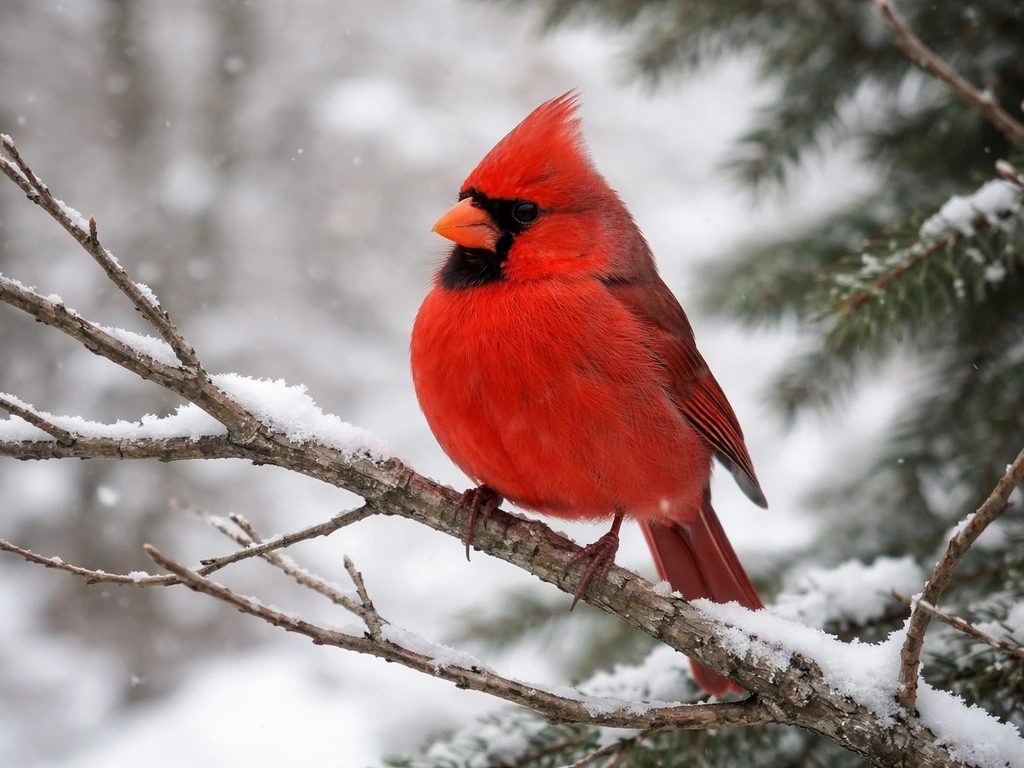
The term 'Santa Claus bird' most commonly refers to the Northern Cardinal, whose vivid red plumage matches the classic Santa suit so closely that people have been calling it the Christmas bird for generations. That said, 'Santa Claus bird' isn't an official species name, and depending on where you read or heard it, it might also point to the Bohemian Waxwing (which arrives from Lapland right around the holidays and sounds, improbably, like sleigh bells). Knowing which bird someone actually means takes a little context, but the symbolic message behind both is pretty similar: good tidings, seasonal abundance, and the arrival of something joyful.
Santa Claus Bird Meaning: Symbolism, Identity, and How to Tell It

Marcus Whitmore
21 Jun 2026
What 'Santa Claus bird' actually refers to
This phrase lives in a fuzzy space between nickname, seasonal slang, and folk symbolism. It isn't a formal bird name you'll find in a field guide, but it does reflect something real: certain birds get linked to the Christmas and winter holiday season so strongly that people start calling them by holiday nicknames. 'Santa Claus bird' is one of those nickname phrases that circulates in conversation, holiday writing, and social media posts rather than in ornithological texts.
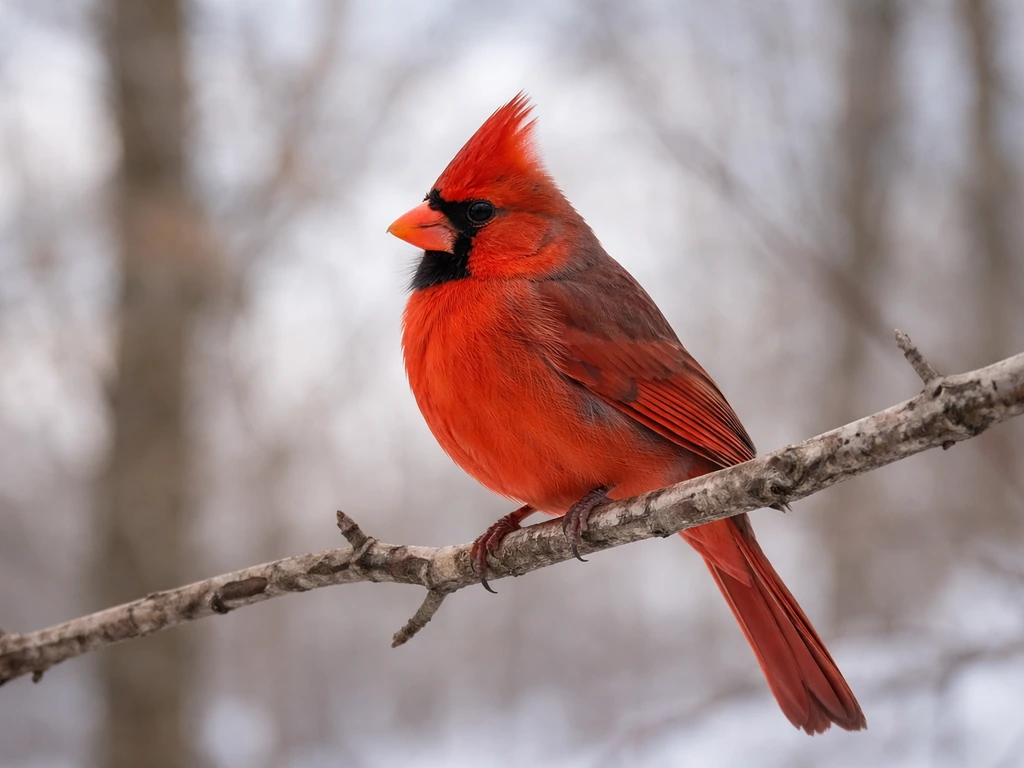
The most common use of the phrase lands squarely on the Northern Cardinal. The male cardinal's crimson red coat lines up almost perfectly with the color scheme of traditional Santa Claus imagery, including the red associated with Coca-Cola's famous mid-20th century Santa Claus advertising. When people see a red cardinal on a snowy branch in December, 'Santa Claus bird' is a phrase that just seems to fit. Some writers use it deliberately, others use it almost accidentally, as a throwaway description in a holiday piece.
There's also a looser, more casual version of the phrase floating around social media, where someone will post a photo of a bird spotted during the holidays and caption it something like 'our Santa Claus visitor' or 'the Santa bird was back this morning.' In those cases, it's not necessarily a cardinal at all. It's just a bird that showed up at a festive time and got a festive name. That context matters when you're trying to decode what someone meant when they used the phrase.
The symbolism behind the Santa Claus bird
In bird symbolism, the birds most often called 'Santa Claus bird' carry a cluster of related meanings that all orbit the same seasonal energy. The core themes are generosity, good news arriving unexpectedly, abundance during a lean season, and the sense that something warm and wonderful is coming even in the coldest part of the year.
The Northern Cardinal specifically is associated with vitality and hope precisely because it doesn't migrate. It stays through the winter, bright and singing, when most other birds have gone quiet or gone south. In many bird-symbolism traditions, that kind of steadfastness reads as a sign of encouragement: a reminder that beauty and life persist even through the hard months. When it gets labeled a 'Santa Claus bird,' that symbolism maps neatly onto the gift-giving, warmth-spreading spirit of the holiday season.
If the Santa Claus bird in question is the Bohemian Waxwing, the symbolism tilts slightly toward arrival and heralding. Waxwings travel from Arctic and subarctic regions, including Lapland, which is already baked into the Santa mythology. Their arrival in more temperate areas in winter has historically been treated as a sign of the season changing, of something significant coming. That 'herald' quality is central to their symbolic meaning.
- Hope and vitality during winter's hardest stretch
- Generosity and abundance, even in a season of scarcity
- Arrival of good news or a welcome visitor
- Warmth and cheer as a counterpoint to cold and darkness
- Steadfastness and loyalty (especially for the non-migratory cardinal)
Holiday folklore and cultural stories behind the bird
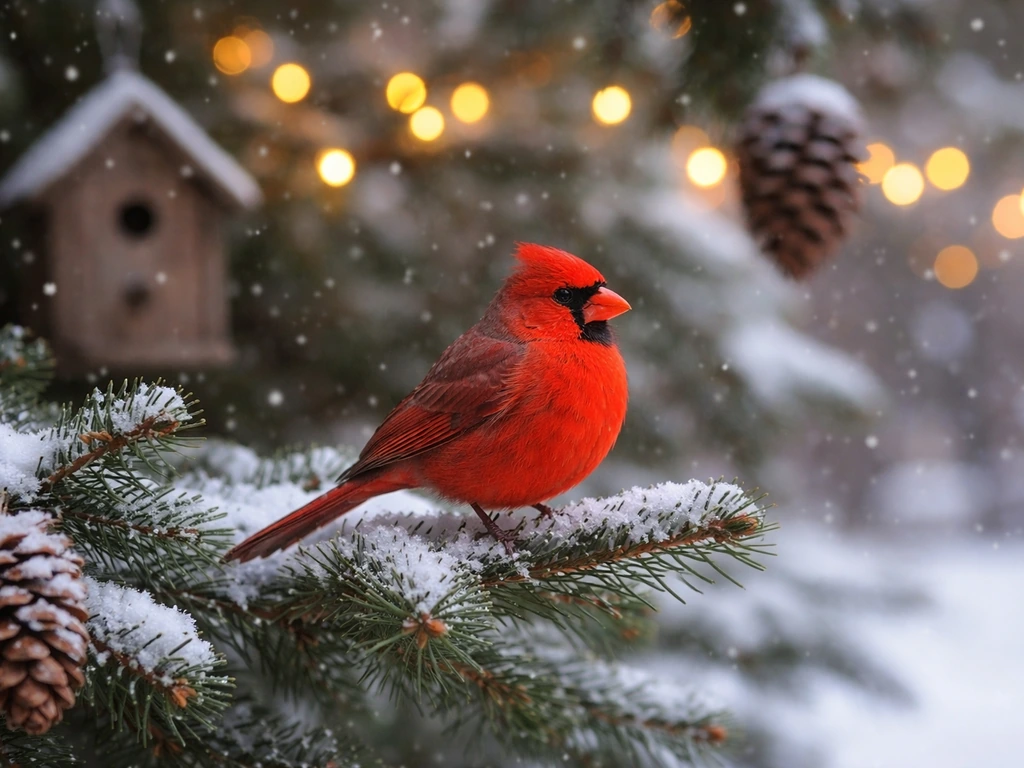
The Northern Cardinal's reputation as the Christmas bird is well established in American folk culture. Local conservation publications, bird clubs, and holiday nature writing have been calling it the Christmas bird for decades, largely because its red color fits traditional Christmas colors and because it's one of the most reliably visible backyard birds during the holiday window in the eastern United States. Cardinals have also been expanding their range northward over time, which means more people in more regions are encountering them during the winter months and folding them into their own seasonal storytelling.
The Bohemian Waxwing brings a different kind of folklore to the table. In Scandinavian and Northern European contexts, the arrival of waxwing flocks in winter has traditionally been treated as a meaningful seasonal event. One article in The Independent described their high, trilling call as sounding like the bells on Santa's sleigh, which is the kind of vivid comparison that sticks. The fact that waxwings winter in flocks, descend suddenly on berry-covered trees, and come from Lapland gives them a sort of mythological road map straight through the heart of Christmas lore.
There's also a broader tradition here worth knowing about. Audubon's annual Christmas Bird Count, a long-running community science event held around the holidays, reflects just how deeply birds are woven into the cultural fabric of the winter season. It's not that any one bird owns Christmas, but rather that the season itself has always invited people to pay attention to which birds show up, which stay, and what their presence might mean.
How people use 'Santa Claus bird' as a phrase
As a piece of everyday language, 'Santa Claus bird' works more like a descriptive nickname than a fixed phrase with a single meaning. People use it the way they'd use any affectionate seasonal nickname: loosely, warmly, and without necessarily worrying about whether it's ornithologically precise. You'll see it in holiday blog posts, backyard birding forums, social media captions, and nature-themed greeting card copy.
What makes the phrase interesting from a language perspective is that it borrows from the 'Santa Claus' frame to communicate a whole cluster of ideas at once: it's red, it's winter, it showed up like a gift, it made someone happy. That's a lot of emotional freight carried by two words. When a Reddit user captions a holiday bird photo with a jokey reference to 'Santa Claus' visiting, they're not necessarily making a symbolism claim. They're participating in a kind of playful holiday language that uses bird sightings as seasonal touchstones.
In more intentional writing, like bird-symbolism articles or nature columns, the phrase usually does mean something specific, typically the Northern Cardinal, and is used to invoke that bird's established role as a symbol of holiday spirit and winter resilience.
Which bird is actually meant: your identification guide
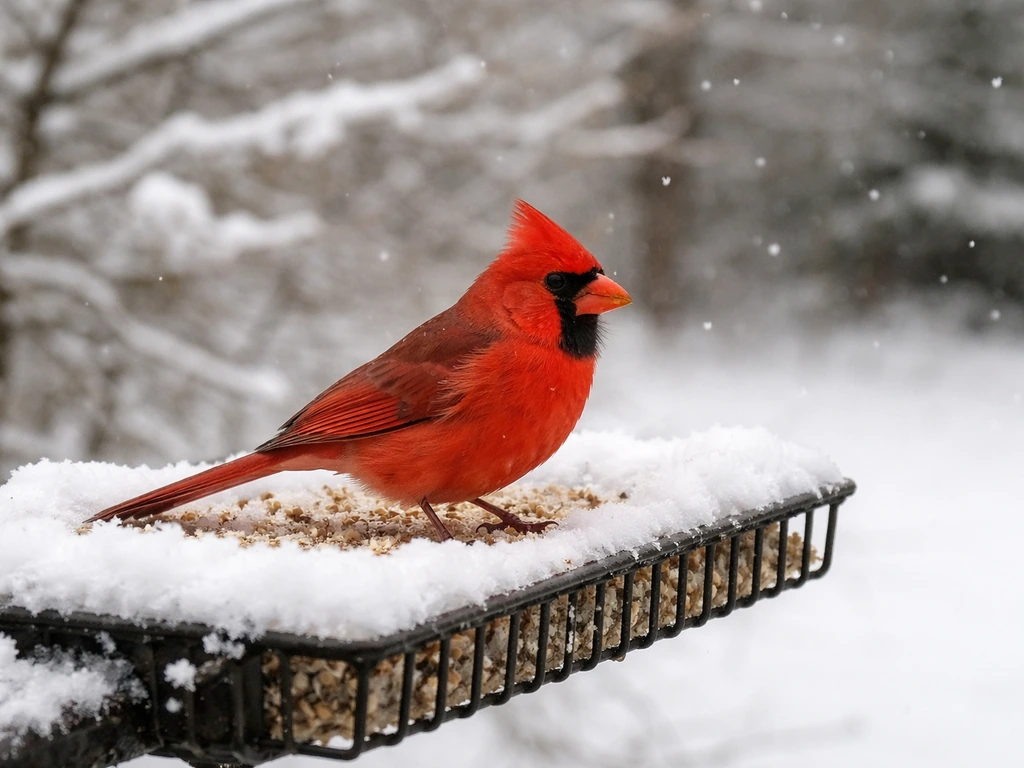
If you're trying to figure out which specific bird the 'Santa Claus bird' label is pointing to, context is your best tool. If you're searching for a “chimney bird meaning in English,” the key is to look at how the phrase is being used, because it can point to different birds depending on context. Here's a quick breakdown of the most likely candidates and how to tell them apart.
| Bird | Key Visual Traits | Region / Season | Why 'Santa Claus' |
|---|---|---|---|
| Northern Cardinal (male) | Vivid all-red body, prominent crest, orange-red bill, black mask | Eastern North America, year-round including winter | Classic red matches Santa's suit; Christmas Bird symbolism is well established |
| Bohemian Waxwing | Gray-brown body, yellow and white wing tips, red accents under tail, black-and-red eye mask, tuft crest | Northern/Arctic regions; winters south in flocks | Arrives from Lapland in winter; call compared to sleigh bells |
| European Robin (in UK/Ireland) | Small, round, bright orange-red breast | Europe, year-round | Iconic on Christmas cards; sometimes called the Christmas Robin |
| Generic 'holiday visitor' (informal) | Varies widely | Wherever the observer is located in winter | Bird spotted at holiday time and given a festive nickname casually |
If the source is American, the bird is almost certainly a Northern Cardinal. If it's British or Scandinavian, there's a stronger chance it's a waxwing or robin. If it's from a casual social media post with no regional context, it might just be whatever bird happened to show up at someone's feeder in December.
What it might mean when you see one
If a bright red cardinal landed in your yard this December and someone called it a 'Santa Claus bird,' or if you're trying to make sense of what that sighting might symbolize, here's a grounded way to think about it. In bird symbolism traditions, a cardinal appearing in winter is generally read as an encouraging sign: a nudge toward hope, a reminder of warmth and connection, or a message that someone or something good is on its way. Some people associate cardinals specifically with deceased loved ones showing up to check in during the holidays, which adds a layer of emotional resonance that many find comforting.
If the bird you saw was a Bohemian Waxwing, the symbolic read is more about heralding: something is arriving, a new phase is beginning, or the season is about to shift in a meaningful way. Their group behavior, descending suddenly in a flock to strip a berry bush bare before moving on, gives them an energy that's both abundant and fleeting. See them while you can.
A practical note: bird symbolism works best when you treat it as a lens rather than a verdict. The sight of any beautiful bird in a stark winter landscape is, at minimum, a genuine moment of natural joy. Whether you layer spiritual meaning onto that or keep it at the level of 'wow, that was gorgeous,' both responses are completely valid. The symbolic interpretations are there to enrich the experience, not to deliver instructions.
- Note the bird's color, size, crest, and any distinctive markings before reaching for symbolism
- Consider your region and the time of year to narrow down the most likely species
- Look up the specific bird you identified in a field guide or birding app for a confident ID
- Then, if you want to explore the symbolism, search for that bird's name alongside 'meaning' or 'symbolism' for richer, species-specific results
- Hold the symbolic interpretation lightly, as one possible layer of meaning rather than a fixed message
Easy to mix up: other holiday and chimney bird nicknames
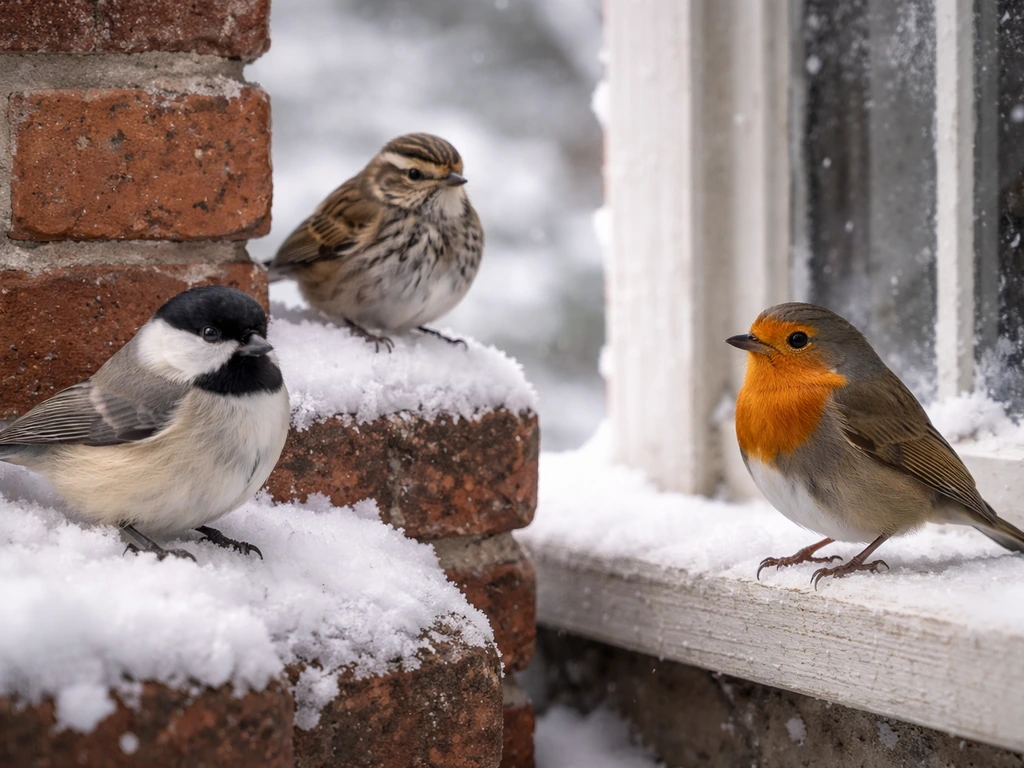
It's worth flagging a few other bird phrases that orbit this same holiday space, because they can blur together easily. Some people also connect these holiday bird nicknames to the superstition of a bird flying down a chimney, which is often discussed for the specific meaning behind the imagery chimney bird nicknames. The 'Christmas bird' label, for example, most often refers to the Northern Cardinal in American contexts but gets applied to robins in British ones. Neither is 'wrong.' They're just regional conventions. The 'Christmas tree bird' is a different creature entirely: that phrase tends to point to the golden-crowned kinglet, a tiny bird that lives almost exclusively in conifer branches and gets spotted in holiday trees by people who weren't expecting company.
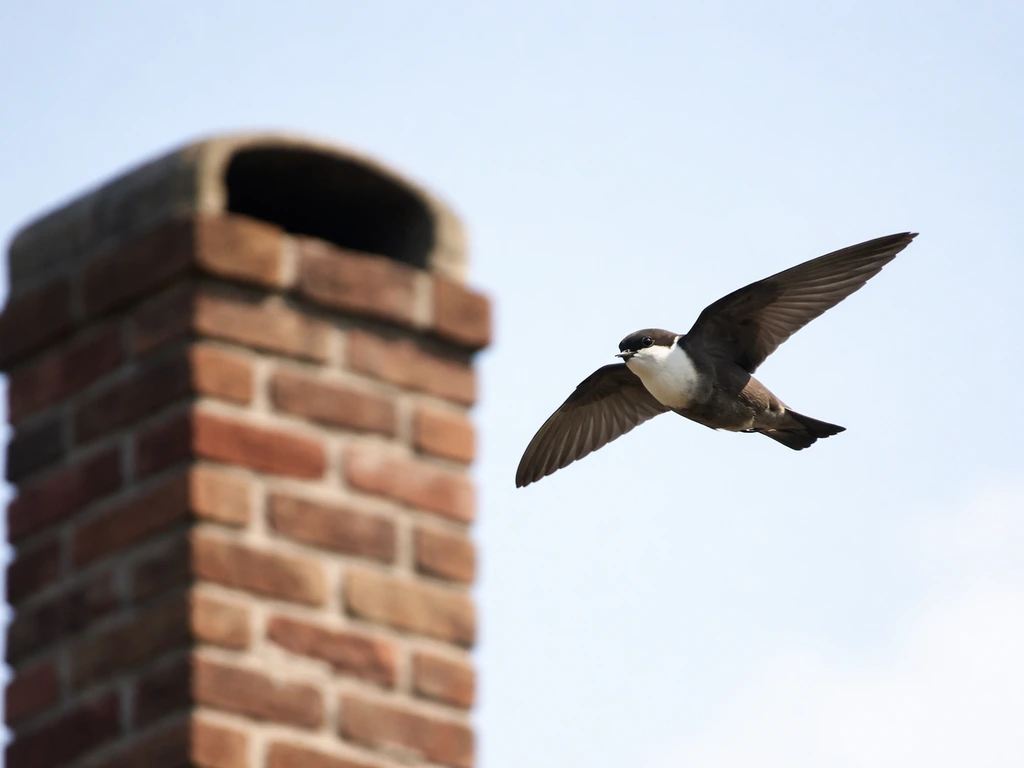
Then there are chimney birds, which are their own category and don't carry much holiday symbolism at all. Birds like the Chimney Swift nest or roost inside chimneys, and the blank" rel="noopener noreferrer">phrase 'chimney bird' usually signals a practical concern about nesting behavior or an unexpected visitor rather than a seasonal symbol. Audubon describes Chimney Swift nests as being built inside chimneys (or similar hollow towers), usually well down from the opening blank" rel="noopener noreferrer">Chimney Swift nest or roost inside chimneys. Chimney Swifts have distinctive slender, curved wings that extend about 1.5 inches beyond their tail when folded, so they're visually distinctive once you know what to look for. If you've heard a phrase like 'bird in chimney meaning' or 'bird down chimney meaning' and landed here by accident, those are genuinely separate topics with their own symbolic and practical interpretations worth exploring on their own. If you meant the “bird in christmas tree meaning” idea instead, the symbolism can point to a different species entirely.
The Santa Claus bird, by contrast, is always about the holiday season's emotional landscape: joy, arrival, abundance, and warmth. If the phrase you encountered felt festive and celebratory rather than practical or ominous, you're almost certainly in cardinal or waxwing territory, not chimney-bird territory. That's the fastest gut-check you can do to make sure you're interpreting the right phrase with the right meaning. If you are also wondering about a bird in chimney meaning, look for context clues about location, color, and whether the story is describing folklore rather than a real sighting.
FAQ
If I saw a bird called “Santa Claus bird” online, how can I tell which species it likely was without knowing the poster’s location?
Use three clues: color, behavior, and feeder or wild habitat. A vivid red, single bird staying visible on branches or near feeders in the eastern US usually points to a Northern Cardinal. A flocking bird that appears suddenly and works berry trees, with a more muted red and creamy accents, often points to a waxwing. If the post mentions an indoor or chimney-related story, it is probably not “Santa Claus bird” at all, since chimney-related phrases refer to different topics and different species.
Can “Santa Claus bird” refer to a robin or another red bird in the US?
Sometimes, informally, yes. People can loosely label any “Christmas red” bird as a Santa bird, especially outside the phrase’s most common associations. However, in American contexts the safest expectation is Northern Cardinal. If the bird in question is not showing cardinal traits (thick conical bill, strong red male look, staying in winter habitat), treat the nickname as general seasonal captioning rather than a species claim.
What’s the easiest visual way to distinguish Northern Cardinal from Bohemian Waxwing if they’re both described as “Santa” birds?
Cardinals are typically a single, stationary-looking red bird with a sturdy conical bill and a relatively clean silhouette. Waxwings more often appear in groups and can look “striped” or patterned, with a softer, rose-to-brown palette plus distinctive facial markings. Also watch for flock movement and berry-eating bursts, waxwings tend to descend and strip, then move on.
Does the symbolic meaning change depending on whether the bird is male or female, or whether it’s the first sighting of the season?
It often does in folk interpretations. Many people attach the “hope” or “gift” symbolism to the bold, winter-active male cardinal because it is more visually striking, but female cardinals can carry the same general winter-presence message. The first bird sighting of December is also commonly treated as a “herald” moment by people who enjoy seasonal meaning, even though the underlying symbolism (warmth, good news, abundance) remains the same.
Is it accurate to treat “Santa Claus bird” as a fixed, official name?
No. It is a nickname phrase, not an official field-guide species name. Treat it as a cultural label that can vary by region and by how the person encountered the bird. If precision matters to you, confirm by matching the described features (color pattern, bill shape, flocking behavior) to the likely candidates.
What if someone claims “Santa Claus bird” means a bird that brings death or a warning, is that common?
It is not the dominant meaning, but some individuals do interpret cardinals through a personal or memorial lens, including “a loved one checking in.” That can be comforting rather than ominous. If the post emphasizes fear, danger, or superstition-based rules, consider it a separate interpretation rather than the mainstream seasonal “good tidings and winter resilience” theme associated with the phrase.
Does “Santa Claus bird” have any connection to the Christmas Bird Count?
Only indirectly. The Christmas Bird Count reflects how communities pay attention to which species show up during the holiday season, it does not define “Santa Claus bird” as one official species. If you want to use the phrase responsibly, you can connect it to the broader idea of tracking winter visitors rather than claiming it comes from the event.
Should I add bird symbolism to my own interpretation, or just enjoy the sighting?
Both are valid. A practical approach is to decide what you want from the moment: if you want to enrich your experience, you can lean into the “arrival, warmth, abundance” lens. If you want to stay grounded, treat it as a real winter bird sighting and skip the spiritual or predictive angle. Either way, you get the benefit of noticing more nature details.
If I’m writing about this phrase, what context should I include to avoid confusing readers about which bird it means?
Include at least one of: your region (country or state/province), the bird’s key visible traits (red color strength, bill shape, presence of flocking), and whether the story is about a real sighting or a piece of seasonal folklore. Without context, readers may assume a different bird, especially waxwing versus cardinal.
If I want to attract a likely “Santa Claus bird” to my yard, does the phrase give any guidance?
Indirectly. Since the most common intended species is the Northern Cardinal, focus on winter-friendly habitat and food sources cardinals reliably use, such as seeds and berry-bearing plants suited to your local area, plus dense cover near feeders. Waxwings would require a different focus because they flock and strongly associate with berry trees. The phrase itself is not a care guide, so use the likely species as your starting point, then adjust for your climate and local bird regulations.
Next Article
Chimney Bird Meaning in English: Origin, Symbolism, and Use
Learn chimney bird meaning in English, including origin, figurative symbolism, common uses, and quick ways to confirm it