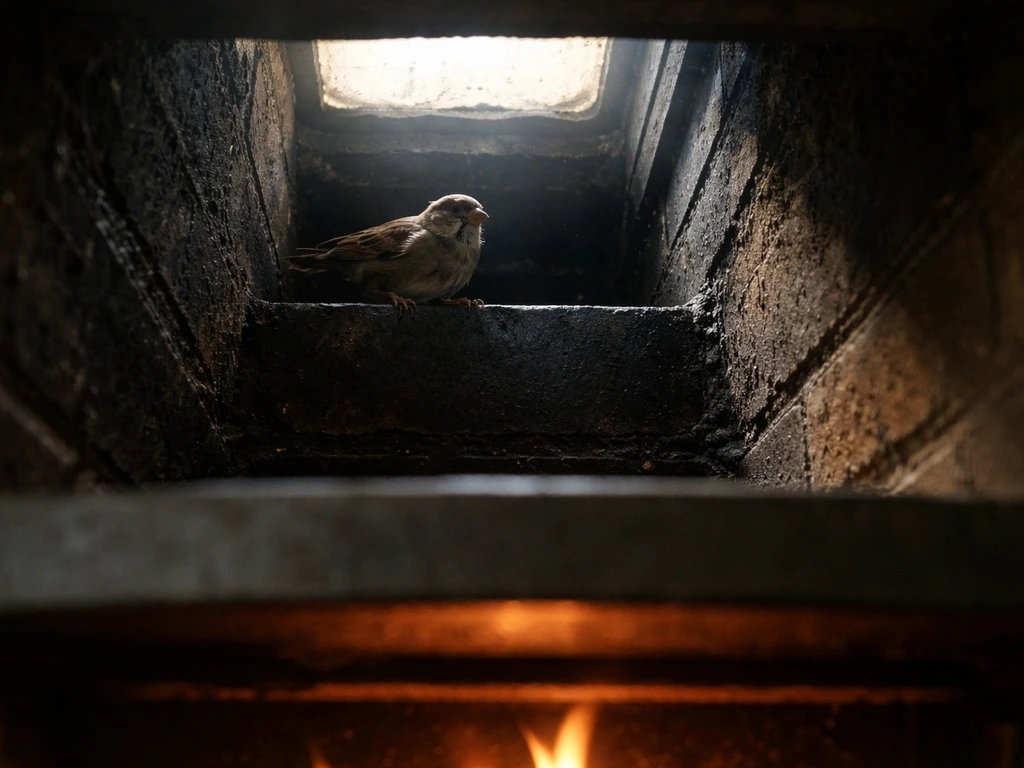
"Chimney bird" in English almost always refers to the Chimney Swift (Chaetura pelagica), a small, acrobatic bird that nests and roosts inside chimneys. It is an older common-name label, not a modern idiom or metaphor. If you ran across the phrase in a natural history book, a wildlife article, or a homeowner forum about strange sounds in the fireplace, you are almost certainly dealing with this one literal meaning: the bird that lives in chimneys.
Chimney Bird Meaning in English: Origin, Symbolism, and Use

Marcus Whitmore
16 Jun 2026
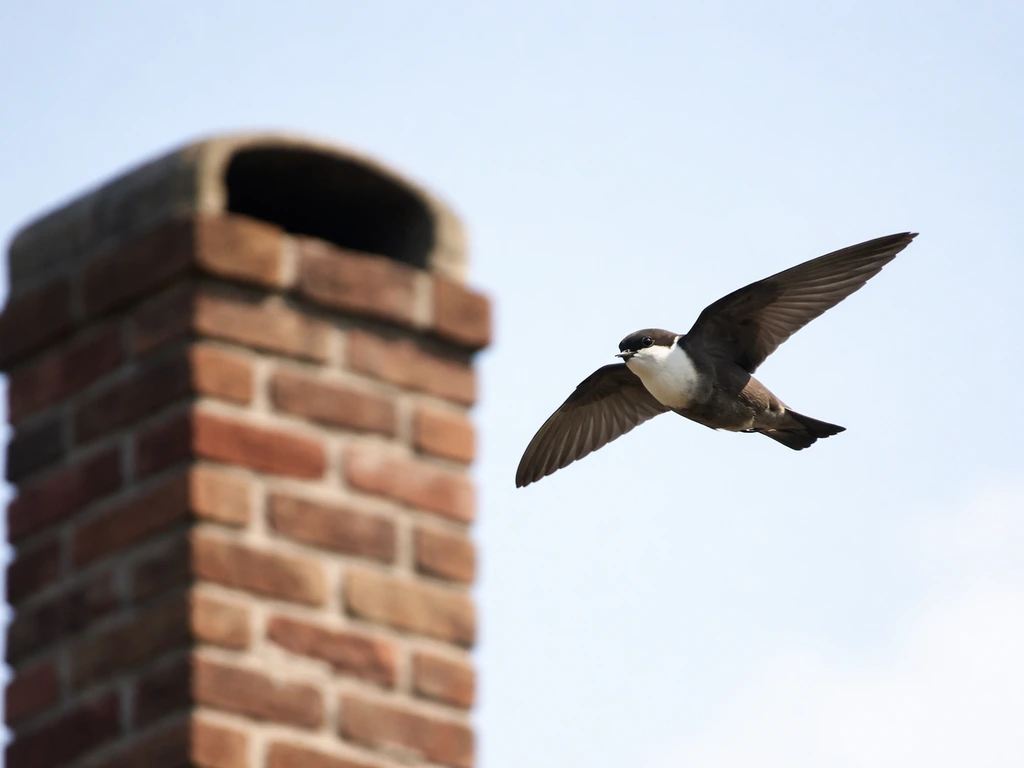
What "chimney bird" actually means in English
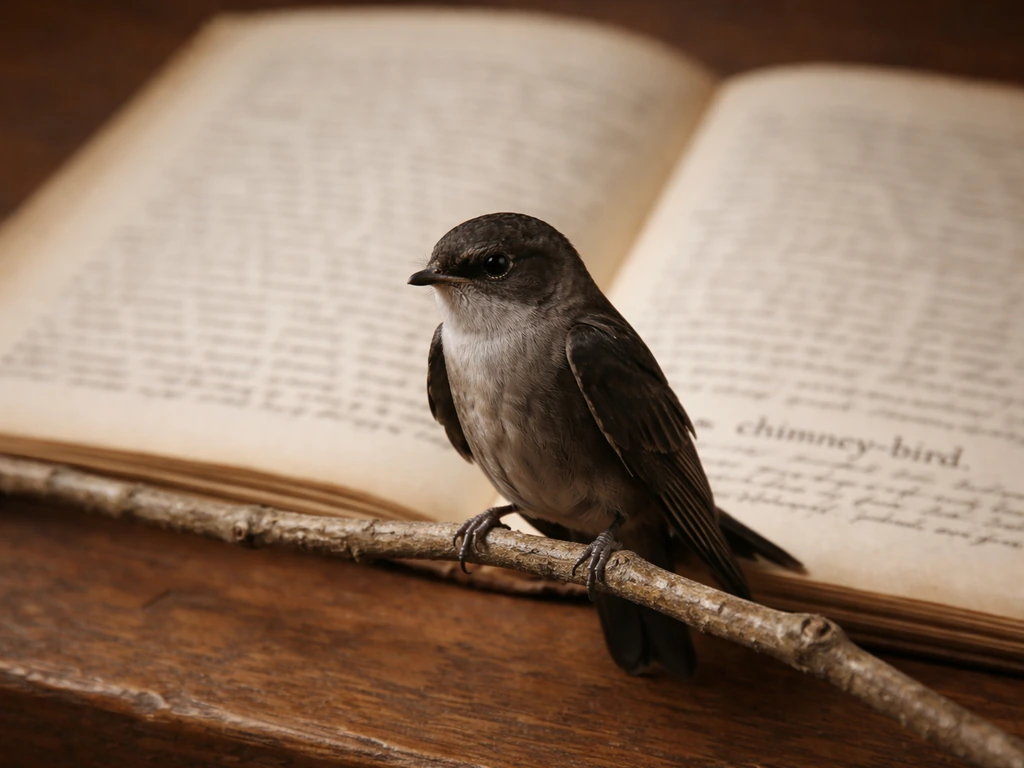
At its most direct, "chimney bird" is an old English common name for the Chimney Swift. Historical ornithological texts list it plainly, sometimes as "chimney-bird" (hyphenated), alongside the species' Latin name. One 18th-century taxonomic listing reads something like "Hirundo pelasgia… The Chimney Bird," treating the phrase as a proper species label rather than descriptive slang. Benjamin Smith Barton's late 1700s writing and later natural history books such as "Our Own Birds: A Familiar Natural History of the Birds of the United States" both use "chimney-bird" as a recognizable common name for the swift. An 1800s-era scientific journal excerpt also attests the form “chimney-bird” as a common name for the Chimney Swift chimney-bird (hyphenated) is used as a recognizable common name for the swift.
So if you are looking for a dictionary-style translation: chimney bird = Chimney Swift. It is a species name in informal clothing, not a poetic phrase. Modern ornithology dropped "chimney-bird" in favor of the current standardized common name "Chimney Swift," which is why the older label can confuse readers who encounter it in historical texts today.
Where the term comes from
The label grew directly out of the bird's behavior. Chimney Swifts shifted from nesting in hollow trees to nesting almost exclusively inside human-built chimneys as European settlers expanded across North America. The association was so obvious and consistent that early naturalists simply called it what it was: the chimney bird. The related term "chimney-swallow" also circulated in older texts, reflecting the fact that swifts were once grouped loosely with swallows by non-specialist observers, even though the two are not closely related. Both labels appear in the same 1800s ornithological sources, sometimes on the same page.
This kind of folk-naming is common in English bird history. People named birds after the most visible or unusual thing they did, so you get terms like chimney swift, barn swallow, and house sparrow all following the same pattern. "Chimney bird" is just the informal, pre-standardized version of that naming impulse.
Figurative meanings and symbolism
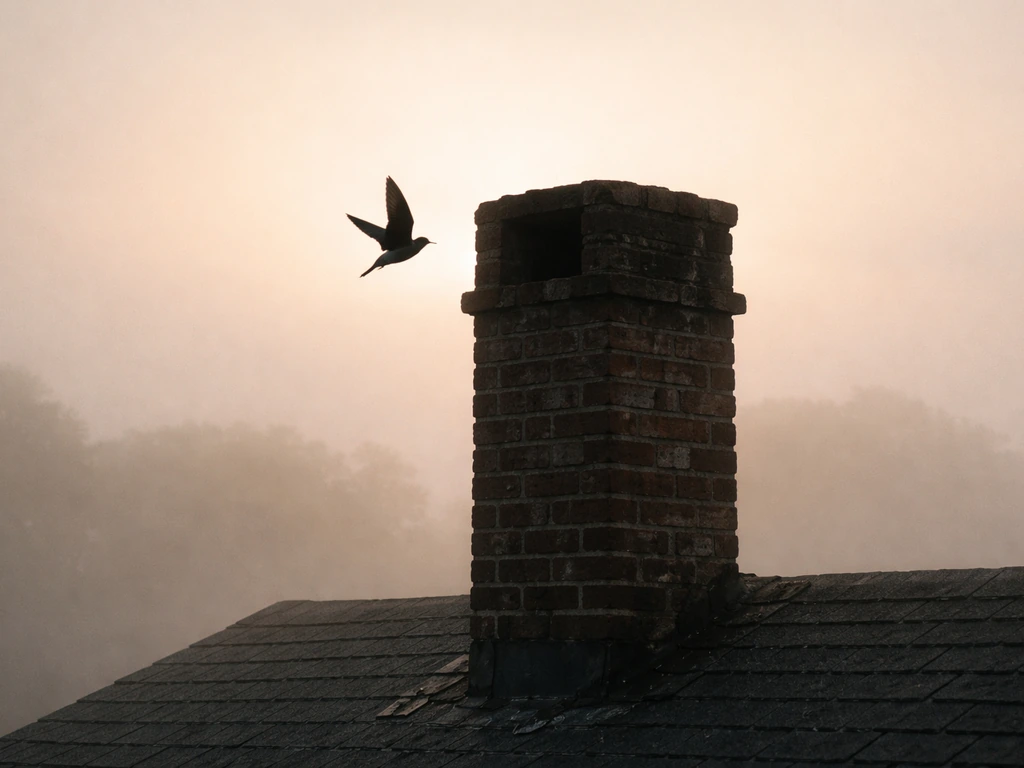
Here is the honest answer: "chimney bird" does not carry a well-established figurative or symbolic meaning the way that, say, a raven or a robin does. It does not appear in standard idiom dictionaries as a metaphor for a personality type, a life situation, or a cultural archetype. The phrase stayed in the practical, literal lane.
That said, the Chimney Swift itself has picked up some loose symbolic associations over time. Because it spends most of its life airborne, barely touching down except to cling to vertical surfaces inside chimneys, it is sometimes associated with restlessness, adaptability, and a kind of humble ingenuity (finding a home where others see only infrastructure). Some wildlife educators frame the swift as a symbol of living in close relationship with humans, for better or worse. If a writer uses "chimney bird" figuratively, that imagery of perpetual motion and quiet cohabitation with people is the most likely symbolic territory they are drawing on.
There is also a seasonal dimension worth noting. Chimney Swifts are migratory birds. Their arrival in spring and departure in autumn have made them informal seasonal markers in communities where large flocks roost together before migration. If you see "chimney bird" used in a seasonal or weather-related context, that migration symbolism is probably what the writer has in mind.
Where you are most likely to run into this phrase
The contexts break down pretty neatly into a few categories:
- Old natural history texts and ornithology books (1700s to early 1900s): used as a straightforward common name for the swift, often hyphenated as "chimney-bird."
- Wildlife and animal-control websites today: "chimney bird" is shorthand for any bird (often a Chimney Swift) that has taken up residence inside a flue or fireplace, usually in the context of humane removal or prevention.
- Homeowner forums and Reddit threads: people describing sounds coming from their chimney will write something like "there's a chimney bird stuck in there" without necessarily knowing the species name. The Wisconsin Humane Society and similar organizations address this exact scenario.
- Conservation and birding content: Audubon-affiliated sources discuss chimney swifts in the context of protecting chimneys as habitat, and "chimney bird" occasionally appears as a casual shorthand.
- Casual or humorous online posts: the phrase pops up in memes or light-hearted posts, typically in a literal (if jokey) sense about a bird near or in a chimney.
The wildlife/household context is the one most readers today are likely to encounter. If you heard chirping from your fireplace and went searching for answers, you found this phrase because the Chimney Swift is a federally protected migratory bird in the United States, meaning you cannot legally remove it or its nest during breeding season. That legal detail is why so many animal-control sites use the term when explaining what homeowners can and cannot do.
Similar-sounding terms that are easy to mix up
A few near-matches are worth flagging so you do not end up down the wrong research path:
| Term | What it actually means | How to tell it apart |
|---|---|---|
| Chimney Swift | The modern standardized common name for Chaetura pelagica | Used in any post-1900 ornithology or wildlife source; the term "chimney bird" is the older historical equivalent |
| Chimney-swallow | An older alternative label for the same bird (or closely related swifts/swallows) | Appears in the same 1700s-1800s sources as "chimney-bird"; not a separate species |
| Bird in chimney / bird down chimney | A literal household situation: a bird of any species has entered your chimney or fallen into your fireplace | Context is always practical (removal, distress, noise) rather than taxonomic |
| Pie bird | A ceramic kitchen tool shaped like a funnel or open-mouthed bird, used to vent steam from pies | Has nothing to do with real birds or chimneys; purely a baking implement |
| Chimney bird guard / cowl | A physical device installed on a chimney cap to prevent birds from entering | A hardware product, not a bird name; common in UK home-maintenance contexts |
The trickiest mix-up is between "chimney bird" as a species label and "bird in chimney" as a household problem. In that household-problem sense, the phrase “bird in chimney meaning” usually points to a live Chimney Swift or other trapped bird that needs safe removal guidance. If you are instead wondering about a bird in a Christmas tree meaning, that is a different symbolism or tradition than the “chimney bird” species label described here. The research path and the solution are different. If you are reading about bird taxonomy, you want information about the Chimney Swift specifically. If you are dealing with a live bird in your home, you want wildlife removal guidance, and the species might not even be a swift. Related topics like what it means symbolically when a bird comes down a chimney into your home, or the significance of a bird found inside a house, cover that more spiritual or folklore-based angle separately. If someone mentions a bird coming down the chimney in a symbolic or folklore sense, that is usually a different meaning than the Chimney Swift name bird comes down a chimney. Some readers also look up what it means when a bird comes down a chimney in folklore, which can lead to popular associations with Santa Claus stories.
How to quickly confirm which meaning you are dealing with

The fastest way to figure out which "chimney bird" you found is to look at the three or four sentences around the phrase. Here is a simple decision process:
- Does the text mention roosting, nesting, or a specific bird species in the same breath? That is the Chimney Swift (species/common-name usage). Search "Chimney Swift Chaetura pelagica" to confirm.
- Does the text describe a sound, a smell, a blocked flue, or getting a bird out of a fireplace? That is the household wildlife context. Search "bird in chimney humane removal" or check the Wisconsin Humane Society's guidance.
- Does the text use "chimney bird" in a historical or scientific list alongside Latin names? That is the old ornithological common name. Cross-reference with a natural history archive or the Wikipedia entry for Chimney Swift.
- Does the text seem poetic, metaphorical, or part of a story? Check whether the author is a known nature writer or folklorist and look for surrounding symbolism (migration, seasons, flight) to understand the figurative intent.
- Still unsure? Search the exact phrase "chimney bird" plus one surrounding keyword ("roost," "swift," "fireplace," or the author's name) and scan the first few results. The pattern will become clear fast.
One thing worth keeping in mind: because "chimney bird" never became a fixed idiom with a metaphorical meaning in standard English usage, you are unlikely to be missing a hidden figurative layer. Unlike bird phrases such as "early bird" or "rare bird," this one stayed tied to its literal roots. The phrase means what it looks like it means: a bird connected to a chimney. The only real question is whether that connection is taxonomic, behavioral, or practical, and context answers that quickly.
FAQ
If I see “chimney bird” in a book or forum post, should I assume it is the Chimney Swift?
Usually yes. In modern English, “chimney bird” is most often shorthand for the Chimney Swift (Chaetura pelagica), not a metaphor. If the surrounding text mentions sounds in the fireplace, nesting, or chimney use, it is almost certainly referring to the bird.
What does “chimney-bird” with a hyphen mean, is it different from “chimney bird”?
In older natural history writing, you may see “chimney-bird” hyphenated or treated like a formal common name beside the Latin species name. That stylistic choice does not change the meaning, it is still the Chimney Swift being labeled by its habitat.
How can I tell whether “chimney bird” is about the bird species or about a home problem?
The phrase by itself does not tell you if the author is describing a taxonomic label, a household incident, or a folklore scene. Check for clues such as dates and migration talk (species and seasonal presence), legal or removal language (home safety), or symbolic language (less likely to be about the real bird).
Can I legally remove a chimney swift or its nest if I find one in my chimney?
If someone is trying to remove what they think is a “chimney bird,” the key caveat is timing. Chimney Swifts are protected as migratory birds in the US, and interfering during nesting or breeding season can be illegal. The safest next step is to contact wildlife control or a local extension office before doing anything in or around the chimney.
What if the bird I see in the chimney is not a Chimney Swift, how do I avoid misidentifying it?
Even if you hear chirping in or near a chimney, the occupant might not be a Chimney Swift, it could be another bird species using a vertical cavity. Don’t rely on the nickname alone, instead confirm the bird by appearance and behavior, or have a wildlife professional identify it.
Is “chimney bird” the same thing as “bird in chimney” when it comes to solving the problem?
Household phrasing like “bird in chimney” can lead to different guidance than the species label “chimney bird.” If the problem is an animal stuck in a home or trapped in a chimney, your plan should focus on safe exclusion and retrieval methods for live animals, not historical taxonomy.
What words around the phrase are the strongest hints that the meaning is literal and seasonal?
Look for nearby keywords. Words tied to seasons and migration, like arrival in spring or departure in autumn, often signal the seasonal marker use. Words tied to nest sounds, droppings, or chimney access usually signal the literal bird meaning.
If “chimney bird” is used in a folklore or spiritual way, does it still mean the Chimney Swift?
If the context sounds like folklore, spirituality, or “a bird came down the chimney into the home,” that is typically not the same meaning as the bird’s historical common name. In that case, the “chimney” is acting as a narrative element, not as habitat identification.
Next Article
Bird in Chimney Meaning: Symbolism and What to Do Now
Bird in chimney meaning explained: symbolism and what to do if a real bird is stuck, safely and fast.