A 'day bird' most commonly means one of two things: a diurnal bird (any bird species that's active during daylight hours, as opposed to nocturnal birds like owls), or a person who is naturally active and alert during the day rather than at night. Think of it as the counterpart to 'night owl' or 'night bird. Day bird insect observation sections in Environmental Impact Assessment materials use “blank" rel="noopener noreferrer">Day bird/insect observations” as a literal header for scheduled field observations. ' If you saw it written as one word, 'Daybird,' that's almost certainly a brand or business name, not a phrase with a symbolic or linguistic meaning.
Day Bird Meaning: What It Can Mean and How to Tell

Marcus Whitmore
18 Jun 2026
What 'day bird' usually means
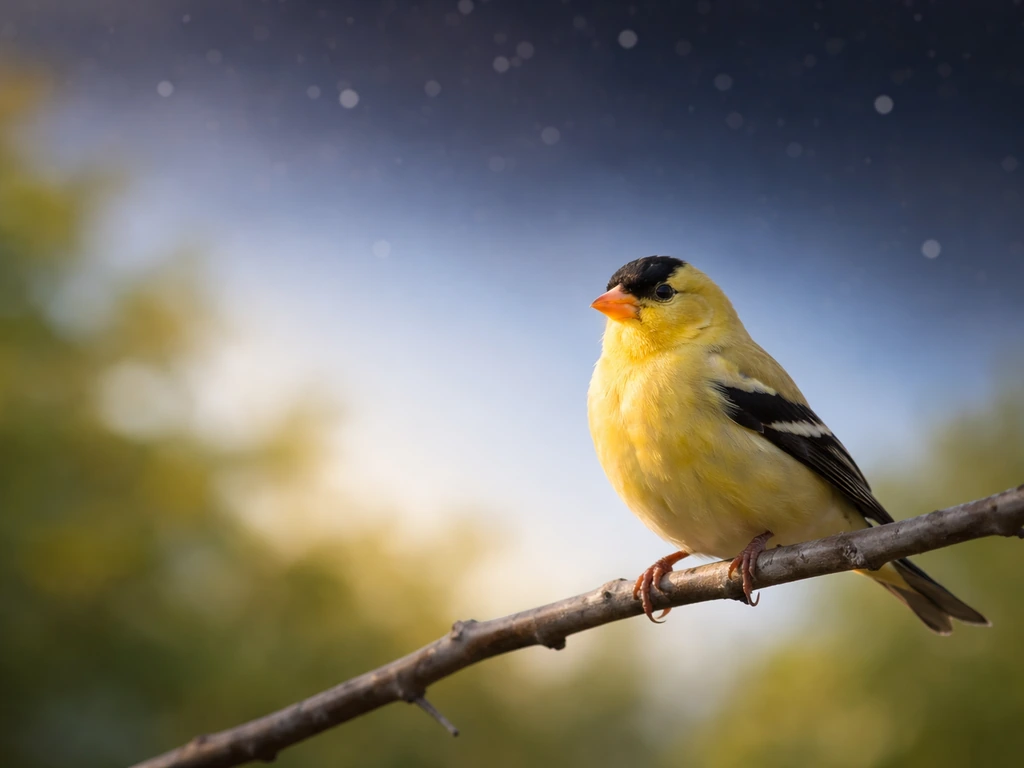
In everyday use, 'day bird' works on two levels. The first is purely descriptive and literal: in birdwatching, wildlife surveys, and natural history writing, 'day bird' simply labels any bird that is active during daylight hours. Field documents use phrasing like 'diurnal (day) bird' to distinguish these species from crepuscular or nocturnal ones. It's technical shorthand, not a metaphor.
The second use is figurative. When someone says 'I'm more of a day bird than a night owl,' they mean they function better earlier in the day. When someone says 'I'm more of a day bird than a night owl,' they mean they function better earlier in the day, which is closely related to the idea behind early bird gets the wood on meaning.
This sits in the same family of chronotype language as 'early bird,' 'lark,' and 'night owl. ' Dictionary references treating 'night bird' as a word entry often list 'day bird' explicitly as its antonym, paired with 'lark' as an equivalent. So if you're reading a Reddit thread or a casual blog post and someone calls themselves a day bird, they're almost always talking about their personal energy and sleep schedule, not actual birds.
'Daybird' vs 'day bird': spelling and phrase variations
The spelling difference is one of the most reliable clues you have. Two words, lowercase ('day bird') is the version you'll find in figurative language, ornithology notes, and metaphor. One word, capitalized ('Daybird') is almost always a proper noun: a brand name, a business, or a location. For example, 'Daybird' is a registered tinted skincare product (a zinc-oxide skin tint marketed as part of an AM routine), and it also appears as the name of a Szechuan hot chicken restaurant in Los Angeles. Both of those are proper nouns that happened to be inspired by the daytime-bird concept, but they carry no symbolic or linguistic meaning on their own.
The practical takeaway: if you see 'Daybird' with a capital D and no spaces, do a quick search for it as a brand or business name. If you see 'day bird' in lowercase with a space, read the surrounding context for ornithological or metaphorical cues. That single distinction resolves most of the ambiguity right away.
Bird species and cultural connections to 'day bird'
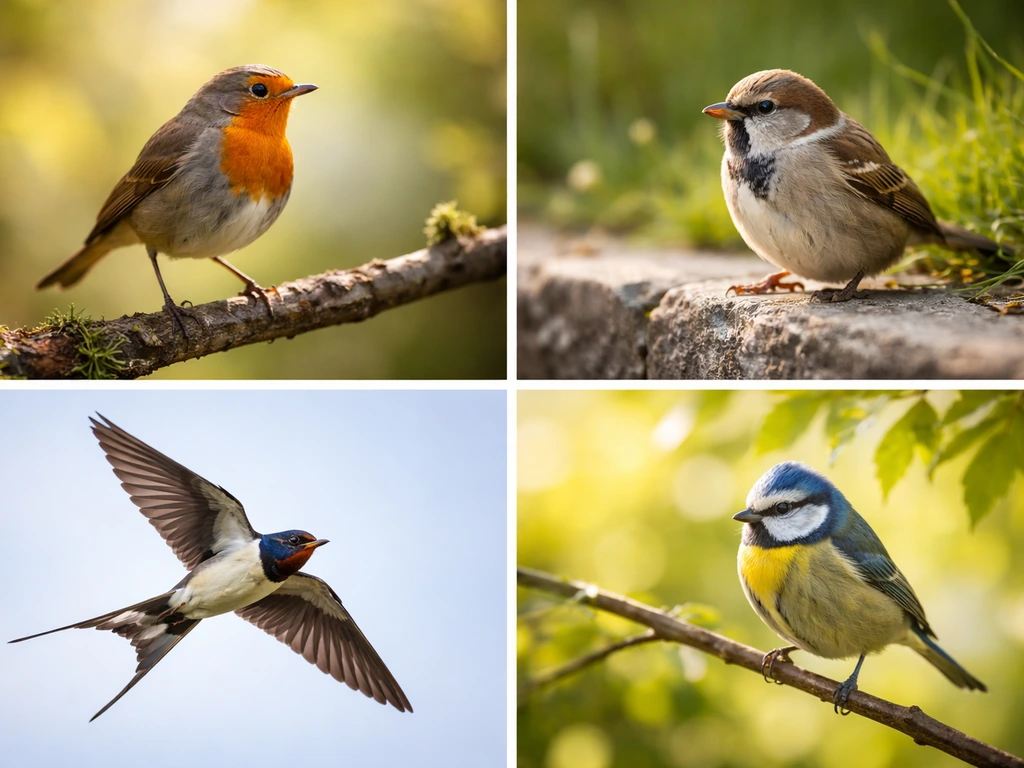
No single species 'owns' the day bird label, but certain birds are culturally embedded in the idea of daytime activity. Robins, sparrows, swallows, and songbirds generally are the archetypal day birds: they're the ones filling the air at sunrise, active all through daylight, and silent after dark. The lark, in particular, has long been the symbolic day bird in English literature and folk language, to the point where 'lark' functions as a synonym for a morning-active, daylight-loving person. If you're looking for the morning bird meaning, the phrase usually points to being active at dawn rather than to a specific species morning-active, daylight-loving person.
Interestingly, some birds complicate the clean day-versus-night divide. Burrowing owls, for instance, are technically classified as diurnal (day-active) by wildlife agencies even though owls are culturally coded as night birds. This is worth knowing if you're in an ornithological or scientific context: 'day bird' there means literally active during daylight hours, and it can apply to surprising species. An academic paper studying birds of Borneo uses exactly this wording, 'all of these birds are day bird,' to categorize them against nocturnal species.
How people actually use 'day bird' in conversation and slang
In informal conversation, 'day bird' functions as a personality label, the flip side of 'night owl.' You'll see it in blank" rel="noopener noreferrer">Reddit discussions where people ask whether you're a day bird or a night owl, and the meaning is entirely about chronotype: when you feel most alive, most productive, most yourself. It's a gentler, slightly less common alternative to 'morning person' or 'early bird,' and it carries a similar symbolic warmth. If you've come across the 'early bird gets the worm' proverb, the 'day bird' framing is a natural extension of that same idea, just broader in scope than strictly about waking up early.
There's also a playful, meme-style use where 'day bird' and 'night bird' are set up as characters or roles, like the classic format of 'night bird watches day bird take a bath.' In that context, neither label means anything technical. It's just a way of anthropomorphizing diurnal and nocturnal animal behavior for humor. The phrase carries no deeper idiom meaning there; it's pure visual and narrative play.
Children's literature uses the day bird concept too. In guided reading texts based on 'The Owl Who Was Afraid of the Dark' by Jill Tomlinson, the idea of 'wanting to be a day bird' or a 'night bird' is used as a genuine character identity question, reinforcing that even for young readers, 'day bird' reads as a type of being, not just a category of species.
What daytime birds symbolize
Across cultures and throughout literary history, birds active in daylight have been associated with a consistent cluster of themes: visibility, openness, productivity, optimism, and connection to the living world. Daytime birds sing at dawn, which links them to new beginnings and opportunity (the same logic behind 'the early bird gets the worm'). They're seen in full light, so they also symbolize honesty and transparency in ways nocturnal birds, associated with mystery and the hidden, typically don't.
In natural history writing, the day bird is often the counterpoint to the creature of the night: one old text frames the contrast as 'the day bird' against nocturnal animals in a way that implicitly positions daytime activity as normal, familiar, and reassuring. This is a deeply cultural bias (plenty of nocturnal animals are remarkable), but it reflects the symbolic weight that daytime activity carries in human storytelling. Light equals clarity, safety, and vitality. The day bird inherits all of that.
In modern chronotype discussions rooted in psychology and biology, being a 'day bird' or 'lark' is associated with conscientiousness, early productivity windows, and alignment with conventional social schedules. In those same modern chronotype discussions, being an early bird figuratively describes someone who wakes up and performs best earlier in the day. It's not a moral judgment, just a descriptor, but culturally it tends to carry positive connotations of discipline and energy, much like the early bird proverb rewards early risers with worms.
How to figure out what 'day bird' means in your specific context

The fastest way to pin down the intended meaning is to look at three things: the spelling, the surrounding words, and the medium.
| What you see | Most likely meaning | Quick check |
|---|---|---|
| 'Daybird' (one word, capital D) | Brand name or business (skincare, restaurant, company) | Search the term as a proper noun |
| 'day bird' near 'night owl,' 'chronotype,' 'lark,' or 'early bird' | Figurative: a daytime-active person/personality type | Read the sentence as a personality label |
| 'day bird' in a wildlife survey, field guide, or ecology document | Literal: a diurnal bird species active during daylight | Check if the document is ornithological or scientific |
| 'day bird' in a heading like 'Day bird/insect observations' | Fieldwork/survey schedule terminology | It's a data collection category, not a metaphor |
| 'day bird' and 'night bird' as characters in a meme or humor post | Playful personification, no fixed meaning | Treat it as character roles, not established idiom |
If you're still unsure, ask yourself whether the writer is talking about an actual bird, a type of person, or a named product or place. Those three categories cover virtually every real-world use of the phrase. 'Day bird' as an actual species category, 'day bird' as a personality/chronotype metaphor, and 'Daybird' as a proper noun almost never overlap in context. Once you identify which category fits, the meaning locks in immediately.
One more useful signal: if the phrase appears alongside related bird idioms, like a discussion of morning birds, early risers, or the early bird proverb, you're almost certainly in figurative territory. That's a well-worn corner of bird-in-language tradition, and 'day bird' fits right into it as an informal, conversational way to describe someone who thrives in the light.
FAQ
If I see “day bird” in a science or birdwatching note, does it always mean diurnal?
In ornithology writing, “day bird” usually points to diurnal activity, but authors often tighten the wording to “diurnal” or “day-active” when accuracy matters (especially for crepuscular species). If the text compares “day” birds to “night” or “nocturnal” ones, treat it as an activity-timing label, not a behavioral personality.
Does “day bird” always mean “morning person”?
Not necessarily. Some people use “day bird” as shorthand for “morning person,” but chronotype is about your best functioning window, not just whether you prefer mornings. If the speaker mentions late-night productivity, irregular sleep, or shift work, “day bird” may be used loosely rather than precisely.
How can I tell whether “day bird” is literal or about someone’s personality?
Look for whether the surrounding sentence uses human cues (sleep, energy, productivity, “me,” “I’m,” “work better”). If it includes times like sunrise, daylight hours, or specific behavioral traits, it’s more likely literal. If it includes preferences or self-description, it’s figurative.
What’s the quickest way to confirm whether “Daybird” is a proper noun?
The most reliable “brand” clue is capitalization and spacing. “Daybird” (one word, capital D) is commonly a proper noun (product, restaurant, place). “day bird” (two words, lowercase) is usually the phrase, so if you see multiple capitalized instances or a logo-like context, consider it a name.
What if the source talks about dawn, dusk, or “twilight birds” alongside “day bird”?
For near-miss cases, treat “day bird” as a broad category and see if the text lists specific timing like “active at dawn and dusk.” If it’s explicitly paired with “crepuscular” or “twilight,” the writer is likely separating those from true diurnal birds.
Can “day bird” still make sense for shift workers or people with irregular schedules?
Yes, “day bird” is often used in online posts, even when sleep timing is unusual. The meaning typically stays figurative (chronotype and alertness), so shift workers might call themselves day birds if their primary awake window aligns with daylight.
Is “day bird” a judgment, or just a description?
Watch for it being used as a compliment versus a neutral descriptor. Many users mean it positively, but it’s not a scientific ranking. If the tone debates “discipline” or “good habits,” that’s cultural framing, not a strict definition.
How do I interpret “day bird” in a meme-style or story format?
Some writers treat the labels like characters in a joke, “day bird” versus “night bird,” where the point is humor and the bird behaviors are anthropomorphized. If the sentence is clearly playful or meme-like, do not infer that it refers to a chronotype or a specific species.
What does “day bird” mean in children’s literature or classroom reading activities?
In children’s contexts, “day bird” usually functions as an identity question (who they want to be, or when they feel best) rather than an actual animal category. If the book is using an “owl and dark” theme, expect the metaphor to be motivational and character-based.
If I’m still confused, what’s a simple decision process to pin down “day bird meaning”?
If you’re unsure after checking spelling and context, the fastest decision aid is to classify the sentence into one of three buckets: literal wildlife timing, figurative chronotype/personality, or named brand/place. Once you pick the bucket that matches the nearby nouns and grammar, the meaning becomes straightforward.
Next Article
She Is an Early Bird Meaning and How to Use It
Learn she is an early bird meaning, usage tones, examples, and similar phrases like early riser and up and at