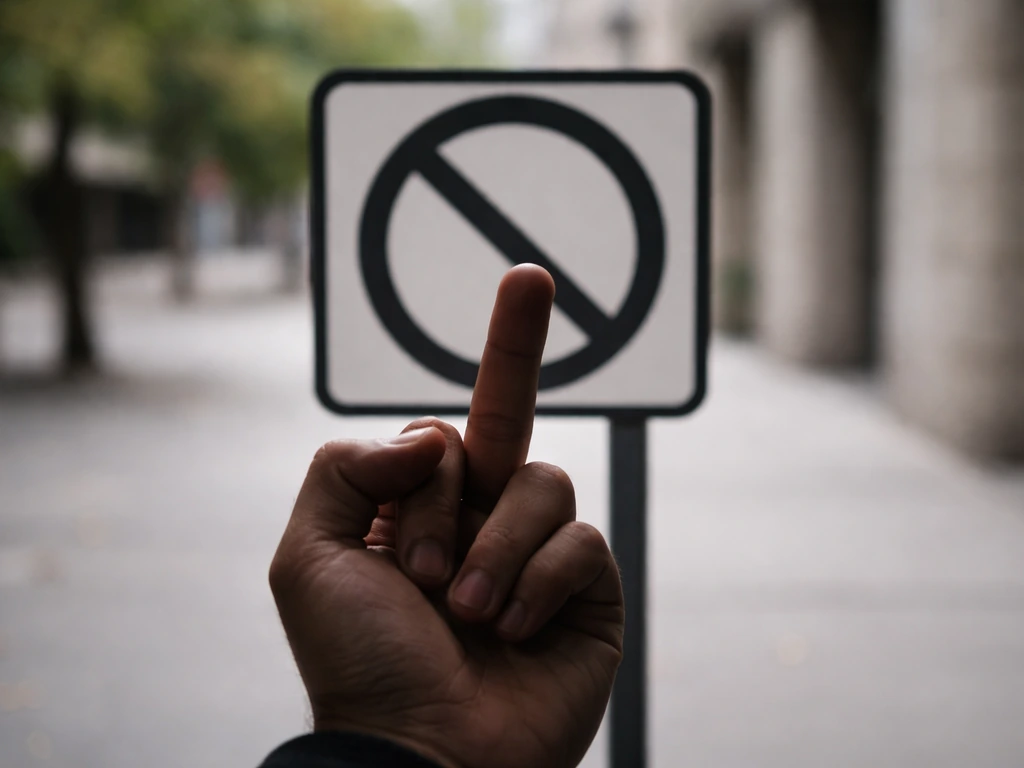
To flip them the bird means to make the middle-finger gesture at someone as an expression of contempt, anger, or dismissal. When someone says they want to "flip them the bird," or that somebody "flipped them the bird," they're talking about extending the middle finger upward with the other fingers folded down, the universally recognized insult also known as "giving someone the finger" or "flipping someone off." The word "them" just specifies the target: the person or group on the receiving end of that contempt.
Flip Them the Bird Meaning: Intent, Origin, and What to Say

Marcus Whitmore
1 Jun 2026
What "flip them the bird" actually means in everyday use
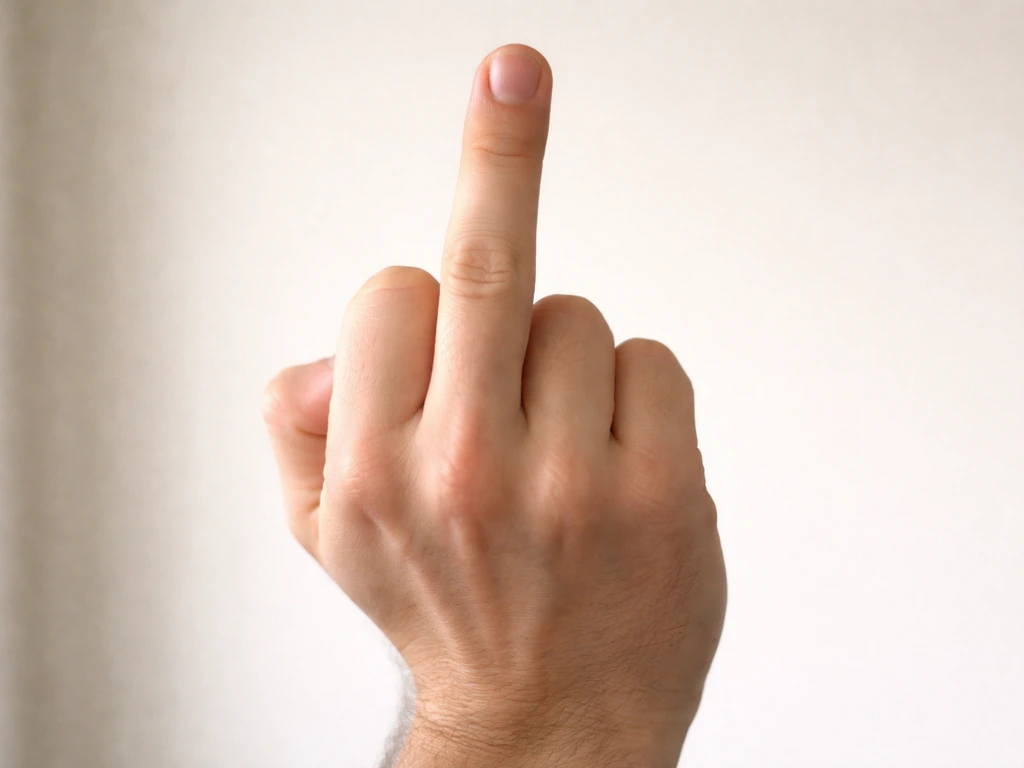
Merriam-Webster defines "flip the bird" as making an offensive gesture at someone by pointing the middle finger upward while keeping the other fingers folded down. Cambridge Dictionary phrases it as "flip/give someone the bird," making clear the phrase is designed to have a target, a person on the receiving end of the insult. Dictionary.com maps it directly to "give someone the finger," which is exactly right: all three phrases mean the same thing.
In real conversation, people use "flip them the bird" in two overlapping ways. First, literally: someone physically makes the gesture at another person. Second, figuratively: someone says the phrase to describe what they felt like doing, or what they wish they had done, without ever raising a finger. "I wanted to flip them the bird and walk out" is a totally common sentence that conveys white-hot frustration without any actual gesture involved. Both uses carry the same weight: contempt, dismissal, a hard "no" aimed at a specific person or group.
It's worth being clear that even when used figuratively, this is not a mild complaint. Dictionaries anchor the phrase squarely in the territory of "fuck you" and "fuck off." Saying you want to flip someone the bird is communicating a degree of hostility that most listeners will take seriously, even if no hand ever moves.
Where the gesture and the phrase came from
The history here is a little layered. The modern middle-finger gesture as we recognize it gained cultural traction widely in the 1960s, but the "bird" euphemism for a dismissive, contemptuous gesture is older. One thread traces back to an 1860s expression: "give the big bird," which originally meant to hiss at someone, like the hissing of a goose, as a sign of disapproval or mockery. Stage performers used it to describe a hostile audience reaction. Over time, the "big bird" concept merged with the physical hand gesture to produce what we now call flipping the bird.
The middle finger itself has an even longer history as a symbol of obscenity and contempt, with some scholars tracing ancient uses back to Roman and Greek sources. But for practical purposes, in modern American and British English, "the bird" became a clean, publishable euphemism for the gesture, a way to describe it in newspapers, on television, or in polite conversation without saying anything explicitly obscene. Mental Floss notes that "the bird" as a label for the middle finger is widely recognized precisely because it's a useful workaround. You're not saying the gesture outright; you're naming it with a bird.
Why "them" changes the feel of the phrase
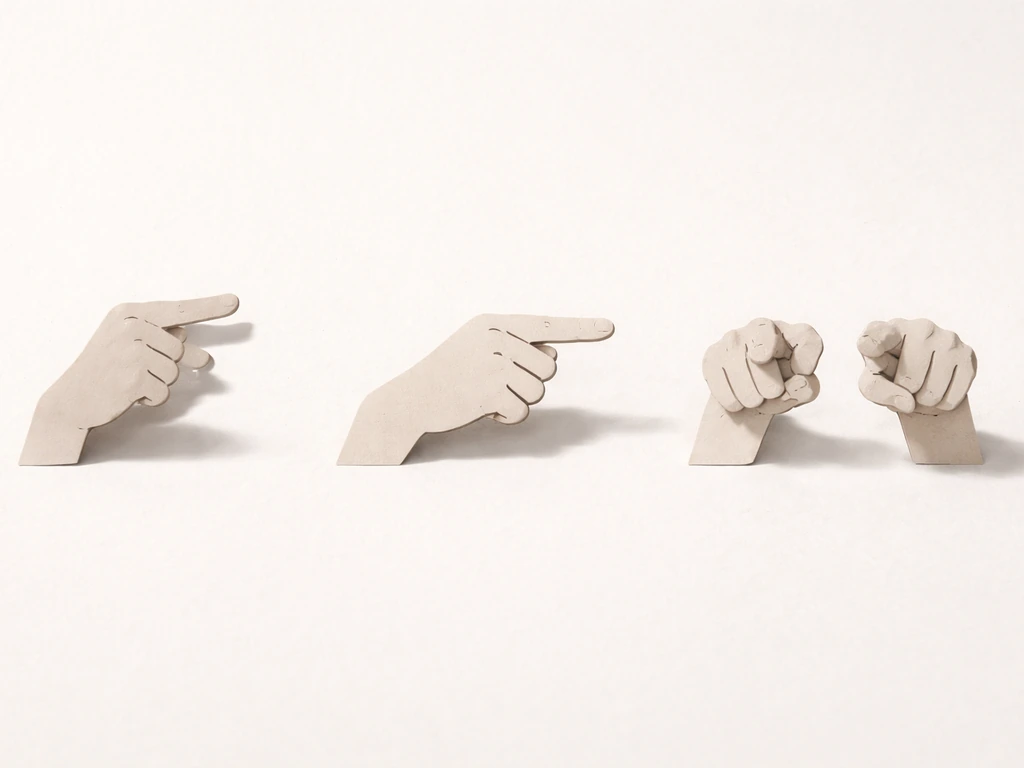
The indirect object in this phrase does real work. "Flip the bird" is the basic construction. "Flip someone the bird" gets more specific. "Flip them the bird" is the most pointed version, because "them" refers back to a person or group already established in the conversation. It implies the target is known and shared between the speaker and listener, the boss who just made an unfair call, the driver who cut you off, the company that denied the claim. There's an intimacy to "them" that makes the phrase feel sharper than the generic construction.
Tone-wise, "flip them the bird" often signals that the speaker has passed the point of trying to resolve the situation. It's retrospective frustration or fantasy frustration, "I should have just flipped them the bird", more than a live threat. That said, context still determines how aggressive it reads. Someone venting to a friend uses it differently than someone saying it in the moment of a confrontation.
Related phrases like "flip me the bird" or "flip someone the bird" follow the same logic with a different target. If you specifically meant the “flip me the bird meaning,” it follows the same “middle finger as an insult” idea, just with a different target. The meaning stays constant; only the relational angle shifts. If you're exploring those slight variations in usage and tone, they each carry their own nuance worth looking at separately.
The family of phrases it belongs to
"Flip them the bird" sits in a cluster of related expressions that all point toward the same gesture or attitude. The most common ones:
- Give someone the finger — direct, no euphemism, same meaning
- Flip someone off — verb-only version, no "bird" required
- Give someone the bird — swaps "flip" for "give," same gesture implied
- Flipping the bird — the gerund form, often used to describe the action in narration
- The finger — shorthand noun for the gesture itself
- Up yours — verbal equivalent, no gesture required, same contempt delivered
Beyond the gesture-specific phrases, "bird" as a concept shows up in English in other dismissive or irreverent ways. In British slang, calling someone "a bird" can be affectionate but also diminutive. The V-sign in some Commonwealth countries carries the same offensive punch as the middle finger in American contexts. And the broader idiom space around birds and insults is surprisingly rich, from "giving someone the cold shoulder" to telling someone to "take a hike," the animal and nature world has always supplied convenient euphemisms for rude dismissals. The sibling topics around "flipping the bird meaning" and "flip a bird meaning" dig further into those specific phrasings if you want to compare. If you're comparing it to related idioms, the flip a bird meaning breakdown can help you pinpoint how the wording shifts the insult.
Why "bird" stuck as the word for this
Language tends to borrow from nature when it needs a polite-ish stand-in for something impolite. "Bird" works as a euphemism for the middle finger for a few reasons. Visually, an extended middle finger with the others folded down does look vaguely like a bird's body and beak, or at least, that's the folk explanation that gets repeated. But the deeper reason is purely linguistic: euphemisms survive when they're useful. "The bird" gives speakers a way to reference the gesture in mixed company, in media coverage, in family conversations, without triggering the same social alarm as spelling out the explicit meaning.
Birds in language generally carry strong symbolic weight. They represent freedom, defiance, the spirit, and the middle finger, as a gesture, is fundamentally about defiance and rejection. So even though the specific connection between the word "bird" and the finger is partly arbitrary, it fits the cultural symbolic register that birds already occupy in English. The gesture is a declaration of independence from whatever social constraint the other person represents, and "bird" language carries just enough of that free-spirit energy to make the metaphor feel right.
How the phrase and gesture land in different places
In the United States, the gesture is almost universally understood as a serious insult. Psychology Today frames it as a conflict-signaling behavior, something that, even when the audience doesn't react outwardly, registers as provocative. In workplaces, it's a different category of problem: legal analysis has pointed out that repeated obscene gestures at work can contribute to a hostile work environment claim. A Nakase Law Firm article similarly discusses how frequent obscene gestures can implicate workplace issues such as hostile workplace risk repeated obscene gestures at work can implicate workplace issues. The San Francisco Chronicle addressed this directly, noting the middle finger has essentially no legitimate place in an office setting.
Cross-culturally, the picture gets more varied. The middle finger is widely recognized across Western Europe, Australia, and Canada with roughly the same meaning. In some parts of East Asia and the Middle East, the gesture may be understood as rude but interpreted slightly differently, or it may be less immediately recognizable. In Commonwealth countries, the two-fingered V-sign (palm facing inward) serves a similar function to the middle finger in American English, which is worth knowing if you're traveling and trying to read gestures correctly. Wikipedia's "Obscene gesture" article notes that meaning can vary significantly by region, so a gesture you assume is universal might land differently than expected.
In schools, the gesture carries real consequences in most jurisdictions. Students have faced disciplinary action for making it, and courts in the US have actually weighed in on whether it constitutes protected expression in some contexts, a genuinely complicated legal conversation. The phrase itself, used in writing or speech, sits in a grayer zone: it's clearly rude in formal settings but not legally actionable the way a physical gesture aimed at someone might be.
| Context | How it lands | Risk level |
|---|---|---|
| Casual conversation with friends | Usually understood as venting; low stakes | Low |
| Workplace (said or done) | Professionally damaging; potential HR or legal issue | High |
| School setting | Disciplinary risk; often explicitly prohibited | High |
| Online/written use | Read as hostile but less immediate than physical gesture | Medium |
| Cross-cultural contexts | May be misread or carry different weight | Medium to High |
What to say instead when you're that frustrated
If the urge to flip someone the bird is real but the context makes it a bad idea, there are ways to communicate the same level of frustration without escalating or creating problems for yourself. Miss Manners has consistently advised against the gesture not because the feeling behind it is wrong, but because it tends to make situations worse rather than better. Here are some actual alternatives that carry weight without the blowback:
- Say it directly with words: "I'm done engaging with this" or "I'm not going to keep having this conversation" communicates finality without an insult.
- Walk away physically — leaving the situation removes you from the conflict more effectively than any gesture.
- Use a firm "no" without explanation. You don't owe anyone the satisfaction of a dramatic exit.
- Write it out privately (and don't send it) — drafting the angry message or imagining the bird-flip can release the pressure without real-world consequences.
- Name the behavior, not the person: "That decision was unfair and I'm going to say so" keeps the focus on the issue rather than becoming personal.
- Tell a trusted friend later — venting in a safe space after the fact covers the emotional need without the risk.
None of these feel as immediately satisfying as the gesture, and that's kind of the point. The middle finger is a shortcut that skips over all the more useful, more powerful things you could actually do or say. Flipping someone the bird tends to end the conversation and harden positions. If you actually want to be heard, or want something to change, most of the alternatives above work better.
FAQ
If I say it figuratively, does “flip them the bird” still count as being rude?
Yes, saying “I wanted to flip them the bird” without making the gesture is still generally understood as expressing intense contempt or dismissal, not a neutral complaint. In many settings it can sound nearly as offensive because listeners infer the same hostility even though nothing physical happened.
Does the phrase mean the same thing if I say it during an argument versus after the fact?
To many people, the phrase reads as a “you and me are done” statement. If you use it during an active argument or immediately after an incident, it can feel like an escalation or threat, even if you claim you meant it as venting.
What can I say instead if I’m furious but I don’t want to escalate?
A better substitute is to state your boundary or demand plainly, for example, “Do not contact me again,” “I’m not okay with that,” or “We’re ending this call.” These keep the same emotional heat while avoiding an obscene insult that can trigger HR, school discipline, or conflict with bystanders.
Is “flip them the bird” ever appropriate to say in professional or school settings?
Watch out for context and audience. In formal workplaces, schools, or around people who might not share your slang, using it in writing or speech can be treated as harassment or disruptive behavior, especially if it targets a specific person repeatedly.
Someone said they wanted to “flip them the bird” at me, what should I do?
If someone says “flip them the bird” about you, your best move is to de-escalate, acknowledge the emotion without endorsing the insult, and move to the issue: “I hear you’re angry. What exactly do you want to change?” Matching the hostility usually makes the situation harder to resolve.
If I use “the bird” euphemistically, will people always understand what I mean?
In most Western English-speaking places, “the bird” is recognized as the middle-finger insult, but in some regions people may not immediately connect the euphemism. Still, the safest assumption is that the target audience will understand it, especially in U.S. media or online contexts.
How does using “them” change the impact compared with a more general phrasing?
Yes. The stronger the reference to a specific target (for example “flip them” rather than “flip the bird” generally), the more pointed it becomes. If you mean “someone in general,” avoid “them” or name the issue instead of the person.
What’s a good way to handle it if I accidentally used the phrase in a text or email?
If you accidentally wrote or texted it, don’t double down. A quick repair like “That was a poor choice of words, I’m upset and I should not have said it like that. Let’s focus on the problem,” can reduce fallout, especially if you send it promptly before the message spreads.
How should I think about the meaning of the gesture phrase when traveling or dealing with international coworkers?
If you are traveling, assume the middle finger can be widely recognized as rude, but the exact interpretation may vary. When you are unsure, treat any comparable obscene hand sign as a serious insult, and keep your behavior conservative to avoid misunderstandings.
If I want results, how do I express frustration without sounding like I’m just trying to insult them?
For many listeners, the phrase implies hostility rather than a request. If you want action, pair your frustration with a concrete next step, for example, “I’m disputing this decision. Please escalate it to X by tomorrow,” so you’re heard instead of just dismissed.
Next Article
Flicker Bird Meaning: Northern Flicker Symbolism and Sightings
Understand flicker bird meaning: Northern Flicker symbolism, phrase uses of flicker, and how to interpret sightings thou