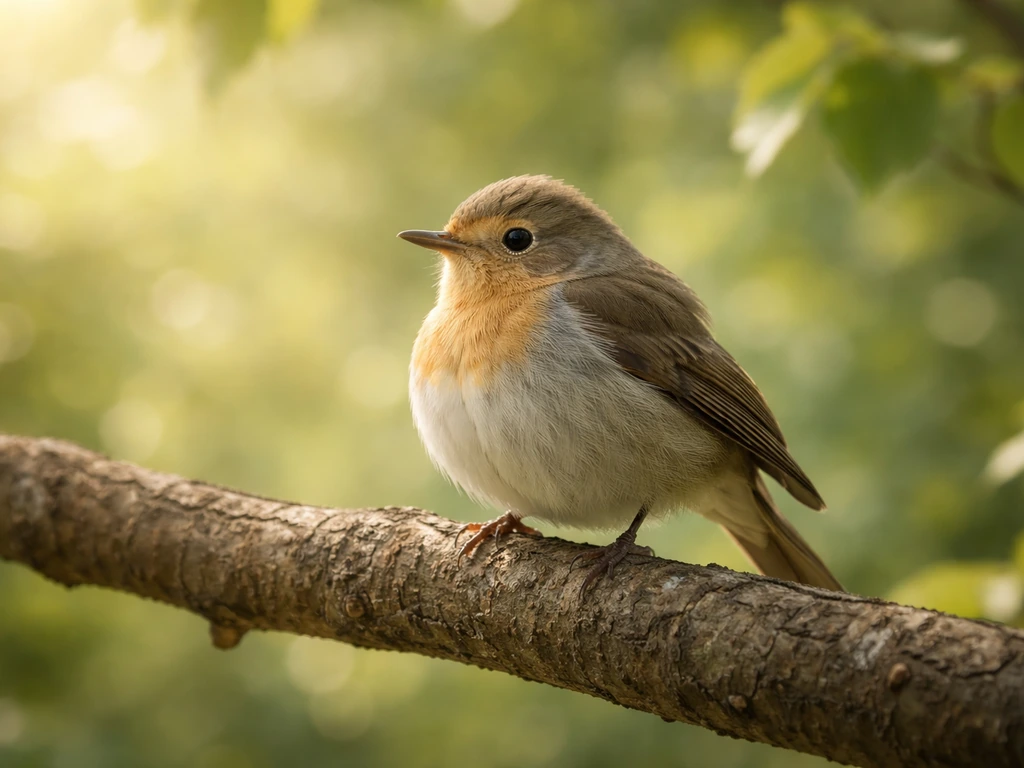
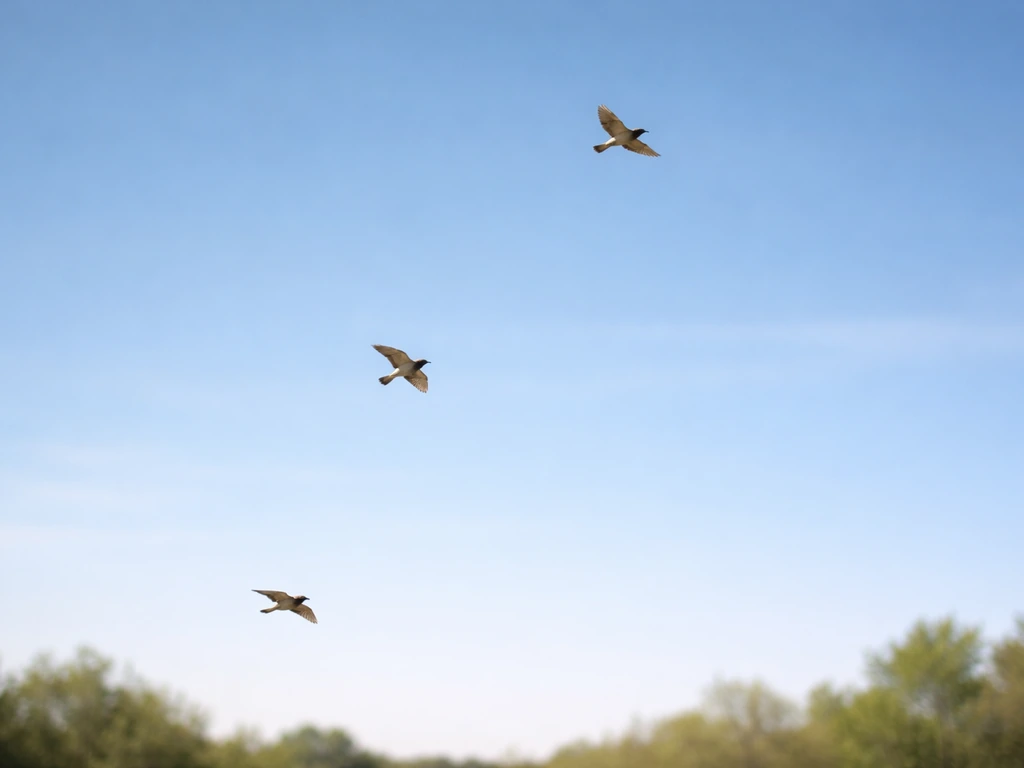
When someone says or writes 'bird in the sky,' they usually mean one of two things: a literal observation of a bird flying overhead, or a poetic shorthand for freedom, hope, guidance, or something spiritually elevated. A bird with flower in mouth meaning is similar in that the image’s symbolism depends heavily on context and cultural associations bird in the sky. Which one applies depends almost entirely on context, and the good news is that context almost always gives it away within a sentence or two.
Bird in the Sky Meaning: Symbolism and How to Tell Context

Marcus Whitmore
26 Jun 2026

What 'bird in the sky' means in everyday language

Unlike firmly established idioms such as 'a bird in the hand' or 'bird's-eye view,' the phrase 'bird in the sky' has not crystallized into a single fixed meaning in English. Merriam-Webster defines “bird's-eye view” as an idiom meaning a view “from above,” illustrating how “bird” phrases can become conventionalized for viewpoint. It sits in a more flexible space: it can be entirely literal (someone describing a bird they spotted hovering motionlessly above them), or it can function as vivid imagery carrying emotional weight. In everyday conversation, people use it the same way they might use 'ray of sunshine' or 'still water', the words are plain, but the intention behind them can be figurative.
The same looseness applies to the related search 'sky bird meaning.' There is no standardized dictionary entry for 'sky-bird' as a symbolic phrase. What that tells you is that the meaning lives in the surrounding context, not in the phrase itself. So rather than hunting for one universal definition, the smarter move is to look at what surrounds the phrase and let that guide your reading.
Common interpretations: freedom, hope, guidance, and 'from above' symbolism
Across literature, music, religion, and everyday metaphor, a bird in the sky tends to cluster around a handful of core meanings. These are not random, they reflect long-standing cultural associations between birds, elevation, and things beyond ordinary human reach.
- Freedom and escape: The sky is the ultimate open space, and a bird moving through it signals unbounded movement. Corpus studies of bird metaphors confirm that constructions like 'free as a bird in the air' are so conventionally tied to freedom that they function almost like set phrases. When a lyric or poem puts a bird in the sky, the freedom reading is usually the first instinct—and it's often the right one.
- Hope and uplift: Emily Dickinson's famous framing of hope as a bird 'perching in the soul' shows how deeply bird imagery is linked to hopefulness in the literary tradition. Scottish poetry library collections include lines like 'a bird in the sky' in explicitly hopeful poems, reinforcing this connection. The bird doesn't have to say anything—just being up there, moving freely, carries the feeling.
- Spiritual guidance and 'from above': Religious and spiritual traditions have used sky birds as signs for millennia. Ancient Babylonian bird omen collections treated a bird in the sky as something sign-like and interpretive. Gospel language anchors 'the bird in the air' to divine providence. Sufi and other spiritual texts describe the bird as a guide arriving from above. When 'bird in the sky' shows up in religious, devotional, or spiritual writing, the 'guidance from a higher source' reading is almost always intended.
- A higher perspective or bigger picture: There is a conceptual overlap here with 'bird's-eye view,' which Merriam-Webster defines as a view from above as if seen by a flying bird. When writers use 'bird in the sky' metaphorically, they sometimes invoke this same sense of seeing things from a removed, elevated vantage point—rising above the immediate situation to get a clearer view.
- Literal observation: Sometimes a bird in the sky is just a bird in the sky. Reddit threads about unusual bird behavior (a hawk hovering completely still, an unidentified black bird motionless in the air) use the phrase as plain description. In these cases, no symbolic interpretation is needed or intended.
Where the phrase shows up in culture, sayings, lyrics, and storytelling

One of the reasons 'bird in the sky' feels meaningful is that it appears across so many different cultural registers, each reinforcing similar emotional associations. In pop lyrics, the phrase can range from deadpan ('it's a bird, in the sky, or a plane') to deeply sentimental. The song 'The Cat in the Window (The Bird in the Sky)' uses sky birds as imagery of motion and longing, the cat wants to fly free like the birds it watches outside. A published academic PDF uses the phrase 'SING LIKE A BIRD IN THE SKY' as a lyrical expression of free, soaring voice. A United Nations poetry collection includes 'like a bird in the sky' as an uplift image. These are not coincidences: writers reach for this combination instinctively when they want to convey something about liberation or aspiration.
In religious storytelling, particularly in Christian and Islamic traditions, birds in the sky carry specific theological weight. The biblical 'birds of the air' are invoked as examples of divine provision, they neither sow nor reap, yet they are fed. This tradition makes 'bird in the sky' synonymous with trust, providence, and care from above in devotional writing. A related way to interpret bird-in-symbol imagery is the bird with a branch in its mouth, which can suggest peace, renewal, or a promised outcome bird with branch in mouth meaning. In Sufi poetry and mystical literature, the bird traveling through the sky often represents the soul on a spiritual journey guided by something greater than itself.
In poetry more broadly, including the many user-submitted poems on sites like PoemHunter, 'bird in the sky' functions as atmospheric metaphor rather than a locked-in idiom. The meaning shifts depending on the poem's emotional direction, it can mean hope, escape, loss, or transcendence. The bird in the sky is essentially a blank screen onto which a poet projects a feeling, which is exactly what makes it so versatile and so persistently used.
How to figure out the exact meaning from context
There is a reliable four-step method for pinning down what 'bird in the sky' means in any specific instance. It works whether you're reading a lyric, a poem, a spiritual text, or a Reddit comment.
- Check the grammatical frame first. Is the phrase introduced by 'like' or 'as'? 'Like a bird in the sky' or 'free as a bird in the sky' signals a simile—the speaker is making a figurative comparison. If it's a standalone statement ('I saw a bird in the sky'), it's more likely literal. Language researchers confirm that 'like/as' constructions are the most reliable surface-level cue that figurative meaning is intended.
- Look at the emotional tone of the surrounding text. Is the writer describing feelings of longing, hope, freedom, escape, or spiritual seeking? That context almost always unlocks a figurative reading. Is the writer asking a question about bird behavior, location, or species? That points to literal use.
- Identify who is speaking and from what tradition. A gospel sermon, a Sufi poem, and a pop lyric will all land differently. Religious and devotional contexts push strongly toward spiritual/providential meanings. Literary or musical contexts push toward freedom, hope, or emotional atmosphere. A nature blog or casual conversation almost certainly means literal.
- Ask whether the bird is doing anything specific. A bird singing, soaring, or returning in the sky tends to carry figurative emotional weight (freedom, joy, resilience). A bird hovering still, behaving strangely, or being physically described in detail usually points to a literal observation or a nature question.
One quick shortcut: if the text around 'bird in the sky' includes words like 'soul,' 'hope,' 'free,' 'sing,' 'guide,' 'above,' or 'spirit,' you can be highly confident the intended meaning is figurative. If it includes words like 'motionless,' 'what kind,' 'hovering,' or 'spotted,' the writer almost certainly means a real bird.
Related phrases and similar imagery
Part of why 'bird in the sky' can feel confusing is that it sits in a cluster of related bird expressions, each with slightly different meaning and different levels of idiomatic fixedness. Here is how they compare.
| Phrase | Fixedness as an idiom | Core meaning | Typical context |
|---|---|---|---|
| Bird in the sky | Low (flexible, context-dependent) | Freedom, hope, spiritual guidance, or literal observation | Poetry, lyrics, spiritual writing, casual description |
| Bird in the air | Low to medium | Providence, divine care (biblical/religious use); also freedom in similes | Religious texts, nature writing, figurative poetry |
| Bird's-eye view | High (established idiom) | A perspective from above, an overview | Maps, analysis, photography, figurative planning |
| Free as a bird (in the air) | Medium (near-set phrase) | Unbounded freedom, liberation | Figurative comparisons, lyrics, informal speech |
| Early bird | High (established idiom) | Someone who acts or arrives ahead of others | Proverbs, scheduling, business language |
| Bird on a branch | Low (visual/symbolic) | Stillness, watchfulness, a pause before action or song | Poetry, spiritual imagery, visual symbolism |
Other related images worth knowing: a bird with something in its mouth (a branch or twig often signals peace or homecoming, a flower can signal love or offering), and a bird on glass (which carries its own set of omens and spiritual interpretations in folk traditions). If you are wondering what a bird on the glass meaning points to, folk interpretations often treat it as an omen or a message about protection and spiritual awareness a bird on glass. These are distinct from 'bird in the sky,' which is specifically about elevation and openness rather than a bird interacting with an object or surface.
The 'bird in the air' phrasing deserves a specific note because it overlaps significantly with 'bird in the sky' and the two are sometimes used interchangeably. In biblical tradition, 'bird in the air' is the more established phrasing (as in 'the birds of the air'), so if you encounter it in religious writing, that tradition is the most likely frame. In secular poetry and lyrics, 'bird in the sky' and 'bird in the air' function almost identically and carry the same freedom/hope associations. A different bird image, the bird with a twig in its mouth, also has a symbolism meaning that depends on the context and tradition being referenced bird with twig in mouth meaning.
Practical next steps: locking down the meaning you actually saw
If you landed here because you came across 'bird in the sky' somewhere specific and want to know what it meant, here is exactly what to do right now.
- Copy out the full sentence or two surrounding the phrase. The phrase almost never travels alone—the words around it will tell you whether it's literal or figurative within about thirty seconds of reading.
- Apply the four-step context check above: grammatical frame (like/as or standalone), emotional tone, tradition or genre, and what the bird is doing. Most cases resolve at step one or two.
- If the phrase is from a song lyric, search the full song title plus 'meaning' to find lyric discussion communities (Reddit's music or fandom subreddits are often the fastest source). Users in those threads almost always debate exactly this kind of figurative-versus-literal question.
- If the phrase is from a poem, look for the full poem. Single lines pulled from poems lose their context. The surrounding stanzas almost always make the intended emotional register obvious.
- If the phrase is from a religious or spiritual text, identify the tradition first. Biblical use points to providence and divine care. Sufi or mystical use points to the soul's journey and guidance from above. Once you know the tradition, the meaning becomes much more specific.
- If you want to explore closely related bird symbolism on this site, look into how bird imagery shifts depending on what the bird is holding or where it is positioned—a bird on a branch, for example, carries different stillness and watchfulness associations than a bird freely moving through open sky.
The bottom line is that 'bird in the sky' is not a phrase you need to memorize a single definition for. It is a piece of flexible symbolic language, and its meaning is always unlocked by what surrounds it. Once you know what to look for, the grammatical framing, the emotional register, the cultural tradition, you can read it accurately every time.
FAQ
How can I tell if “bird in the sky” is meant as a joke or a visual deadpan line?
Look for nearby literal framing that treats it like a normal observation, for example “it’s a bird,” “or a plane,” or descriptions that list possibilities. When the sentence sounds like it is ruling out interpretations, the phrase is usually used literally or humorously rather than spiritually.
Does “bird in the sky meaning” differ in religious contexts versus modern poems?
Yes. In devotion or scriptural-style writing, the bird often points to providence and trust, with emphasis on care “from above.” In modern poems, it more often functions as emotional atmosphere, where the exact message (hope, escape, grief, longing) depends on the poem’s ending or the speaker’s situation.
What if the sentence includes both a literal observation and spiritual words, which meaning should I choose?
If the text contains clear visual cues (hovering, spotted overhead, wingbeat details) plus spiritual vocabulary (soul, guide, spirit, above), it is frequently using the sight as a trigger for metaphor. In that case, treat it as “literal bird as doorway to figurative meaning,” not purely one or the other.
Is “bird in the sky” the same as “bird in the hand” or “bird’s-eye view”?
No. “Bird’s-eye view” is about perspective, “bird in the hand” is about preferring what you already have, and neither is about elevation as a symbol of freedom. “Bird in the sky” is about openness, aspiration, or transcendence, even when it starts from a real bird.
What common mistake do people make when reading this phrase?
They search for a single dictionary definition. Because the phrase is flexible and often poetic, the more reliable approach is to decide whether the surrounding grammar is descriptive (watching, noticing) or interpretive (hope, guidance, spirit).
Can “bird in the sky” ever suggest negative meanings like loss or danger?
Yes. Birds can symbolize longing or freedom, but a poet can redirect that toward absence or unreachable goals, especially if the nearby lines mention separation, silence, or failure. Check whether the emotional direction in the next sentence is uplifting or aching.
How should I interpret it in song lyrics where the tone changes mid-verse?
Use the most recent “anchor” word or image. If the chorus shifts to themes like singing, freedom, and elevation, the phrase likely becomes metaphorical. If a verse turns to concrete travel details, weather, or identification (“it’s a bird”), the meaning may be deliberately ambiguous.
Does the phrase mean the same thing in every culture and language?
Not necessarily. Birds are broadly associated with freedom and the heavens, but specific traditions can add or change emphasis (providence, soul journey, peace, renewal). If you are reading translation or culturally specific text, treat local imagery and religious references as higher priority than general symbolism.
What if I want to use the phrase in my own writing, how do I avoid confusing readers?
Choose a frame that makes your intent obvious. Add either a visual cue (overhead, hovering, spotted) for literal use, or a spiritual or emotional anchor (hope, guide, soul, beyond) for metaphor. If you do both, clarify the transition with a verb like “as if,” “like,” or “meant to be.”
How does “bird in the sky” relate to “sky bird” or similar phrases online?
“Sky-bird” is not a standardized idiom, so online usage can be creative, slangy, or a username-style term. In those cases, rely on the post’s surrounding context (topic, hashtags, the author’s theme) rather than assuming it carries the same meaning as the standalone phrase.
Next Article
Bird on a Branch Meaning: Symbol, Phrase, and How to Interpret
Meaning of bird on a branch symbol and phrase, plus how to infer calm, patience, hope from context details.