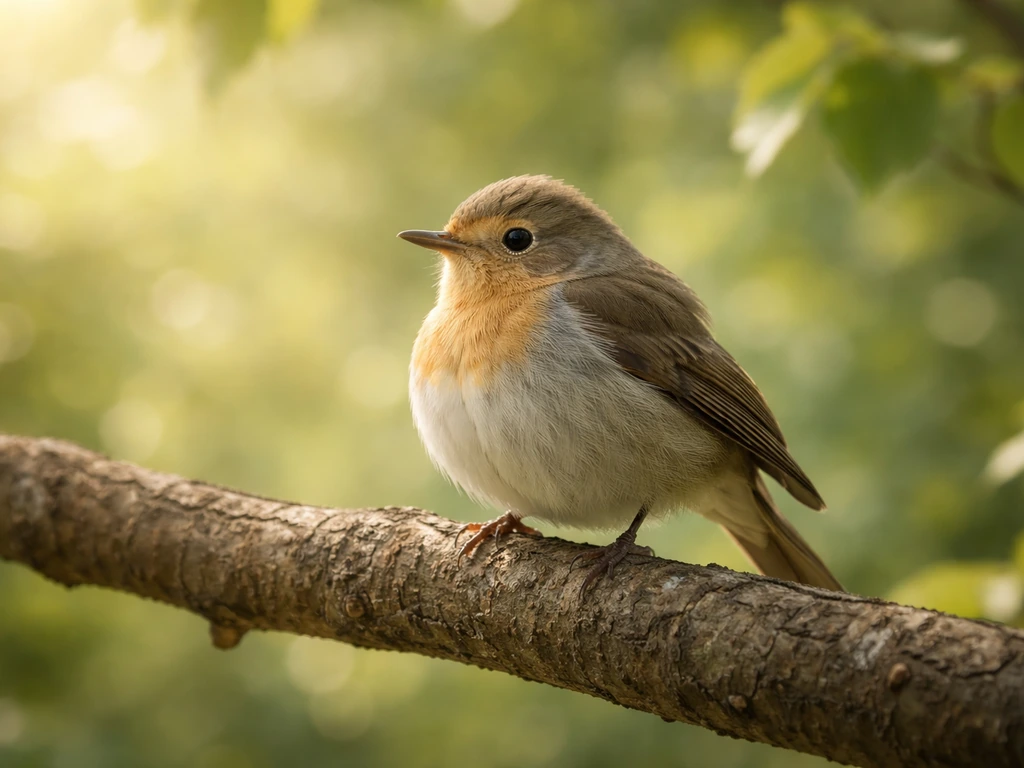
A bird on a branch most commonly symbolizes stillness, patience, and quiet observation. It sits at the intersection of two ideas that feel almost contradictory: freedom (birds can fly anywhere) and rootedness (right now, it has chosen to stay). That tension is exactly why the image shows up everywhere from Zen ink paintings to minimalist tattoos to inspirational wall art. It is not a single locked-in meaning, but if you had to pick the most universal one, it is this: a moment of calm presence before whatever comes next.
Bird on a Branch Meaning: Symbol, Phrase, and How to Interpret

Marcus Whitmore
20 Jun 2026
The most common meanings at a glance
Before you go deeper into species or cultural context, here are the meanings that come up most reliably when someone encounters this image or phrase. Most interpretations cluster around one or more of these.
- Stillness and calm: a bird perched quietly on a branch is one of the most universally recognized images of peaceful rest, especially in wall art and poetry.
- Patience and watchfulness: the bird is not in motion but it is alert, scanning, waiting. This maps strongly onto themes of careful observation and readiness.
- Freedom held in check: the bird could leave at any moment but does not. That voluntary stillness carries a sense of choice, groundedness, or belonging.
- Hope and presence: in many spiritual and religious traditions, a bird landing near you or perching calmly is read as a gentle sign that things are okay.
- Reflection and meditation: Zen Buddhist painters specifically used a single bird on a branch to represent solitary contemplation, and that association still carries weight today.
- Fragility or transition: in poetry, a bird perched on a wilting or bare branch can shift the mood toward vulnerability, impermanence, or a turning point.
- Safety and belonging: from a tattoo-meaning perspective, a perched bird specifically (versus one in flight) is consistently described as representing safety, steadiness, and staying close.
What it almost never means on its own: active good news, urgency, or the 'early bird catches the worm' kind of proactive energy. That is a separate idiom family entirely, and conflating them is the most common interpretive mistake people make. A perched bird is not rushing toward anything.
The deeper symbolism: why this image carries so much weight
Peace and calm
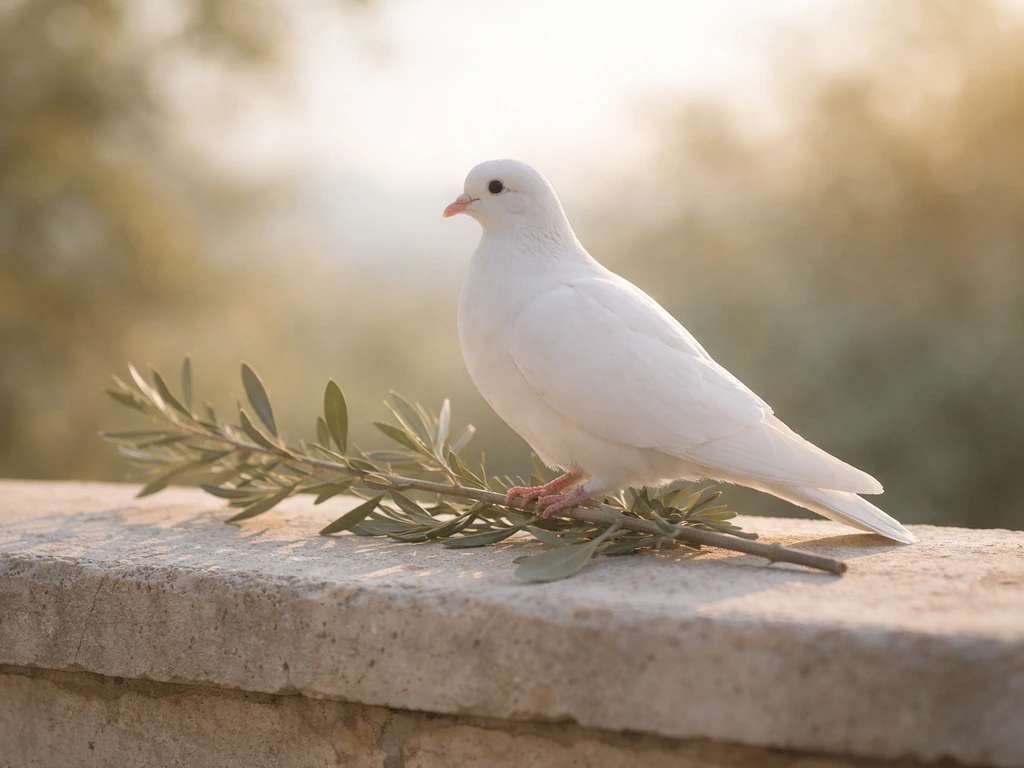
The clearest cultural anchor for peace is the dove on a branch, specifically the olive branch carried by the dove in the Noah's Ark narrative. That image is so embedded in Western culture that any bird sitting quietly on a branch can inherit a little of that peaceful association, even when the bird is not a dove. When someone describes a scene as having 'a bird sitting on a branch,' it almost reflexively reads as a moment of tranquility, not tension.
Patience and observation
A perched bird is watching. It has not checked out; it is simply waiting with full attention. Emily Dickinson built whole poems around the idea that a bird's careful, unhurried posture reveals something about grace and observation that humans tend to rush past. Tattoo guides pick up on this directly, describing a perched bird as representing 'watchfulness and steadiness' rather than the bold freedom of a bird in flight.
Hope and spiritual presence
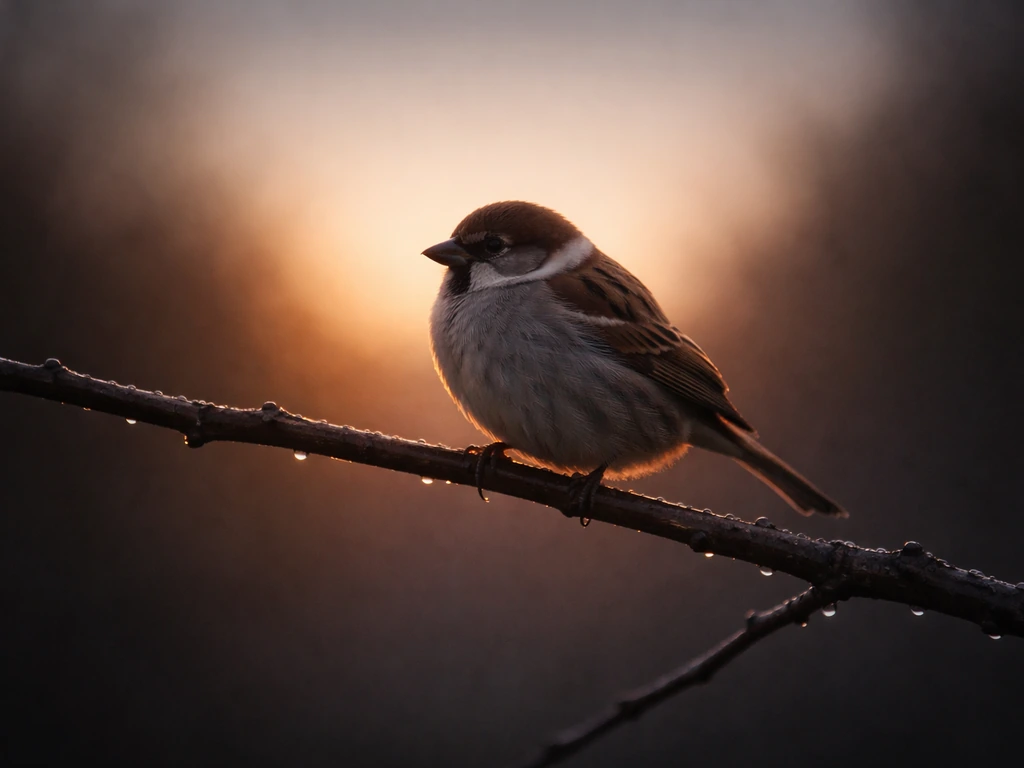
In Christian interpretive traditions, there is a strand of thinking tied to Matthew 10:29, where the sparrow perched and observed is used to communicate divine care and attention. Kierkegaard's meditations on 'the obedience of the bird' push this further: the bird on the branch is not anxious about tomorrow; it simply is, in trust. If you have seen this image used in a religious or memorial context, that is the current it is likely drawing from.
Freedom alongside stability
This is the tension that makes the image so rich. A bird in pure flight means freedom unmoored. A bird in a cage means captivity. A bird on a branch means something in between: the capacity for freedom, paired with the choice to rest here, now. That balance is why it works so well in tattoos for people navigating life changes, or as a motif for someone who has found their footing after a chaotic period.
Fragility and impermanence
Not every 'bird on a branch' image is serene. When the branch is bare, wilted, or broken, the same bird reads as precarious or melancholy. Poetry uses this shift deliberately. A bird perched on a wilted branch is not a symbol of peace; it is a symbol of something trying to hold on. So the state of the branch matters as much as the presence of the bird.
How to read your specific image: a practical checklist
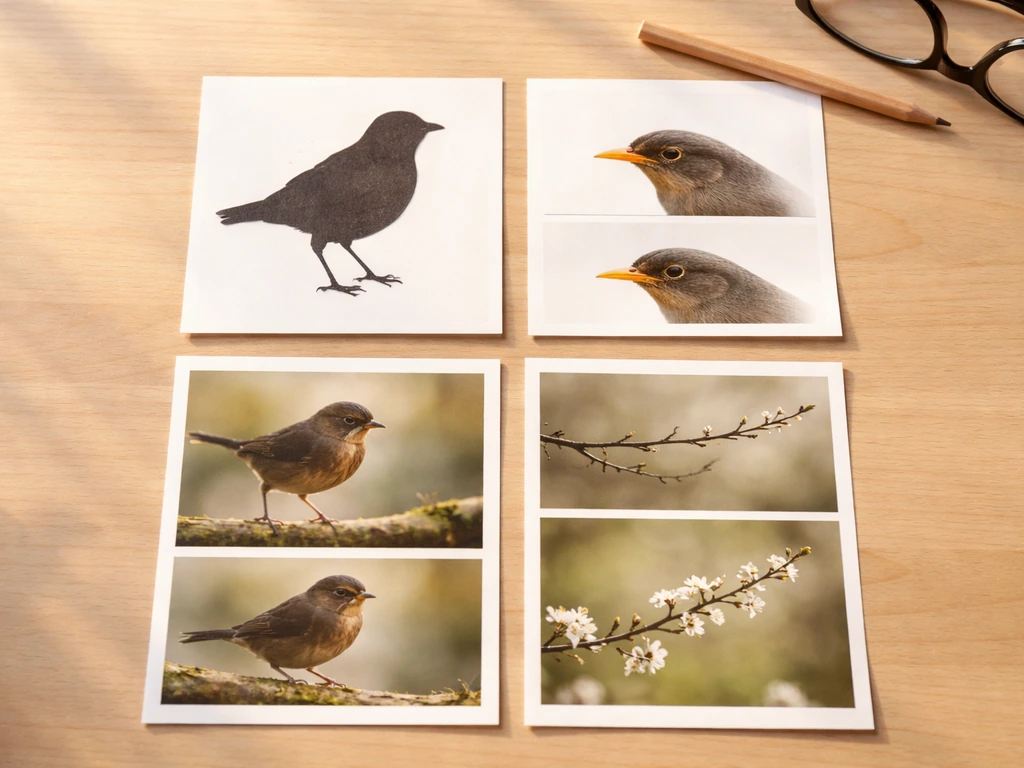
If you are trying to interpret a specific tattoo design, a piece of art, a dream, a moment in nature, or a phrase someone used, run through these four factors. They will narrow you from 'could mean several things' to 'most likely means this.'
1. What species is it?
Species is the single biggest modifier. A generic small songbird lands somewhere around peace, simplicity, or everyday beauty. A dove lands on peace and spiritual reassurance almost automatically. A crow or raven shifts the meaning toward mystery, intelligence, or sometimes omen. An owl on a branch suggests wisdom or nighttime contemplation. A bluebird or robin skews toward hope and new beginnings. If the species is identifiable, look it up separately because the bird's own symbolic weight will combine with the 'on a branch' posture to give you a much more specific reading.
2. Is it singing or silent?
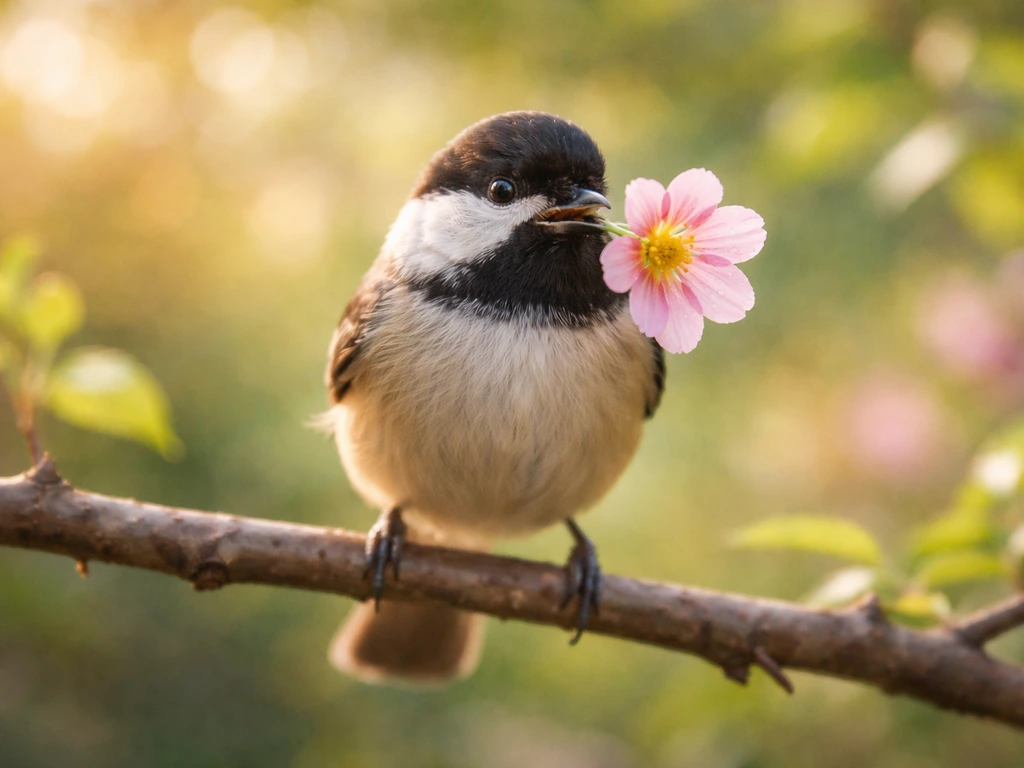
A bird with its beak open, mid-song, shifts the meaning from observation toward communication, expression, and joy. A silent bird is in receiving mode: resting, watching, or simply being. A bird with a flower in its mouth is often interpreted as hope and a gentle offering, building on the same calm, paused presence bird with a flower in its mouth meaning. Ornithologically, blank" rel="noopener noreferrer">birds perching quietly at dusk are in a resting or preening state, not an active communication state. If the image shows a silent bird on a branch, lean toward rest, reflection, and stillness as your primary reading. If it is singing, lean toward self-expression, joy, or a message being sent.
3. What is the posture?
A bird sitting upright and alert, feet firmly on the branch, reads as stable and watchful. When you see a bird with a branch in its mouth, the meaning often shifts toward symbolism of carrying, offering, or building a new nest of ideas A bird sitting upright and alert, feet firmly on the branch. A bird that looks hunched, ruffled, or awkwardly placed reads as vulnerable or uncomfortable.
This matters in tattoos especially: if the bird looks like it is confidently perched, the symbolism of steadiness lands. If it looks like it barely fits the branch or is about to tip, the composition can unintentionally communicate instability. When evaluating a tattoo design, ask whether the bird looks like it belongs on that branch before committing.
4. What is the setting or surrounding detail?
A bird on a lush, flowering branch in spring light reads as hope, renewal, and abundance. A bird on a bare winter branch reads as solitude, endurance, or contemplation. A bird on a pine branch (common in Japanese ink painting) connects directly to Zen meditative traditions. If there is a moon, a sunrise, or water in the background, those elements all tilt the emotional register further. The branch itself is not neutral: look at its condition, the season it suggests, and whether it is rooted or cut.
How culture shifts the meaning
East Asian art traditions, especially Japanese and Chinese ink painting, have used the bird-on-branch motif for centuries as a subject unto itself. The Philadelphia Museum of Art's collection includes an 18th-century mynah bird on a pine branch that Zen Buddhist artists used to reflect on their own solitary, meditative lives. The Metropolitan Museum of Art catalogs a Japanese work literally titled 'Bird on a Branch,' in ink on paper. In these traditions, the image is not decorative filler; it is a complete philosophical statement about stillness and presence. A single brushstroke bird on a minimal branch is the visual equivalent of a haiku.
In Western Christian contexts, the bird on a branch draws more from scripture: divine care for even the smallest perching sparrow, and the dove with the olive branch as a sign of peace restored after catastrophe. These are not about personal stillness so much as cosmic reassurance.
In contemporary Western culture (especially tattoo culture and wall art), the image has been somewhat secularized and personalized. It tends to mean whatever the person wearing or displaying it says it means, but the underlying themes of calm, belonging, and balance are so consistent that they function as reliable defaults even when there is no explicit cultural framing.
| Cultural context | Primary meaning | Key detail to look for |
|---|---|---|
| East Asian (Zen/ink painting) | Meditation, solitude, spiritual simplicity | Sparse composition, pine or bamboo branch, minimal ink |
| Western Christian | Divine care, peace restored, trust | Dove species, olive branch, scripture reference nearby |
| Contemporary tattoo/art | Personal calm, balance, freedom with roots | Style (minimalist vs detailed), species choice, branch condition |
| Literary/poetic | Observation, grace, fragility, or transition | Posture, branch state, surrounding imagery or text |
| General spiritual/nature | Hope, presence, gentle omen | Context of when/where you saw or received it |
Related phrases and motifs: what connects and what to ignore
A few bird-related expressions will pop up when you search this topic, and it is worth knowing which ones are genuinely connected to the 'bird on a branch' image and which ones are basically unrelated.
The 'early bird' idiom (as in 'the early bird catches the worm') is probably the most common confusion. A bird in the sky meaning. It means proactive timing and has nothing to do with stillness, rest, or spiritual presence. A bird on a branch is not being an early bird. That phrase-family is about action and opportunity, not perching.
More genuinely connected is the idea of 'birds as messengers,' which overlaps with the singing bird reading: if a bird lands near you or appears to call your attention, many traditions interpret that as a sign or message rather than random behavior. A bird on a branch is not quite the same as a bird suddenly appearing at your window, but they share the 'birds carry meaning' cultural logic.
The related motifs worth comparing to this one are images like a bird carrying something in its mouth (a twig, flower, or branch), which shifts the meaning toward building, intention, and nurturing rather than rest. A bird on glass or at a window leans toward visitation or messages from beyond. If you are trying to decode a bird-on-glass moment, the meaning often points to visitation, observation, and a message that feels personal A bird on glass or at a window. A bird in open sky is about freedom and aspiration without the groundedness of the branch. The branch is what makes the 'bird on a branch' image specifically about chosen stillness rather than pure movement.
Applying this to your actual situation
If you are choosing a tattoo
A bird-on-branch tattoo is one of the most versatile designs in this space precisely because it can be tuned so specifically. A minimalist single-line sparrow on a bare branch says something very different from a detailed robin on a flowering cherry branch.
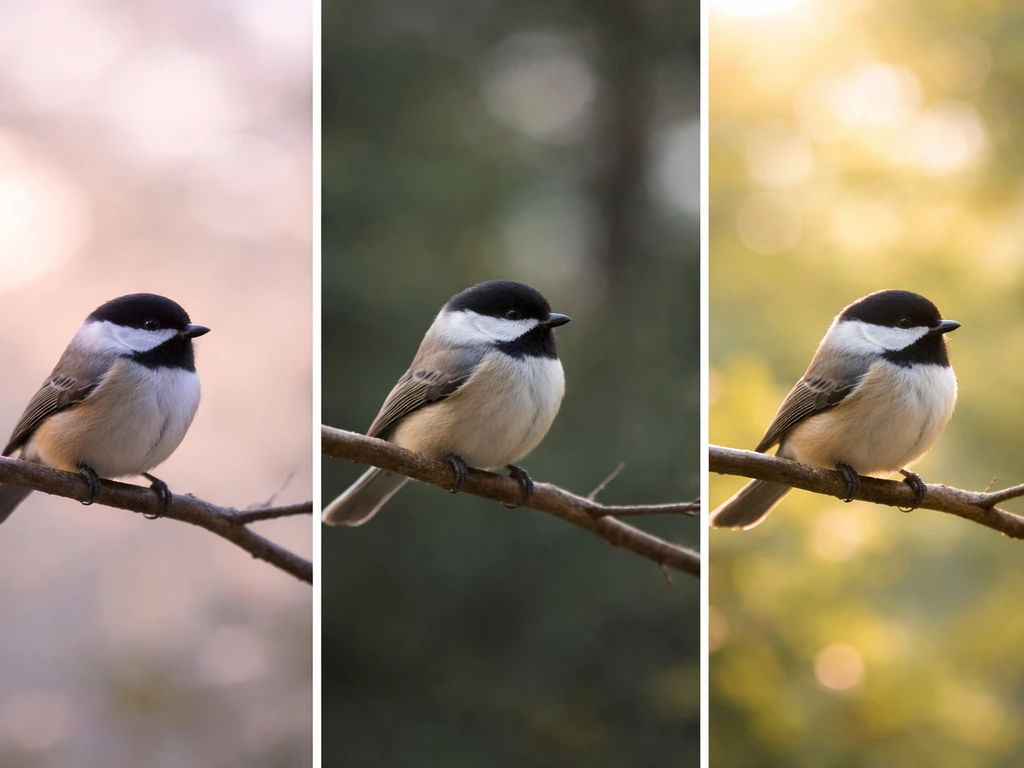
Dżo Lama notes that a birds on a branch tattoo's meaning can shift depending on the artistic style and color palette, ranging from calm and quiet to more storylike and whimsical impressions A minimalist single-line sparrow on a bare branch says something very different from a detailed robin on a flowering cherry branch. .
Before you commit, get clear on what you want it to communicate: if it is personal calm and balance, go simple and spare. If it is hope or renewal, add the blooms. If it is a memorial or spiritual piece, the species and branch detail should reflect whoever or whatever you are honoring. Also: check that the bird looks confidently perched, not awkwardly placed.
A technically off composition will undercut the meaning every time you look at it.
If you received it as a gift or symbol
If someone gave you art, jewelry, or a card featuring a bird on a branch, the most likely intended meanings are calm, hope, or 'I see you as someone grounded and free.' Run it through the checklist above: species, singing or silent, branch condition. If it is a dove, they almost certainly meant peace or comfort. If it is a generic songbird on a spring branch, think hope and renewal. If there is a note or context clue attached, trust that over the symbolism defaults.
If you saw it in nature and want to interpret it
Many people search this phrase because they watched a bird land on a branch near them at a significant moment and want to know what to make of it. Across most spiritual traditions, a bird that lands close and sits quietly near you is considered a gentle positive sign: presence, peace, divine attention, or a reminder to slow down.
If your image shows a bird holding a twig, people often read it as building, nesting instinct, and a readiness to settle bird with twig in mouth meaning. What it almost certainly is not: an urgent warning, a bad omen, or a call to action. A quiet perched bird is not trying to alarm you. Take the stillness at face value.
If you are using the phrase in writing or a quote
If you are writing something and reach for 'a bird on a branch' as an image or quote, you are invoking a well-established shorthand for paused presence. It works beautifully for moments of reflection, breath, or the space between events. Just be specific about the bird and branch if you can: a cardinal on a snow-covered branch and a warbler on a willow in July are telling very different stories, even though the structure is the same.
FAQ
If I saw a bird land on a branch near me, does that always mean something spiritual or a “sign”?
Not always. Many cultures treat a quiet, nearby perch as reassurance, but in everyday interpretation it can also be simple timing, shelter-seeking, or local feeding behavior. A practical way to decide is context, did anything change for you emotionally right then, and did the bird stay calmly for more than a minute (suggesting it chose the spot) versus quickly passing through?
Can a bird on a branch meaning be negative, even if the posture looks calm?
Yes, especially when the branch is stressed (broken, wilted, dead, or thorny) or when the bird looks unwell (ruffled, hunched, or barely balanced). In that case people often read vulnerability or hardship rather than peace, and the “presence” message becomes endurance or “holding on” instead of serenity.
What does it mean if the bird is on a branch but the branch is very high up or very low?
Height changes the emotional register. A low, reachable branch often reads as closeness and comfort (something near you), while a high perch can feel more distant, observational, or “from above,” which some people interpret as guidance or perspective rather than direct reassurance.
Does the bird on a branch mean “stay put,” or can it mean “rest before moving on”?
Both are possible, but the cue is the surrounding story. The motif commonly implies chosen stillness, but if the scene shows transitional context (season shift, sunrise, or a path/water in the background), people usually frame it as pausing before a next step, not permanent staying.
How should I interpret it in a dream if the bird is calm but I feel anxious?
Dream emotion often outweighs symbol calm. If you feel anxious, the same image may reflect “trying to be still” or longing for patience rather than actual peace arriving. Pay attention to whether you are watching the bird (receiving) or chasing it (wanting control), since those actions usually change the reading.
What’s a common mistake when interpreting this phrase in art or tattoos?
Over-fixating on the species while ignoring composition and branch condition. Two identical sparrows can mean totally different things if one bird appears firmly settled and the other looks awkward or tipped on a weak branch.
Is a bird on a branch meaning the same as “bird in the sky” meaning?
No. “Bird in the sky” typically leans toward aspiration, freedom, and motion without the grounding choice. “Bird on a branch” adds restraint and selected presence, so it often reads as balance or waiting with intention rather than pure upward escape.
If it’s a dove on a branch, is peace the only meaning I should consider?
Peace is the dominant association, but you can refine it by the branch and details. An olive-branch-like look tends to evoke restored harmony after disruption, while a dove on a bare or broken branch can shift the message toward fragile peace, grief, or rebuilding rather than effortless calm.
How can I “decode” the meaning quickly when there are multiple details (flower, moon, water) in the same image?
Use a priority order: (1) bird behavior (silent/resting versus singing/communicating), (2) branch condition and season (hope or hardship), (3) bird species (tone), then (4) background elements (moon, sunrise, water) for emotional flavor. If the bird is silent on a barren branch, for example, background light usually adds reflection, not turning it into an upbeat renewal.
Can two people interpret the same bird-on-a-branch tattoo differently, and which interpretation should I trust?
Yes, because modern tattoo culture often personalizes meaning. If you want a tie-breaker, consider the artist’s chosen emphasis: realistic species versus simplified silhouette, and whether the bird looks confident or precarious. If those cues align, they usually reflect the core intent more reliably than random personal guesses.
Next Article
Bird with Flower in Mouth Meaning: Symbolism and Species
Meaning of a bird holding a flower: romance, peace, new beginnings, plus how to identify species and refine symbolism.