
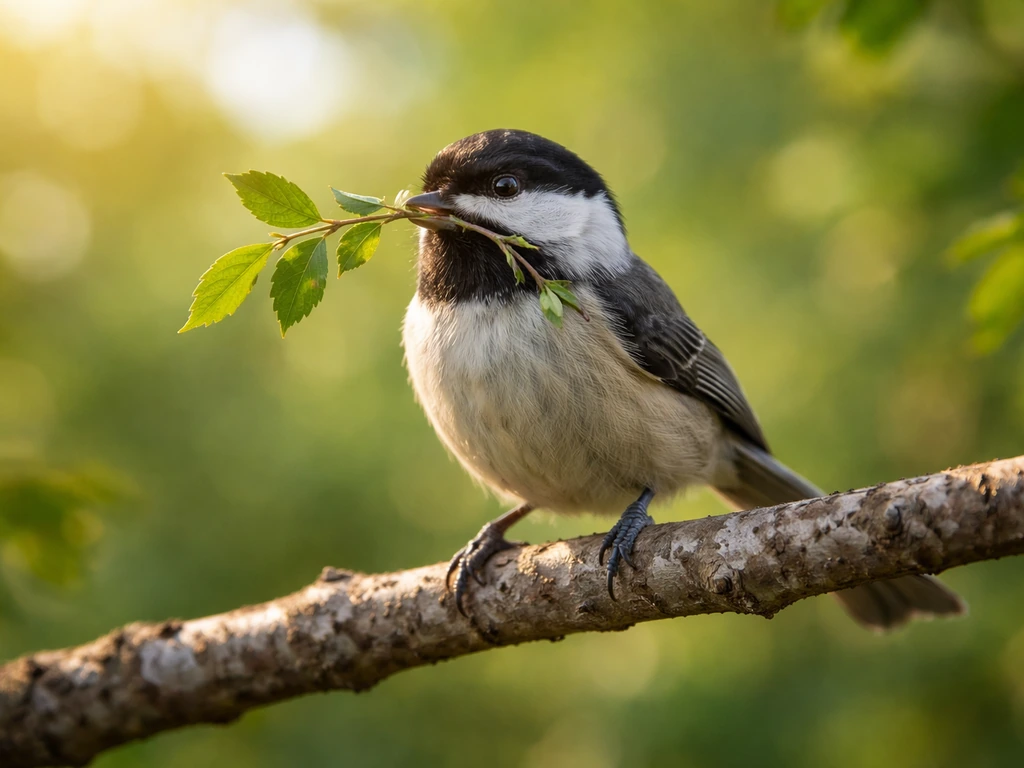
A bird with a branch in its mouth is almost always doing one of two things: building a nest or representing the idea of building one. In real life, that twig in the beak is a classic sign of nesting season, a bird making hundreds of small trips to construct or repair a home. In art, tattoos, logos, and symbolic contexts, that same image gets read as a shorthand for home, partnership, devotion, and new beginnings. Which meaning applies to what you saw depends almost entirely on context, and this guide will help you sort that out quickly.
Bird With Branch in Mouth Meaning: Nature and Symbolism

Marcus Whitmore
27 Jun 2026
What people actually mean by 'bird with branch in mouth'
The phrase itself is a bit loose, and that looseness is worth naming upfront. People use 'bird with branch in mouth' and 'bird with twig in beak' almost interchangeably, and they usually mean one of three things. First, they saw a real bird outside doing something with a stick and want to know what's going on. Second, they came across a photo, painting, tattoo, or logo featuring this image and want to understand what it symbolizes. Third, they encountered the phrase in a caption, quote, or social media post and want to know if it carries any deeper idiomatic meaning. All three are valid searches, and all three have different answers.
One important distinction: 'branch' and 'twig' do different work in these searches. 'Twig in beak' tends to pull up nesting behavior content, while 'branch in mouth' more often surfaces symbolic or artistic interpretations. If you are researching a related but slightly different image, a bird carrying a flower or a single leaf rather than a woody stem, the symbolism shifts meaningfully and is worth exploring separately. But for the branch or twig variant, the core meanings cluster around construction, home, and new beginnings.
What's actually happening when a real bird carries a branch
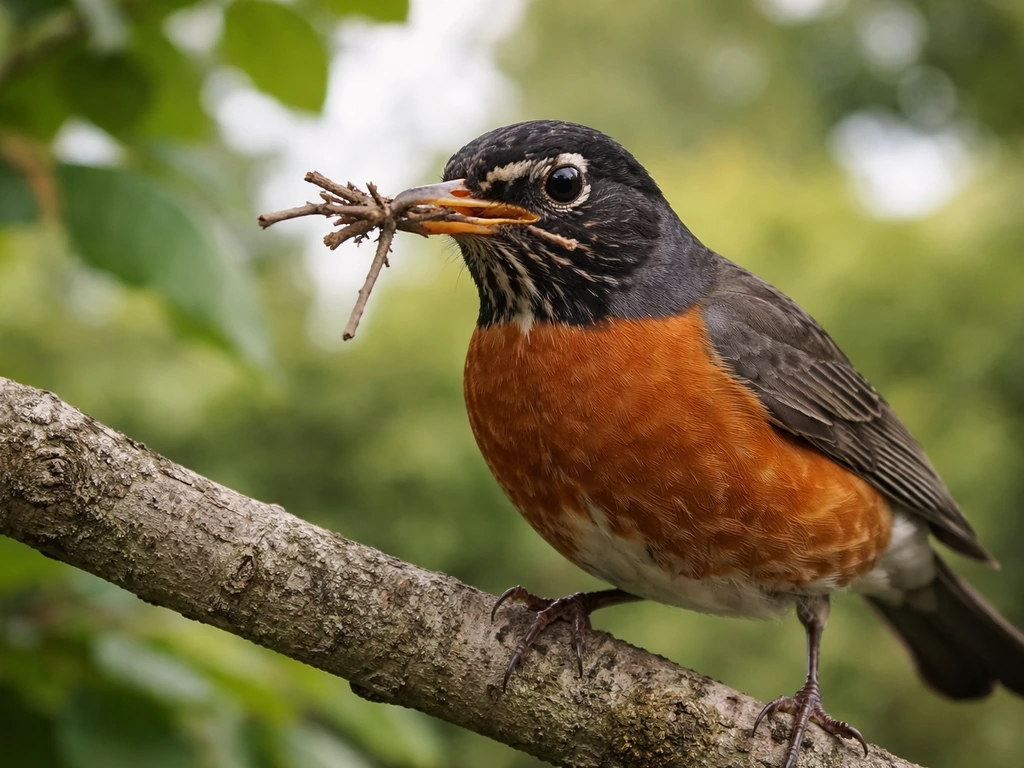
If you watched a real bird carry a twig or small branch, you almost certainly witnessed nest-building. This is one of the most universally recognizable behaviors across bird species, and the 'twig in beak' moment is its signature image. Birds use twigs, grass, moss, mud, bark strips, and even manmade materials to construct nests, and the specific materials depend heavily on the species. Nest-building materials vary widely among birds, including twig-based construction styles such as woven and cup-shaped nests with pressed lining, plus plant fibers chosen for each species’ nest design Birds use twigs, grass, moss, mud, bark strips, and even manmade materials to construct nests, and the specific materials depend heavily on the species.. The repeating pattern is the tell: a bird making the same trip, returning again and again with small sticks or stems, is in full construction mode.
American robins are probably the most commonly observed twig-carriers for backyard watchers in North America. The female does most of the building, making hundreds of trips to gather enough mud and plant material to form the characteristic cup-shaped nest of twigs, grass, and compacted mud. She can take five to seven days on a first nest, faster on subsequent ones. Crows are pickier; they select freshly plucked twigs with specific flexibility characteristics. Great blue herons carry sticks to treetop colonial nests in a way that makes for dramatic photographs. Ospreys bring substantial sticks to platform nests and actively maintain them throughout the season. Wrens sometimes struggle heroically to maneuver a twig that seems comically oversized into a small nest hole, which is delightful to watch.
A few species use branch-related materials in less obvious ways. Nuthatches carry sticky conifer resin in their bills to plaster around nest entrances, which is a twig-adjacent material-carrying behavior but serves a different function (pest deterrence rather than structural building). Barn swallows use mud pellets more than twigs but make the same repeated short-trip pattern. The general rule: if you see a bird making repeated directed flights while carrying anything in its beak, it is almost certainly either building, lining, or repairing a nest nearby.
There is also a courtship dimension worth knowing. In some species, like mourning doves, the male begins investigating nest sites and carrying or presenting materials as part of early courtship, before the actual construction phase really begins. So 'bird with twig in beak' can signal the very start of the breeding cycle, not just mid-construction. If you see it in late winter or very early spring, you may be catching that initial courtship-and-site-selection phase.
What time of year signals nest-building behavior
Spring through early summer is peak twig-carrying season in most of the Northern Hemisphere, roughly March through July depending on latitude and species. Some birds like common starlings raise multiple broods in a season, so you may see material transport continue well into summer. blank" rel="noopener noreferrer">Common starlings often reuse and relabel nests, and pairs can raise multiple broods, which can make repeated nest material transport visible across a longer breeding window than a single brief nesting event. If you are in the Southern Hemisphere, the timing is reversed. Seeing a bird with a branch in its beak outside of these windows is less common but not unheard of, especially for species that nest year-round in mild climates or attempt late-season second broods.
The symbolic meaning of the branch-in-beak image
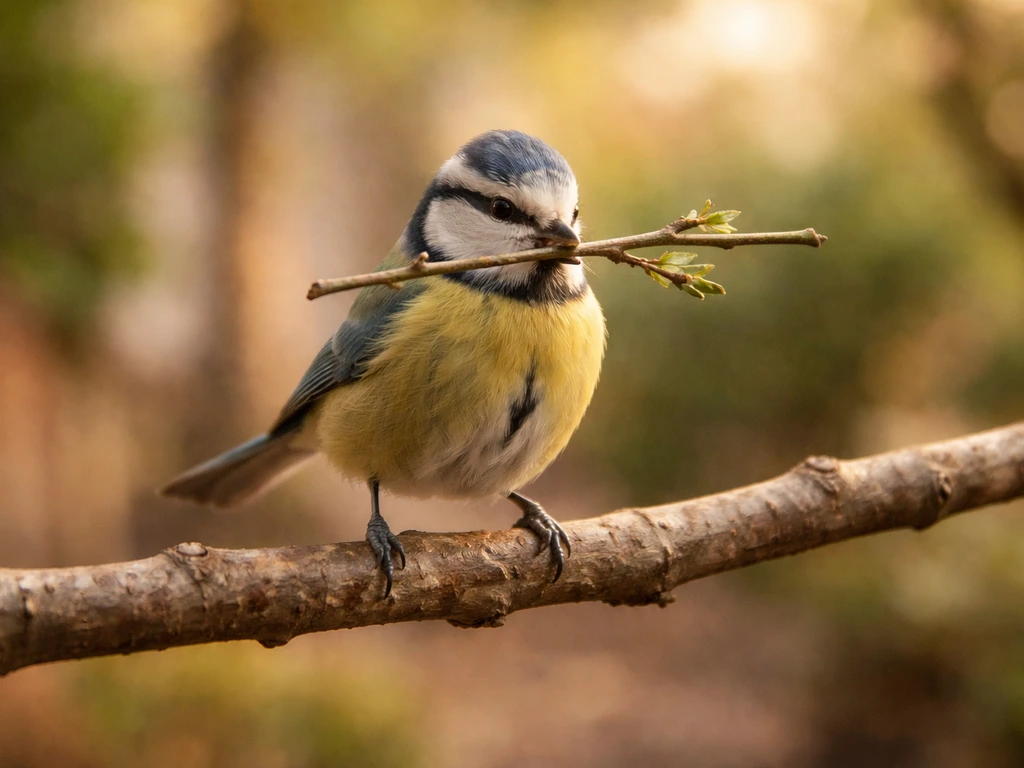
Once you move from the backyard into art, jewelry, tattoos, and iconography, the branch-in-beak image carries a consistent cluster of meanings: home, partnership, devotion, planning, and new beginnings. Understanding what a bird with twig in mouth meaning points to can help you interpret the image in captions, tattoos, and logos. These are not arbitrary associations. They trace directly back to the observable behavior. Birds building nests are working toward a specific goal (a home), they often do it in pairs (partnership and devotion), the labor is deliberate and effortful (planning), and the outcome produces life (new beginnings). Artists and symbol-makers across cultures have recognized this and used the image accordingly.
In Christian iconographic tradition, birds generally carry associations with the soul, paradise, and divine care. A bird actively carrying nesting material can be read as representing the soul preparing a spiritual home, though the specific twig-carrying motif is more often conveyed through implication than explicit depiction. European stork symbolism offers a well-known parallel: households traditionally encouraged storks to nest on their roofs, associating the nesting bird with family, fertility, and good fortune for the household. The nesting bird near the home became a sign of blessing, not just coincidence.
In contemporary visual culture, the 'bird with branch' image is heavily used in decorative and commercial contexts: wedding invitations, home decor prints, tattoo flash sheets, brand logos, and jewelry. In these settings it almost universally signals domesticity, love, and the building of something together. The image reads as aspirational and warm rather than ominous, which is part of why it is so common in wedding and home-related visual branding. It is worth noting that this symbolic reading is contextual rather than universal across all world traditions; some cultures associate particular bird species with very different meanings, which is why species identification matters when the symbolism is specific.
When the species changes the meaning
A dove carrying a branch is one of the most loaded images in Western symbolism, instantly evoking peace, reconciliation, and hope. This traces directly to the Noah's Ark narrative, in which a dove returns carrying an olive branch to signal that floodwaters are receding and safety is near. That specific image is so culturally embedded that it functions almost as a logo for peace in international contexts. A crow or raven carrying a branch carries very different associations in many traditions, leaning toward intelligence, mystery, or transformation rather than domestic warmth. A robin with a twig in spring reads as cheerful and seasonal. A heron with a stick reads as stately and solitary. The branch is the same; the bird changes everything.
In language: idioms, metaphors, and how this image shows up in speech
The 'bird with branch in mouth' is not a fixed idiom the way 'early bird gets the worm' or 'a bird in the hand is worth two in the bush' are. Some people search for the bird on the glass meaning because they associate the image with messages about beginnings and domesticity bird with branch in mouth. It functions more as a visual metaphor or image-caption prompt. You will see it as a caption for motivational quotes about building something from scratch, making a home, or working steadily toward a goal. The implied message is almost always some version of: small consistent efforts create something lasting. The bird is not flying dramatically; it is just carrying one twig at a time.
The dove-and-olive-branch variant is the one instance where the branch-in-beak image has hardened into a genuine cultural idiom. To 'extend an olive branch' means to offer peace or reconciliation, and the dove carrying one is the visual root of that phrase. If you encountered the image in a religious, political, or diplomatic context, that olive branch reading is almost certainly what is being invoked. Outside of that specific dove-and-olive-branch context, branch-carrying bird imagery stays in the realm of metaphor and visual symbolism rather than fixed phrase.
There is also a seasonal and literary dimension. Audubon and naturalist writers have long noted that bird-and-plant imagery marks the turning of seasons, and 'birds carrying plant material in spring' functions as a recurring literary shorthand for renewal and the return of life after winter. If you came across the phrase in a poem or literary passage, that seasonal-renewal reading is likely what the writer intended.
How to identify the specific bird you saw
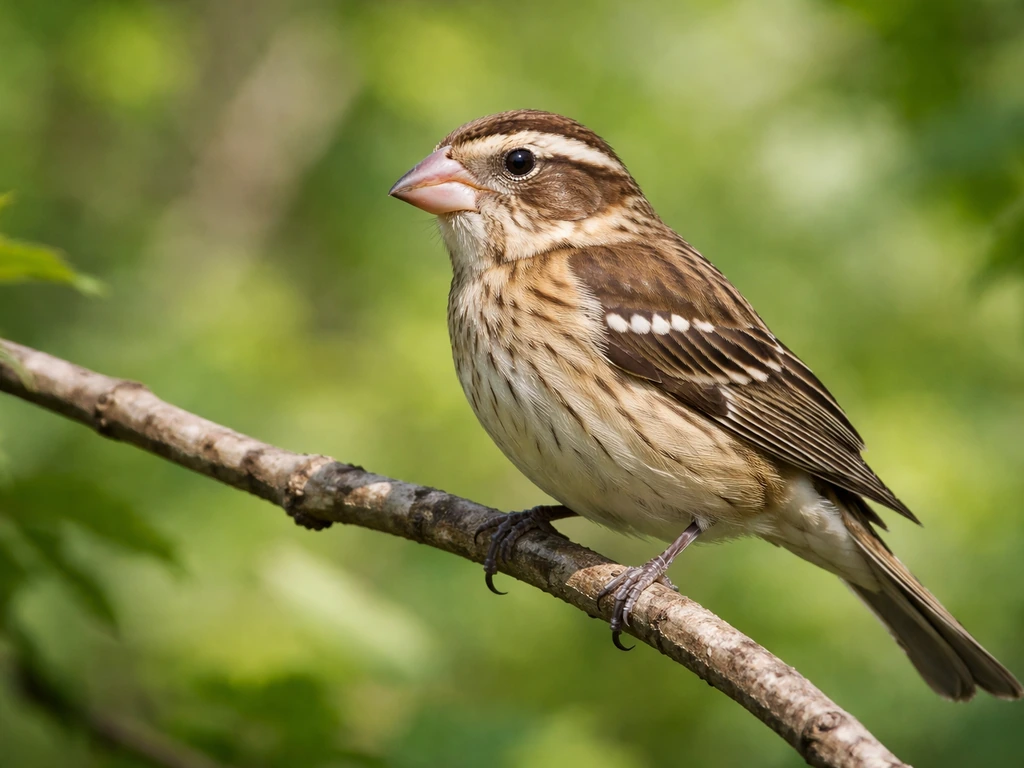
Knowing the exact species refines both the behavioral and symbolic interpretation considerably. Bird identification from a photo or memory comes down to a few key field marks: the size and shape of the bill, overall body size, plumage colors and patterns, and the setting or habitat where you saw it. You do not need to be an expert to narrow it down significantly.
- Bill shape: A thick, sturdy bill suggests a songbird like a robin or starling. A long, pointed bill suggests a heron or egret. A hooked bill suggests a raptor or corvid. A small, fine bill suggests a wren or warbler.
- Body size: Is it sparrow-sized, robin-sized, crow-sized, or heron-sized? Size relative to a familiar object in the scene helps enormously.
- Colors and markings: Note head, back, breast, and wing colors. Even a partial description narrows the field dramatically.
- Behavior and setting: Was it near water? In a woodland canopy? In a suburban backyard? At a cliff or building ledge? Habitat rules out many species quickly.
- Twig size relative to bird: A bird carrying a twig nearly as long as itself is probably a wren or small passerine. A bird carrying a substantial stick is more likely a crow, heron, osprey, or dove.
For practical identification, the Merlin Bird ID app from Cornell Lab of Ornithology is the most accessible starting point. It is free, covers birds worldwide, and has a photo identification feature where you can upload a picture and get an AI-assisted match. iNaturalist is a strong alternative, especially if you want a second opinion from a community of naturalists who can confirm or correct an AI suggestion. Both apps are genuinely good and take about two minutes to use.
Comparing what the image means across common contexts
| Context | Most likely meaning | Key species to consider |
|---|---|---|
| Real bird sighting in yard or park (spring/summer) | Active nest-building; breeding season underway nearby | Robin, crow, dove, wren, starling, heron, osprey |
| Wildlife or nature photograph | Nest construction behavior; often labeled accordingly in contest/media contexts | Great blue heron, osprey, robin, barn swallow |
| Religious or classical art | Spiritual home, divine care, peace (especially dove with olive branch) | Dove (olive branch = peace/reconciliation), stork (family/new life) |
| Tattoo, jewelry, or decorative art | Home, love, partnership, building a life together | Typically a generic songbird, swallow, or dove silhouette |
| Motivational quote image or social media post | Steady effort toward a goal; small actions building something meaningful | Species usually generic or unstated |
| Wedding or homemaking visual branding | New beginnings, partnership, domesticity | Typically a swallow, robin, or dove |
What to do next based on what you saw
If you saw a real bird carrying a branch or twig, the most useful next step is to watch for a few minutes and note where it is flying to. It will almost certainly return to a nest site, which may be hidden but is usually within a short distance. You are in a good position to observe a nest from a respectful distance, especially if it is early in the building phase. Try not to disturb the bird, and avoid handling any nest material. If you want to identify the species, snap a photo and run it through Merlin or iNaturalist.
If you found the image in a piece of art, a tattoo design, or a logo and want to understand its symbolic meaning, start by identifying the bird species depicted. A dove with a leafy branch is almost always the peace-and-reconciliation symbol. A swallow with a twig leans toward home and return. A generic songbird in a nesting context reads as domestic warmth and partnership. Once you have the species, you can layer in cultural and regional symbolism, since a bird that means one thing in Western European tradition may carry a completely different set of associations in East Asian or Indigenous traditions.
If you are trying to use this image yourself, in a design, a tattoo, or a piece of writing, be intentional about the species and the branch type. An olive branch is already a loaded symbol. A generic twig reads more neutrally as 'building' or 'home.' A flower in the beak shifts the meaning considerably toward beauty, gift-giving, or affection rather than construction, and a bird carrying a flower is worth treating as a distinct symbolic image. Similarly, a bird sitting on a branch rather than carrying one has its own set of associations worth exploring separately.
The bottom line is that this image is almost never random. Whether you spotted it in your backyard or on someone's forearm, a bird carrying a branch is pointing at something being built, something beginning, or something being offered as a gesture of peace. In particular, if you are looking up the bird in the sky meaning, these context clues help explain what the phrase is getting at. The species and the setting tell you which of those readings fits.
FAQ
Is “bird with branch in mouth” ever a literal phrase, like a secret message in a caption?
Usually it is not an idiom with a hidden, fixed meaning. Most uses are either describing nest-building behavior or using it as a visual metaphor (home, love, peace, renewal). The closest “set phrase” equivalent is the dove with an olive branch for reconciliation, but outside that context it stays context-dependent.
How can I tell whether an image is showing nesting behavior or just symbolizing it in art?
Look for realism cues. Realistic art typically shows repeated, purposeful carrying (and often a nest site nearby), while stylized designs often simplify the scene, remove the nest context, and use the branch as a prop. If the bird is posed like a portrait with no visible destination, it is more likely symbolic.
Does “branch in mouth” mean different things than “twig in beak”?
Yes, people often search with those variants for slightly different results. “Twig in beak” tends to pull more nesting-season and behavior explanations, while “branch in mouth” is more likely to surface symbolic or artistic interpretations. Still, the meaning can flip depending on the species and the branch type (especially if it is an olive branch or a flower).
What if the bird is carrying something non-woody, like grass or feathers, instead of a branch?
Then it still usually relates to nest construction or lining, but the symbolism shifts toward “care and preparation” rather than “building wood structure.” In art, materials like feathers and fibers often read as comfort, protection, or softness, so treat them as a different symbolic image than a woody twig.
I saw a bird carrying a branch at the wrong time of year, does it change the interpretation?
It can. If it is late in the season, the bird may be repairing an existing nest, feeding nestlings, or attempting a late or second brood in certain climates. The behavioral meaning still holds most of the time, but seasonal symbolism (renewal, springtime beginnings) becomes less reliable.
Can I identify the exact bird species from the image, or do I risk over-interpreting?
You can narrow it down, but avoid treating a single photo or drawing as certain species identification. Bill shape, body size, and color patterns are useful, but tattoos and logos often simplify features. If species is unclear, focus on broad reads like “home and partnership,” then refine only when the species is likely.
If the bird is a dove, is peace always the meaning?
Dove imagery strongly suggests peace in many Western contexts, but it is not automatic. The specific loading depends on what the dove is carrying. A leafy or olive-like branch points more toward reconciliation, while a generic twig can still imply home, devotion, or new beginnings without the explicit “olive branch” message.
What if the bird is carrying a flower instead of a branch, does that mean something else?
Yes. A flower in the beak typically shifts the image from “construction” toward affection, gifting, beauty, or romance. You should treat it as a distinct variant rather than a substitution, because viewers often read it as emotional offering rather than nest preparation.
How should I interpret the image if I want to use it in a design or tattoo?
Pick both the bird species and the branch type intentionally. An olive branch has a stronger “peace” association, a generic twig reads more neutral as “building/home,” and a flower shifts toward love or celebration. Also consider style: a realistic nest-building scene reads more literal, while a portrait-like pose reads more symbolic.
If a bird is seen repeatedly with twigs, how close should I look for a nest, without disturbing it?
Watch from a distance and do not move closer just to “find the nest.” Birds often return to a nest site within short travel routes, but nests can be hidden or fragile early on. The safest next step is to observe the flight path and, if you want to identify the species, take one photo from where you are without handling or touching any vegetation or nesting materials.
Next Article
Bird in the Sky Meaning: Symbolism and How to Tell Context
Understand bird in the sky meaning, its common symbolism, and how to identify context for the right interpretation.