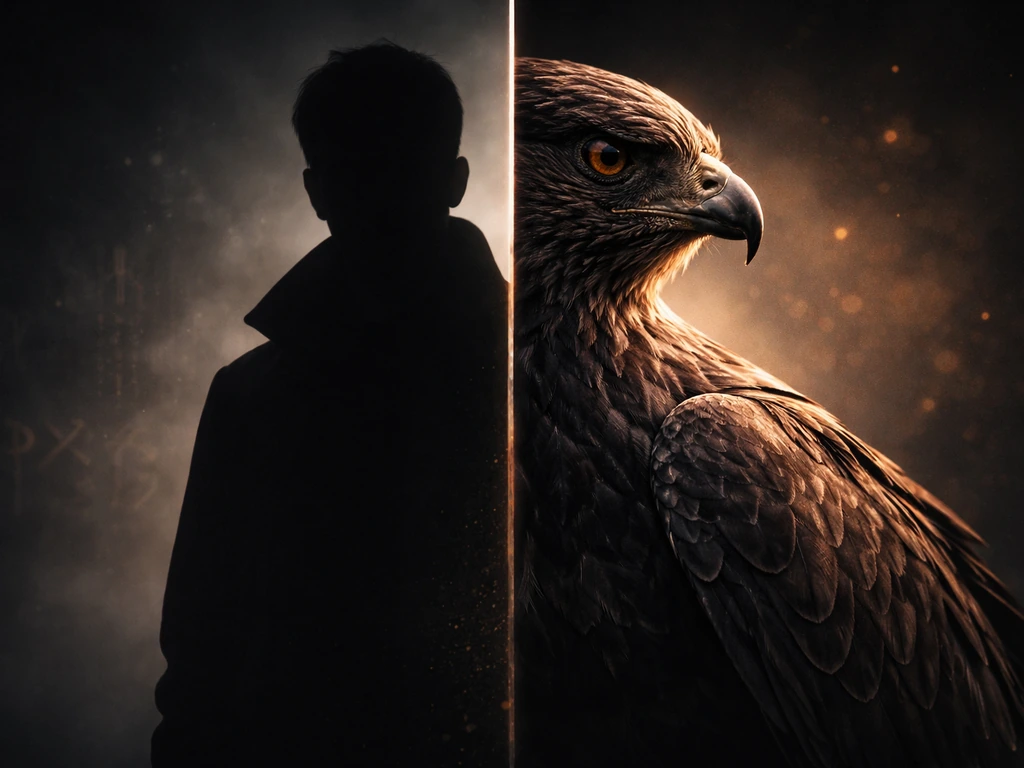
When someone says 'half bird,' they almost always mean one of two things: a mythological or fictional creature that is literally part bird and part something else (usually human), or a figurative shorthand used in captions, tattoo descriptions, and online posts to describe something that feels caught between two natures. The mythological meaning is far more common and well-documented, covering creatures like harpies, sirens, kinnaris, and tengu from Greek, Japanese, Southeast Asian, and Slavic traditions. The figurative use shows up in memes, character descriptions, and creative writing to suggest a person or being that is partially wild, partially free, or not quite fully one thing.
Half Bird Meaning Explained: Literal and Figurative Uses

Marcus Whitmore
17 Jun 2026
Wait, which 'half bird' are we actually talking about?
The phrase 'half bird' can land in a few different contexts, and the meaning shifts depending on where you encountered it. Here are the most common scenarios people run into:
- You saw it describing a creature in a myth, legend, or fantasy story (harpy, siren, tengu, kinnara, etc.)
- You saw it in a tattoo description, art caption, or character design prompt (like 'half bird half fish')
- You read it in a caption, meme, or online post as a metaphor for someone's personality or behavior
- You found it in a historical or academic text referring to hybrid figures in ancient iconography
- You came across it as an old regional term for a specific type of duck (teal), priced at half what a full duck costs
The last one is genuinely obscure. A historical dictionary entry lists 'half-bird' as a name for a teal duck, named simply because it sold for half the price of a larger bird. That usage is basically dead in everyday language, so unless you are reading 19th-century market records, you can probably rule it out. For almost everyone searching this phrase today, the meaning is either mythological hybrid or figurative metaphor.
The mythology of bird-human hybrids
Bird-human hybrid beings appear across an enormous number of cultures, and they all tend to share a few common traits: they exist on the boundary between the human world and something beyond it, they carry messages or omens, and they are rarely entirely benevolent or entirely evil. They are in-between figures, and that is kind of the point.
Harpies (Greek and Roman)
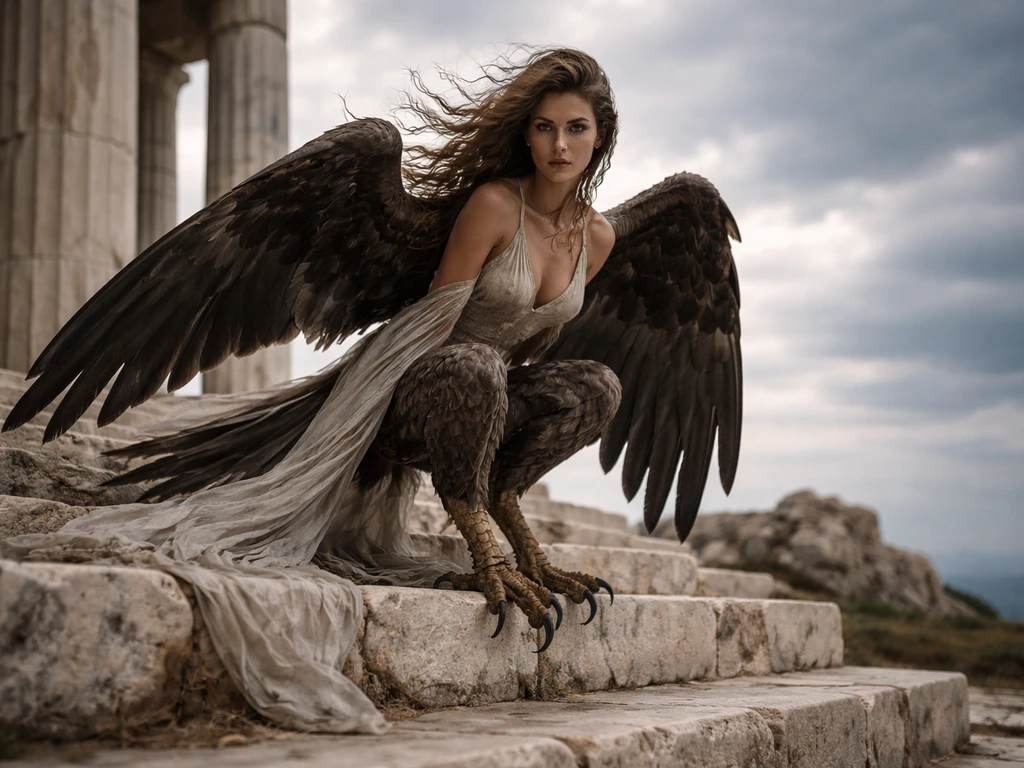
Harpies are probably the most recognizable half-bird figures in Western mythology. They are described as half-bird, half-woman creatures, personifications of storm winds who would snatch food, souls, and people at the bidding of the gods. The World History Encyclopedia describes them explicitly as 'half-bird, half-woman creatures,' and they appear in myths like the story of Phineus, whose meals they perpetually stole as divine punishment. Harpies are not gentle symbols. They represent chaos, swift punishment, and the violent, uncontrollable aspects of nature. They get conflated with sirens fairly often in popular discussion, which causes a lot of confusion.
Sirens (Greek, then medieval)
Here is where it gets messy. In original Greek mythology, sirens were half woman and half bird, not half fish. The fish-tail version came much later through medieval illustration and eventual conflation with mermaids. A Menil collection description notes that siren depictions varied over time, sometimes showing a woman's head on a full bird's body, other times splitting the figure more evenly. A Roman mosaic from Naples, widely shared online, shows a siren as 'upper half woman, lower half bird.' The deadly lure of the siren, that irresistible song that drew sailors to their deaths, made more sense with wings in the original Greek framing: these were wind-borne, sky-crossing creatures. Medieval bestiaries described the siren as 'half human, half bird or fish,' acknowledging the visual ambiguity that had already crept in by that point.
Tengu (Japanese)
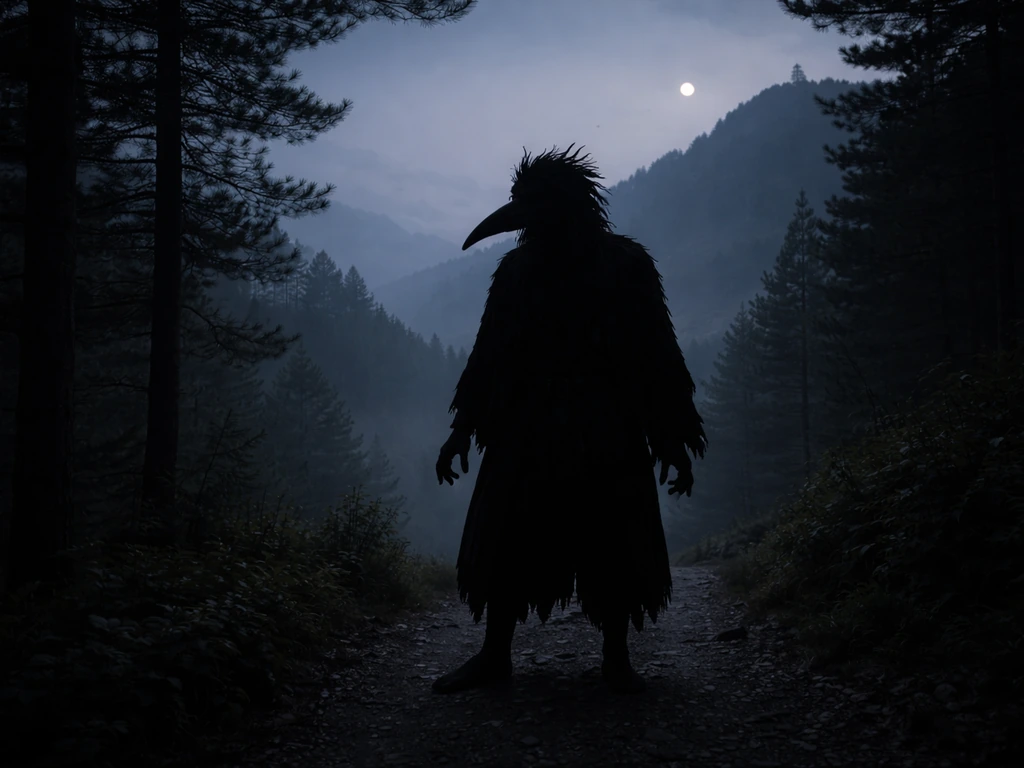
Tengu are Japanese mountain spirits (yokai) often described as bird-man or bird-demon figures. Early depictions showed them as almost entirely birdlike, but over centuries of storytelling the human elements took over, leaving the distinctive long nose as a remnant of the original beak. A government heritage document describes tengu as 'bird-like goblins found in folk tales' who are regarded as guardians of mountains and forests. They are associated with supernatural martial skill, pride, boundary-crossing between the human and spirit worlds, and a kind of dangerous wisdom. Tengu are excellent examples of how a 'half-bird' figure can shift from pure omen to cultural hero depending on the era and the storyteller.
Kinnara and Kinnari (Southeast Asian Buddhist tradition)
In Southeast Asian Buddhist mythology, the kinnara (male) and kinnari (female) are depicted as half-human, half-bird beings. Unlike harpies or sirens, they are associated with music, love, and grace rather than danger or punishment. They appear frequently in Thai and Cambodian temple iconography, often shown playing instruments, and they carry symbolism around beauty, devotion, and harmony. The kinnari in particular represents an idealized feminine grace that exists between the earthly and the divine.
Sirin (Slavic and Russian legend)
The Sirin is a Russian legendary bird with the head of a beautiful woman and the body of an owl or bird. It is directly influenced by the Greek siren concept and carries similar associations with irresistible, dangerous music. In Russian folklore, the Sirin's song was said to bring such joy that listeners would forget everything and follow it to their deaths. It represents the seductive pull of beauty and the otherworldly, sitting between the human world and something unreachable.
Snallygaster (American folklore)
For a more regional example, the snallygaster is a mythical creature from rural Maryland described as half reptile and half bird. Merriam-Webster has actually covered this one in an etymology piece connecting 'snallygaster' to 'snollygoster.' It is a relatively obscure piece of American folklore, but it shows that the 'half bird' hybrid concept is not limited to ancient or foreign traditions.
When 'half bird' is metaphorical, not mythological
Outside of mythology, 'half bird' shows up in figurative language to describe something or someone that feels caught between two states. In online posts, captions, and creative writing, you will see it used to express a kind of restless in-between-ness: someone who is almost free but not quite, who has instincts that pull against their circumstances, or who feels like they belong to two different worlds.
Reddit threads and meme captions sometimes use 'half bird' in a playful, literal-but-not-literal way, like joking about what it would actually mean to be 'half bird' physically, which spills over into commentary about identity and nature. A 'Would You Rather: half bird edition' thread, for instance, got into serious debate about whether bird-top or bird-bottom would be preferable, but the subtext was really about what it means to be partly wild and partly human. That is the figurative dimension doing its work even inside a joke.
In tattoo culture specifically, 'half bird' is extremely common as a description for hybrid designs: half bird half fish, half bird half woman, half bird half skull, and so on. These are not references to specific myths. They are aesthetic and personal symbolism choices where the 'bird half' contributes its own symbolic weight (freedom, spirit, transcendence) to whatever the other half represents.
What birds symbolize, and how 'half' shifts the meaning
Birds carry a consistent set of symbolic meanings across most cultures: freedom, the soul, messages from the divine or the dead, transformation, vigilance, luck, and the crossing of boundaries between the living world and whatever lies beyond it. A bird in full form represents all of that without tension. The 'half' changes things. If you are trying to interpret quarter bird meaning, start by asking which specific hybrid version is being referenced and whether it is used literally or metaphorically The 'half' changes things..
When a being is half bird, the symbolism tends to pivot toward liminality, which is a fancy word for being on a threshold. A half-bird figure is not fully free and not fully bound. It has the instinct and the reach of a bird, but something anchors it to the human or earthly world. This is why so many half-bird creatures in mythology are associated with danger: they can reach places humans cannot, they carry divine messages or punishments, and they are not fully subject to human rules. But they are also not fully transcendent. They are stuck in between, and that in-between space is where interesting and often dangerous things happen.
| Symbolic theme in birds | How 'half bird' shifts it |
|---|---|
| Freedom / flight | Partial freedom; constrained by the human or earthly half |
| Soul / spirit messenger | Carrier between worlds, but not fully of either one |
| Transformation | Mid-transformation; process rather than completion |
| Vigilance / prophecy | Sight that crosses boundaries, sometimes unwanted insight |
| Music / beauty | Otherworldly art that can enchant or destroy (siren, kinnari) |
| Divine will / punishment | Instrument of gods rather than agent of its own will (harpy) |
| Luck / protection | Protective power drawn from both natures combined (kinnara, temos) |
How to figure out which meaning applies to what you saw
The context around the phrase does most of the work here. A few questions narrow it down fast.
- What genre or medium is it? Mythology, fantasy fiction, and historical art almost always mean a literal hybrid creature. Memes, captions, and personal writing usually mean a metaphor.
- Is a specific creature named? If the text mentions harpies, sirens, tengu, kinnari, or a named creature from a specific culture, you are in hybrid-mythology territory.
- Is it describing a visual? Tattoo descriptions, character design prompts, and art captions use 'half bird' as a literal proportion description ('upper half bird, lower half human').
- Is the tone personal or introspective? If someone says 'I feel half bird,' they are almost certainly using it as a metaphor for feeling wild, unconstrained, or caught between two ways of living.
- What culture is the source material from? Greek and Roman sources point to harpies or sirens. Japanese sources point to tengu. Southeast Asian Buddhist sources point to kinnara. Slavic sources point to Sirin. Each has distinct symbolic baggage.
- Is it in a joke or meme format? Humorous uses of 'half bird' are usually riffing on the literal hybrid concept for comedic effect, but often carry an underlying point about identity or nature.
Quick interpretation guide for common situations
Here are the most common scenarios and how to read them reliably.
In a story or myth
If you are reading a fantasy novel, mythology retelling, or folklore summary and a character is described as 'half bird,' look for cultural markers. Greek or Roman setting almost always means a harpy or siren. Japanese setting usually means a tengu or related yokai. Southeast Asian or Buddhist-influenced settings point to kinnara. If the creature is original to the story, the half-bird nature almost always signals liminal power: the ability to move between worlds, carry messages, or see what humans cannot.
In a tattoo or visual art description
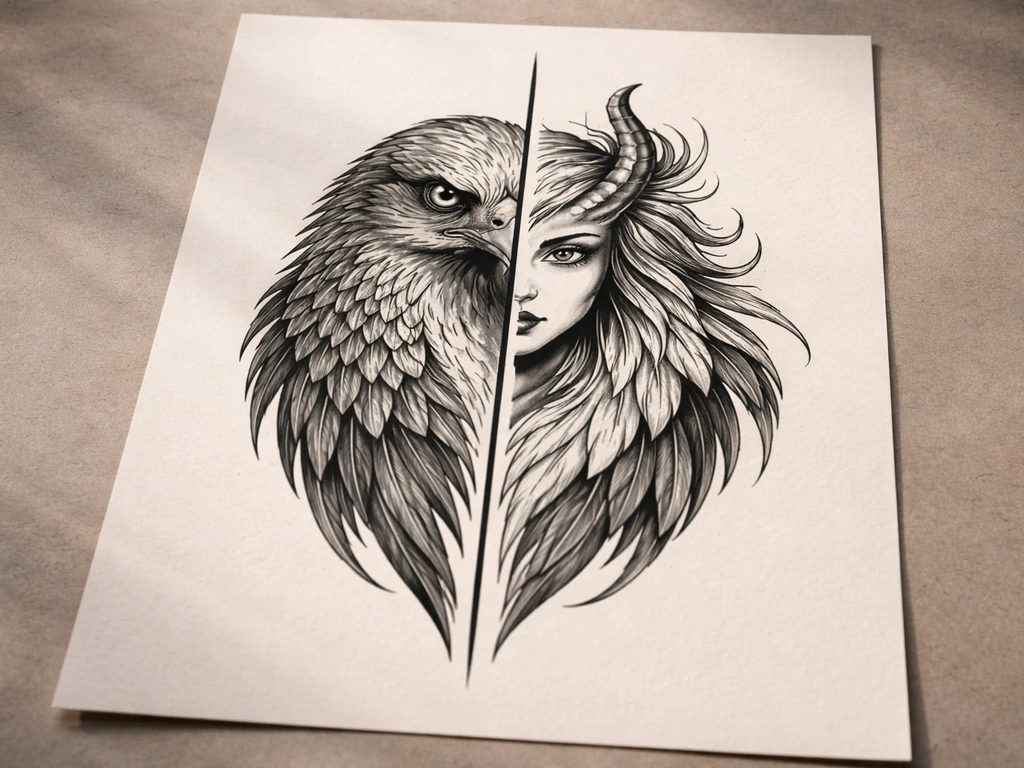
Tattoo descriptions use 'half bird' as shorthand for a split-design concept. For more on the symbolism behind the phrase, see what people mean by “two bird meaning.”. 'Half bird half fish' describes a creature with fish and bird features merged, often chosen for personal symbolism combining the meanings of both animals. blank" rel="noopener noreferrer">A TattoosAI page on the 'temos,' described as a mythical half-bird, half-fish creature believed to bring good luck and protection, is a good example of how tattoo culture sometimes generates or amplifies its own mythology around hybrid designs. If the person got this tattooed, they probably chose it for what each half means to them personally, not because temos is a well-documented ancient creature.
In a personal quote, caption, or poem
When someone writes about feeling 'half bird' or describes a person as 'half bird,' they are almost always reaching for the freedom-versus-constraint metaphor. The bird half wants to fly, to be untethered, to trust instinct. The human half (or whatever the other half is) keeps them grounded, burdened, or conflicted. It is a compact way to describe a divided nature, and it borrows its power directly from what birds symbolize universally.
In a character design or roleplay prompt
Online communities that create characters or run tabletop roleplay games use 'half bird' as a literal physical description. The Reddit 'Would You Rather: half bird edition' format, for instance, specifies exactly which half is bird and which is human, because the physical arrangement matters for the scenario. In these contexts, 'half bird' means exactly what it says: half of the body follows bird anatomy, half follows human anatomy.
In an academic or historical art context
When you see 'half bird' in an academic article, museum catalog entry, or historical document, it is almost always describing iconography: a visual representation of a hybrid figure in ancient or traditional art. An MDPI research article referencing 'half-bird, half-human images' in Eurasian funerary practices is describing archaeological evidence for these hybrid figures in burial art and cult objects, not making a metaphorical claim.
Still not sure? Here is where to look next
If you have read through all of this and the specific 'half bird' you encountered still does not fit neatly into any of these categories, the best move is to isolate the source. Find out where the phrase came from: a specific culture's mythology, a creative work with a named author, a tattoo artist's description, or an anonymous meme. Once you have the source, the meaning follows quickly.
It also helps to look at the other half. 'Half bird' almost always comes with a counterpart: half bird half woman, half bird half fish, half bird half human. The counterpart tells you a lot about the intended meaning. A human counterpart points to liminality and boundary-crossing symbolism. A fish counterpart points to a water-air duality, often used in tattoo work for personal reasons. A skull counterpart points to death-and-freedom symbolism. The bird half contributes consistent meaning across almost all of these combinations: spirit, freedom, transcendence, and the ability to move between worlds. If you are specifically after the third-bird meaning, look at how the phrase is being used in its cultural or metaphor context rather than treating it as one fixed definition third bird meaning.
If you are exploring related territory, the question of what a 'full bird' means symbolically is worth looking into separately, since it gives you the baseline that 'half bird' is always departing from. If you are wondering about the full bird meaning, it typically represents the complete, unbroken version of the bird symbolism that half-bird imagery is working away from. Similarly, the idea of a 'double bird' (which carries completely different slang connotations) and fractional uses like 'quarter bird' or 'third bird' each have their own distinct meanings in language and slang that do not overlap with the hybrid creature sense covered here. Knowing where those expressions diverge helps you triangulate the meaning of what you actually saw.
FAQ
If I see “half bird” in a tattoo, is it usually referring to a specific myth like a harpy or siren?
Most of the time it does not. In many tattoos and character designs, “half bird” is an aesthetic label for a hybrid or split concept, and the specific artist’s or wearer’s intent (freedom, protection, transformation) is the real key, not a named ancient creature.
How do I interpret “half bird” when the design is also “half fish,” “half skull,” or another combo?
Yes, but the question is what “other half” means. If the non-bird portion is human, expect liminality (between worlds, boundary powers). If it is fish, skull, or reptile, the meaning usually shifts toward water duality, death-and-freedom, or terrestrial danger, and those shifts are often personal rather than standardized.
What are reliable signs that “half bird” is being used literally versus figuratively?
Check for literal description cues. If the text mentions anatomy (wings, bird head, talons, beak, “upper half” or “lower half”), it is likely meant physically. If it mentions mood or identity (restless, conflicted, feeling between two natures), it is usually metaphorical.
In roleplay or character sheets, does “half bird” imply specific placement details like bird-top versus bird-bottom?
In tabletop roleplay and many fan communities, the phrase often functions like a build spec, meaning the physical placement affects abilities, social reactions, or story outcomes. For example, “bird-top” versus “bird-bottom” can imply different sensory traits or how others perceive the character.
If an academic source uses the phrase “half-bird,” should I treat it as symbolism or as an art-description of a motif?
It can be, especially in older or culture-specific art descriptions, where museum or catalog language focuses on iconography. If the source reads like an archaeology or art history summary, treat it as a description of visual motifs rather than a claim that the creature exists or that the audience should adopt a metaphor.
What’s the most common mistake people make when interpreting “half bird meaning”?
Because “half bird” is not one fixed slang definition, it is easy to misread. A common mistake is assuming a universal meaning when the phrase is actually culture-bound (Greek and Roman for harpies or sirens, Japanese for tengu, Buddhist-influenced Southeast Asia for kinnara). Always use surrounding context like the setting, costume, or character background.
If someone says they feel “half bird,” what does that usually mean emotionally or personally?
Yes. If a person says “I feel half bird,” you can usually translate it to a specific tension: instinct, freedom, or “otherworldly” perception (bird side) versus grounding, duties, or social limits (human side). Asking “what constraint am I feeling?” often pins down the intended sub-meaning fast.
When “half bird” appears in memes or “Would You Rather” formats, is it still meaningful or just nonsense?
Sometimes it is deliberately playful, like “what would you rather be” jokes, but even then it tends to keep the same core metaphor (part wild, part human) and then uses the anatomy choice to mirror identity concerns. If the thread turns into arguments about identity, that is a sign the figurative meaning is doing the work.
When “half bird” includes a counterpart, how do I decide which symbolism dominates?
Compare it to the counterpart. If you want to know whether it is liminality-focused, look at what replaces the bird half: human suggests threshold/boundary themes, water-related parts suggest air and water duality, and skull suggests death-adjacent symbolism. This is often more informative than the “half” part by itself.
What should I do if the phrase I saw still does not match any of the common meanings?
Because the article explains the two big buckets (mythic hybrid versus metaphor), the next step is to locate the exact variant you saw. Search for whether it was “half bird half woman,” “half bird half fish,” or something else, then confirm whether the source is referencing a named tradition (like Greek or Japanese) or an original character/tattoo concept.
Next Article
Two Bird Meaning: Interpretations in Dreams, Symbols, and More
Two birds meaning in dreams and symbols, covering love, partnership, balance, duality, communication, plus how to disamb