"Pull a bird" most commonly means to successfully attract or pick up a romantic or sexual partner, and it is rooted in British English slang where "bird" has informally meant "a young woman" for well over a century. You will hear it most in the UK and Australia, rarely in the US, and almost always in casual, after-dark social contexts. It can also mean, quite literally, the act of physically pulling, catching, or handling a live bird, which is a completely different situation with its own practical and ethical weight.
Pull a Bird Meaning: Slang, Literal Sense & Safety Guide

Marcus Whitmore
27 Jul 2026

Quick definition: literal and idiomatic meanings
The phrase sits at a crossroads between colloquial British slang and plain descriptive English, and the meaning depends almost entirely on context. Here are both senses at a glance.
| Sense | Meaning | Register | Main regions |
|---|---|---|---|
| Idiomatic (slang) | To successfully attract, seduce, or pick up a romantic/sexual partner | Informal, colloquial | UK, Australia |
| Literal (animal handling) | To physically pull, catch, or handle a live bird by grasping it | Neutral / technical | Everywhere |
| Gesture-related (rare) | To perform a rude hand gesture involving the middle finger ("giving the bird") | Vulgar, informal | US primarily |
What each sense actually means
The slang pickup sense
In British and Australian slang, "pull" means to succeed at attracting someone, and "bird" is the informal term for a young woman. Put them together and "pull a bird" means to charm, seduce, or go home with someone, having met them socially, typically on a night out. The Oxford Dictionary of Slang records this romantic/sexual sense of "pull" with quotations dating to the late 1960s and early 1970s, including constructions like "to pull the birds." Merriam-Webster's slang entry for "pull" flags the mid-20th century as its likely origin window and specifically marks it as British English in origin. Example: "Did you pull a bird at the party last night?" means straightforwardly, "Did you manage to get together with anyone?"
The literal handling sense
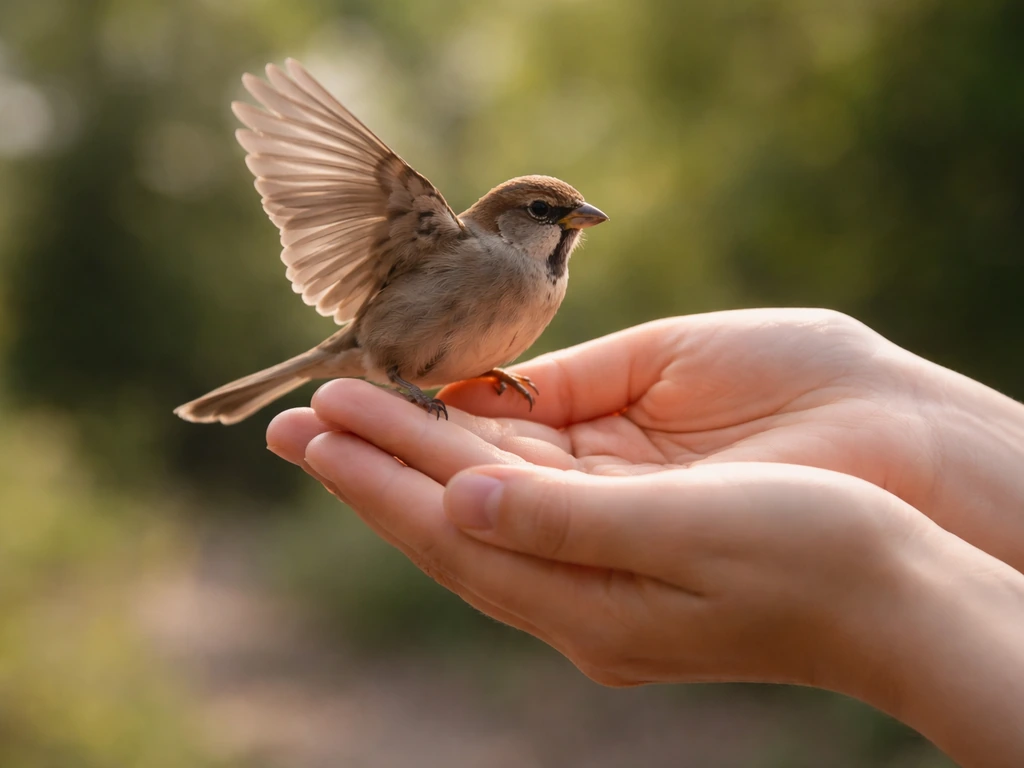
Taken at face value, "pull a bird" describes the physical act of grasping and pulling an actual bird, whether you are removing it from a net during a wildlife survey, extracting a fledgling from a tight spot, rescuing an injured bird, or (in historical falconry contexts) handling a trained raptor. This sense carries no slang weight at all. It is descriptive, neutral in tone, and relevant to anyone working in wildlife rehabilitation, ornithology, or farming.
The gesture insult sense
There is a third, less direct connection worth flagging. The phrases "give someone the bird" and "flip the bird" both involve a rude hand gesture (raising the middle finger). While these are technically distinct phrases rather than direct variants of "pull a bird," readers searching the slang may land here looking for that sense. In the UK, "give the bird" historically referred to booing or jeering, while in American English it specifically means the middle finger gesture. Neither is what "pull a bird" means, but the overlap in search intent is real enough to mention.
The slang sense in British and Australian English
The slang use of "bird" to mean a young woman or girlfriend goes back further than most people realise. Etymologically, the word traces to Middle English "burde," meaning a young woman or maiden, and it resurfaced as British street slang in the early 20th century before becoming widespread in the 1960s. Cambridge Dictionary records it as UK informal for "a young woman," Collins lists it as British informal for "a girl or young woman, including one's girlfriend," and the Oxford Advanced Learner's Dictionary marks it as British, old-fashioned/slang, and notes it can be offensive in modern usage. Collins Dictionary lists 'bird' as (British) informal for 'a girl or young woman' (including 'one's girlfriend'), confirming the UK colloquial sense used in phrases like 'pull a bird' Collins lists 'bird' as British informal for 'a girl or young woman' (including one's girlfriend)..
The companion slang verb "pull" (meaning to attract or seduce someone) is similarly British in origin and is best understood alongside the phrase "on the pull," which simply means going out with the explicit intention of meeting a romantic or sexual partner. If someone says they are "on the pull," they are not just socialising; they are actively hoping to "pull" someone. "Pull a bird" is the successful outcome of that mission. You find this language in pubs, clubs, and casual conversation across England, Scotland, Wales, and (with slightly different local flavour) Australia. It rarely appears in formal writing, professional settings, or mainstream American English.
The literal sense: physically handling a bird
When the phrase is used literally, it describes situations like a ringer (bird bander) removing a small passerine from a mist net, a falconer retrieving a hawk, a wildlife rescuer carefully extracting an injured bird from a hedge, or a farmer handling poultry. In each case, the "pulling" involves a controlled, gentle grasping action. The word "pull" here is simply descriptive and carries no social or cultural baggage.
If you have found an injured or grounded bird and need to handle it, the RSPB and RSPCA both advise approaching carefully, using gloves or a cloth to protect both yourself and the bird, placing it in a ventilated box in a dark, quiet space, and contacting a licensed wildlife rehabilitator or vet rather than attempting home treatment. Fledglings on the ground are often not injured at all, just learning to fly, and the best intervention is usually to leave them alone and keep cats and dogs away. "Pulling" or grabbing a healthy fledgling is almost always the wrong move.
Related variants and sibling idioms
Bird-related idioms and slang expressions form a surprisingly rich family, and several close relatives of "pull a bird" each have their own distinct meanings worth understanding.
Catch a bird
"Catch a bird" sits closer to the literal end of the spectrum. It describes the act of trapping or capturing a bird, whether by hand, net, trap, or lure. In slang contexts it can shade toward meaning to attract or win someone's attention, similar to the pickup sense of "pull," but it is less established as a fixed slang phrase than "pull a bird" and tends to be interpreted more literally. The imagery of catching emphasises effort and opportunity over seduction.
Catching a bird with bare hands
This phrase leans heavily into the idea of achieving something improbable through patience, stillness, and timing. Literally, catching a bird without tools is extremely difficult and requires the bird to be either injured or unusually tame. Figuratively, the phrase evokes persistence and a delicate touch. It is related to "catch a bird" but carries a stronger implication of challenge and skill. For a concise explanation of the phrase and its figurative sense, see catching a bird with bare hands meaning.
Throw a bird
"Throw a bird" most commonly refers to the American English gesture of "flipping the bird," meaning to raise the middle finger as an insult. In that sense it is a gesture of contempt or frustration. It can also occasionally mean to release or launch a trained bird of prey, as in falconry. The two senses are entirely unrelated in meaning but share the same surface phrasing.
Untouchable bird
The phrase "untouchable bird" suggests something or someone that cannot be caught, held, or possessed, either literally (a wild bird that cannot be approached) or symbolically (a person who is unattainable, a goal that is out of reach, or a status that protects someone from consequences). For a fuller explanation of that symbolic use, see the entry on untouchable bird meaning. It is more poetic and figurative than the others and feels at home in lyrics, storytelling, and symbolic language.
And this bird you cannot change
This phrase is most familiar as a lyric from the Lynyrd Skynyrd song "Free Bird," where the bird serves as a symbol of freedom, restlessness, and a spirit that cannot be domesticated or altered to suit someone else's expectations. It is metaphorical rather than literal or slang, and it carries strong emotional resonance around independence and identity.
Ignore the bird follow the river
This is a more contemplative, advice-like phrase that uses the bird as a symbol of distraction or a misleading guide, while the river represents a more reliable, steady path. For a short explanation of the phrase and its symbolism, preferring steady guidance over flashy distractions, see ignore the bird follow the river meaning. It suggests that the obvious or flashy thing (the bird) is not always the wisest thing to follow. The phrase turns up in philosophical contexts, survival wisdom, and motivational writing.
How the senses compare and contrast
The key distinction within "pull a bird" itself is straightforward: the slang sense is social and interpersonal (about attraction and seduction), while the literal sense is physical and animal-handling (about grasping a real bird). They share nothing in meaning except the words themselves.
| Phrase | Core meaning | Literal or figurative? | Tone |
|---|---|---|---|
| Pull a bird (slang) | Successfully attract/seduce someone | Figurative | Informal, playful, possibly dated |
| Pull a bird (literal) | Physically handle or pull a live bird | Literal | Neutral, practical |
| Catch a bird | Trap or capture a bird; attract attention | Mostly literal, some figurative | Neutral to playful |
| Catching a bird with bare hands | Achieve something difficult through patience | Literal and figurative | Admiring, philosophical |
| Throw a bird | Give the middle finger (US); release a bird of prey | Literal (gesture or falconry) | Vulgar (gesture) / neutral (falconry) |
| Untouchable bird | Someone/something unattainable | Figurative | Poetic, respectful |
| And this bird you cannot change | A free spirit that resists being controlled | Figurative | Emotional, lyrical |
| Ignore the bird follow the river | Follow the steady path, not distractions | Figurative | Philosophical, advisory |
What is interesting across this group is how differently "bird" functions in each. In "pull a bird," the bird is slang for a person. In "catch a bird with bare hands," it is a real animal used as a metaphor for difficulty. In "untouchable bird" and "and this bird you cannot change," the bird is a symbol of freedom. And in "ignore the bird follow the river," it becomes a symbol of distraction. The same word carries dramatically different cultural and linguistic weight depending on which phrase it lives inside.
Where the phrase comes from and who uses it
The slang meaning of "pull a bird" is most strongly rooted in British English. The Oxford Dictionary of Slang places the romantic/sexual "pull" sense in the late 1960s to 1970s, and Merriam-Webster confirms British English as its origin. The word "bird" meaning a young woman has been part of British colloquial speech since at least the early 1900s, with etymological roots going back to Middle English "burde" (meaning maiden or young woman), as tracked by the Online Etymology Dictionary.
Australian English picked up both "bird" (for woman) and "pull" (for attracting someone) and uses similar phrasing, though Australians also have their own parallel slang vocabulary. In mainstream American English, neither "bird" as a term for a woman nor "pull" in the seduction sense is widely established. The British National Corpus confirms heavy UK attestation of this slang cluster, and corpus tools like COCA suggest low frequency in American English sources. If you hear "pull a bird" and you are in the US, the speaker is almost certainly British, Australian, or has spent time in those contexts.
Tone, register, and who might be offended
This phrase is informal in every direction. Even in its most casual British context, it belongs to pub conversation, banter among friends, or comedy writing rather than polite or professional speech. There are a few things worth being aware of before you use it.
- Gender and respect: calling a woman a "bird" is flagged as potentially offensive by the Oxford Advanced Learner's Dictionary, and most modern style guides would agree. The term objectifies and reduces the person being discussed. Many British women of all ages find it patronising or reductive, even if it is used without malicious intent.
- Age and generational context: among older speakers in the UK, "bird" and "pull a bird" may feel like harmless nostalgia; among younger speakers and in more progressive social circles, the same phrase may come across as dated, sexist, or both.
- Cultural context: if you are not a native speaker of British English and you drop this phrase into conversation, the effect can range from charming (if the context is clearly self-aware or humorous) to jarring or offensive if the audience reads it as sincere and unreconstructed.
- Professional settings: this phrase has no place in workplaces, formal writing, or any public-facing communication. It is strictly casual and social.
- Who is listening: the phrase refers to women in a reductive way, so using it around women who are not familiar with the slang register or who have not signalled they are comfortable with banter-style language is a bad idea.
If you want a phrase that carries the same casual meaning without the gendered baggage, alternatives include "pull someone," "pull last night," "get with someone," "meet someone," or simply "chat someone up." In Australian English, "hook up" and "pick up" carry a similar casual register without the gendered noun. If you are writing dialogue, quoting someone, or explaining British slang, the phrase is perfectly legitimate to use in that descriptive context, as long as you acknowledge the register and potential offensiveness.
Using the phrase in context: a few examples
To make the distinction between senses completely clear, it helps to see the phrase in actual sentences.
- Slang/pickup sense: "Steve went out on the pull last Saturday and actually pulled a bird at the club." (British casual conversation, meaning he successfully attracted someone.)
- Slang/teasing sense: "Did you pull a bird at the wedding or just eat all the free food?" (Affectionate banter between friends.)
- Literal/animal-handling sense: "When you pull a bird from the mist net, make sure to support the body weight and keep the wings folded." (Instruction in bird ringing / banding.)
- Literal/rescue sense: "She had to pull a bird from between the fence slats; it had gotten one foot stuck and was panicking." (Wildlife rescue narrative.)
Notice how the slang examples involve human social interactions and casual speech, while the literal examples involve careful, deliberate physical action with an actual animal. There is no overlap in intent or implication.
A note on literal bird handling and safety
If you found this page because you genuinely need to handle a bird, whether it is injured, trapped, or grounded, the most important advice is: less is more. Most healthy fledglings that appear stranded are not in danger and should be left in place. If a bird is clearly injured (bleeding, unable to move, obviously sick), you can contain it by covering it gently with a cloth or towel, placing it in a dark, ventilated box without food or water, and contacting a licensed wildlife rehabilitator or vet as quickly as possible. Organisations like the RSPB and RSPCA provide specific regional guidance and can direct you to the right help. Do not try to force-feed it, and avoid prolonged handling. The bird's best chance depends on getting it to a professional.
FAQ
What are the core research goals when preparing a publication‑ready article explaining the phrase "pull a bird"?
Clarify literal and idiomatic senses; document regional and historical distribution; identify related variants and sibling idioms; define sub‑meanings with tone/register/offensiveness labels; collect authentic example sentences and typical contexts; provide safety/ethical guidance for literal handling with authoritative links; trace likely origins with cautious etymology; compare and contrast variants; propose polite/neutral alternatives and avoidance guidance; assemble publication‑quality citations and internal link suggestions.
Which authoritative sources should I gather first?
Start with major learner and general dictionaries (Cambridge, Oxford Learner's, Collins) for reliable definitions and usage notes. Add slang references (Oxford Dictionary of Slang, Merriam‑Webster Slang) for attested slang senses and dating. Use etymological sources (Online Etymology Dictionary) for word‑history context. For safety/handling guidance cite wildlife organisations (RSPB, RSPCA, local wildlife rehabilitators). For regional distribution and usage frequency consult corpora (BNC, COCA, GloWbE). Record any contemporary conversational attestations from forums/Reddit only as informal evidence and mark them as user‑generated.
What corpus and empirical checks are required to support regional and register claims?
Search British National Corpus (BNC) to check late‑20th‑century British attestations. Use COCA to test American frequency (expect low frequency for the idiom). Use BYU GloWbE to compare UK, AU, and US distributions. Run lemma and phrase queries ("pull a bird", "pull the bird", "pulled a bird", "on the pull") and sample concordance lines to confirm contexts (romantic/sexual vs literal). Quantify hits where possible and report observed limits (e.g., low/no occurrences in US corpora).
How do I verify historical attestation and likely origins without making unsupported claims?
Rely on dated quotations and entries in documented slang works (Oxford Dictionary of Slang; dated examples from the 1960s–1970s for 'pull' in the attraction sense). Use etymological authorities (Etymonline) for 'bird' as 'maiden' and note earliest attestations with conservative language ("attested from...", "likely derived from..."). Avoid asserting a single origin unless multiple sources converge; phrase origin statements as "probable/likely" and cite the sources used.
What steps ensure correct presentation of multiple senses and sub‑meanings?
For each sense, provide: a concise label (e.g., British slang: 'to pick up/attract someone'), a one‑line definition, tone/register (informal/colloquial, potentially offensive), typical contexts, and 1–2 publication‑ready example sentences. Distinguish clearly between the idiomatic slang senses and literal physical senses (catching/handling a bird) and note overlaps (e.g., metaphoric uses). Use dictionary citations to back tone/register labels.
How should I handle related variants and sibling idioms in research and writing?
Collect attested forms: 'catch a bird', 'catching a bird with bare hands', 'throw a bird', 'untouchable bird', the quoted lines ('and this bird you cannot change', 'ignore the bird follow the river'). For each variant, document sense overlap or divergence (literal vs idiomatic), register, and source citations. Compare and contrast to sibling idioms like 'pick up (someone)', 'on the pull', and 'give someone the bird'—use idiom dictionaries and learner dictionaries to source definitions and note differences in meaning and tone.
Next Article
Catch a Bird Meaning: Literal, Idiom, and Symbolic Sense
Understand catch a bird meaning: literal capture, idiom-like uses, and symbolic bird symbolism like luck, timing, contro